IIT Branch Difficulty & Fit Analyzer
Step 1: Select an Engineering Branch
Computer Science (CSE)
Logic, Algorithms, Coding
Electronics (ECE)
Hardware + Software Hybrid
Electrical (EE)
Power Systems, Magnetism
Mechanical
Thermodynamics, Design
Step 2: Rate Your Strengths (1-10)
Branch Analysis
Calculating...Description goes here.
Your Compatibility
Analysis of your input vs branch requirements.
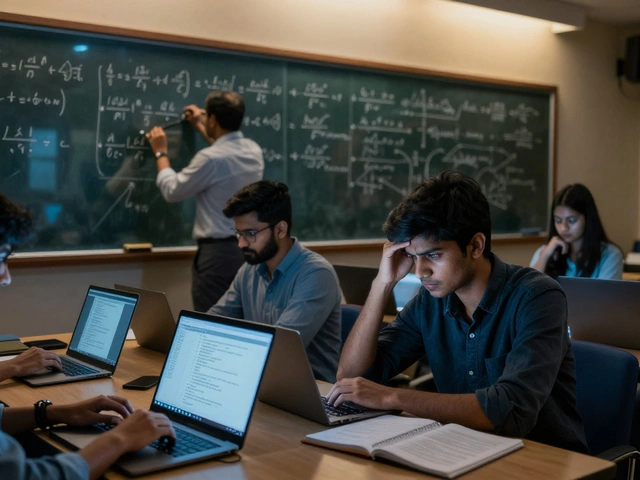
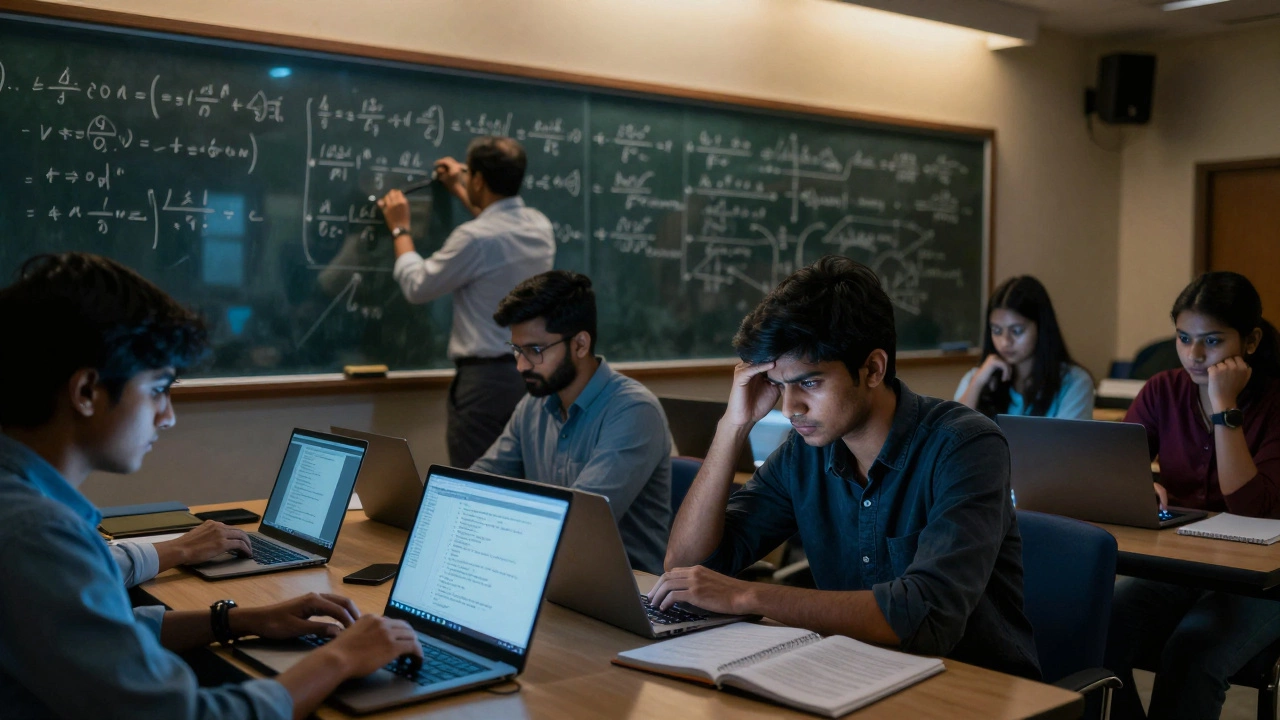
Imagine sitting in a lecture hall at Indian Institute of Technology, a premier technical university system in India known for rigorous academic standards. The professor writes a complex derivation on the board. Half the class is scribbling furiously; the other half looks completely lost. You glance at your neighbor’s notebook-it’s filled with code snippets that look like alien hieroglyphics. This isn’t just about intelligence; it’s about the sheer volume of abstract concepts you must master simultaneously.
The question "Which IIT branch is toughest?" doesn't have a single answer because "tough" means different things to different people. For some, it's the mathematical depth. For others, it's the coding intensity or the endless lab hours. If you are preparing for IIT JEE, Joint Entrance Examination, the competitive entrance test for admission to Indian Institutes of Technology, understanding these nuances can help you choose a path that challenges you without breaking you.
The Myth of the Single Hardest Branch
There is no official ranking of "hardest" branches published by the institutes. However, student sentiment, dropout rates, and placement statistics paint a clear picture. Generally, the branches considered most demanding fall into three categories: Computer Science Engineering (CSE), Electronics and Communication Engineering (ECE), and Electrical Engineering (EE). These are often called the "core" high-demand branches.
Why are they tough? It’s not just the syllabus. It’s the competition. When everyone in your section aims for top tech companies or research roles, the peer pressure amplifies the academic load. A student in Civil Engineering might find their curriculum manageable, but a student in CSE at IIT Bombay faces a different reality: a packed schedule, intense project deadlines, and a culture of constant upskilling.
Computer Science Engineering (CSE): The Cognitive Marathon
Computer Science Engineering, a branch focusing on software development, algorithms, and computational theory is widely regarded as the most mentally exhausting branch. Why? Because the feedback loop is immediate and unforgiving. In physics, if your calculation is off by a decimal, you might still get partial credit. In coding, if one semicolon is missing, the entire program crashes.
- Abstract Thinking: You aren't just learning syntax; you're learning how to structure logic. Data structures and algorithms require a level of abstraction that many students struggle with initially.
- Rapid Obsolescence: What you learn in Year 1 might be outdated by Year 4. Students must constantly self-study new frameworks, languages, and tools outside of regular classes.
- Debugging Fatigue: Spending six hours finding a bug that turns out to be a typo is a common experience. This emotional toll contributes significantly to perceived difficulty.
The workload isn't just about exams. It's about projects. A typical CSE semester includes multiple mini-projects, mid-terms, and a major capstone project. At top IITs like IIT Delhi or IIT Madras, the cutoff marks for internal assessments are incredibly high, meaning even small mistakes can drop your GPA significantly.
Electronics and Communication Engineering (ECE): The Hardware-Software Hybrid
If CSE is pure logic, Electronics and Communication Engineering, a branch dealing with electronic circuits, signal processing, and communication systems is the bridge between physical hardware and digital software. Many students find ECE tougher than CSE because it requires mastery in two distinct domains.
You need strong math skills for signal processing and control systems, but you also need practical hands-on skills for circuit design. Imagine trying to debug a radio frequency interference issue while simultaneously writing embedded C code for a microcontroller. That’s a typical Tuesday in ECE.
| Branch | Primary Challenge | Math Intensity | Lab Workload |
|---|---|---|---|
| CSE | Algorithmic Logic & Coding | High (Discrete Math) | Low (Virtual Labs) |
| ECE | Hardware-Software Integration | Very High (Calculus & Diff Eq) | High (Physical Circuits) |
| EE | Power Systems & Electromagnetics | Very High (Vector Calculus) | Medium (Simulation) |
| Mechanical | Thermodynamics & Design | High (Applied Math) | High (Workshop & Labs) |
The "toughness" here comes from the breadth. You can't ignore the hardware side because it forms the foundation of modern IoT and AI chips. Students who fail to grasp both sides often feel stuck, leading to higher stress levels compared to more specialized branches.
Electrical Engineering (EE): The Invisible Forces
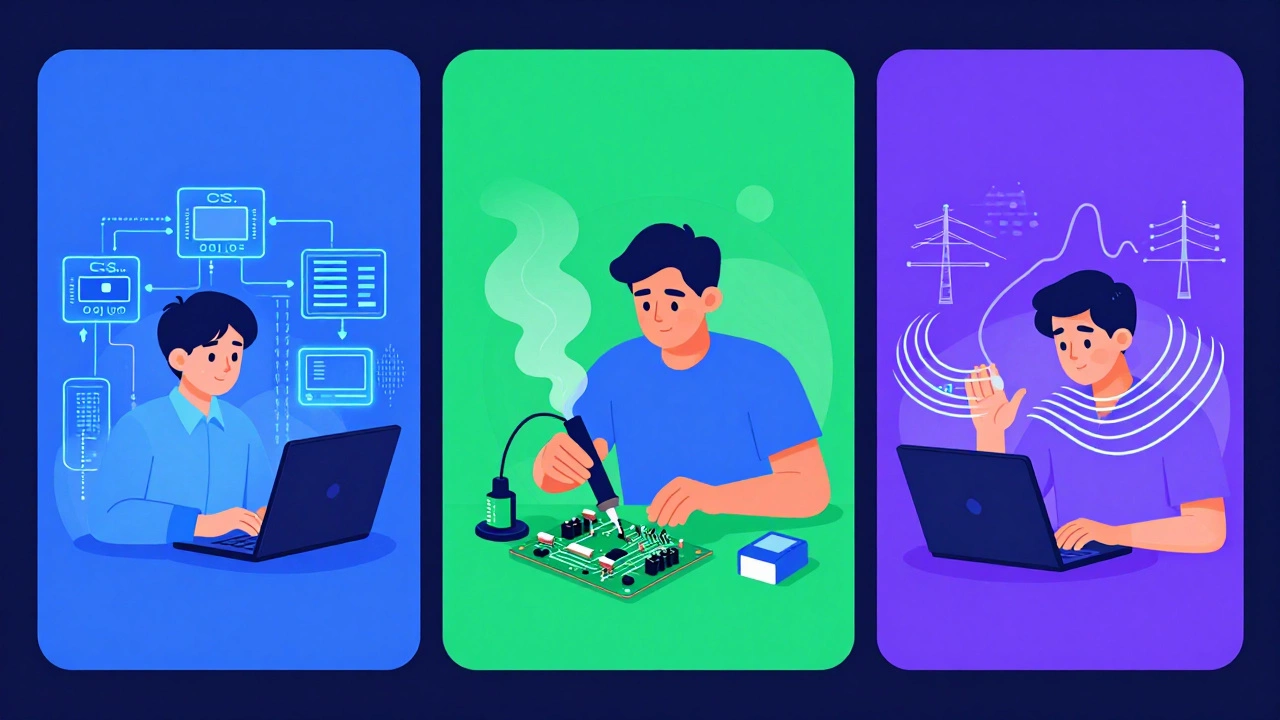
Electrical Engineering, a branch focused on electricity, electronics, and electromagnetism is notoriously difficult due to its heavy reliance on advanced mathematics. Electromagnetics, Power Systems, and Control Theory are subjects where intuition fails, and only rigorous mathematical modeling works.
Unlike mechanical engineering, where you can see gears turning, EE deals with invisible forces. Visualizing magnetic fields or understanding transient stability in power grids requires a strong mental model. The coursework is dense, and the exams are often theoretical, requiring precise derivations rather than approximate answers.
Mechanical Engineering: The Breadth Beast
While CSE and ECE dominate the "toughest" conversation, Mechanical Engineering, the oldest engineering branch dealing with design, analysis, and manufacturing of mechanical systems deserves mention for its sheer volume. Mechanical engineers study everything from fluid dynamics to thermodynamics to robotics.
The challenge isn't necessarily the depth of one subject but the width of all subjects combined. You have labs in the workshop, CAD software assignments, and complex numerical problems. It’s physically demanding too-late nights in the machine shop are real. For students who dislike variety, this lack of specialization early on feels overwhelming.
Factors That Make Any Branch Tougher
It’s not just the branch name. Several external factors amplify the difficulty:
- IIT Campus Culture: Top IITs (Bombay, Delhi, Madras) have a more competitive environment than newer IITs. The peer group pushes harder, raising the bar for everyone.
- Placement Pressure: Branches with high placement packages (CSE, ECE) attract students who are highly driven. This creates a "survival of the fittest" atmosphere where maintaining a high CGPA is crucial for internships.
- Faculty Expectations: Professors in core branches often expect students to go beyond the textbook. Research opportunities are abundant but come with significant time commitments.
How to Choose Without Burning Out
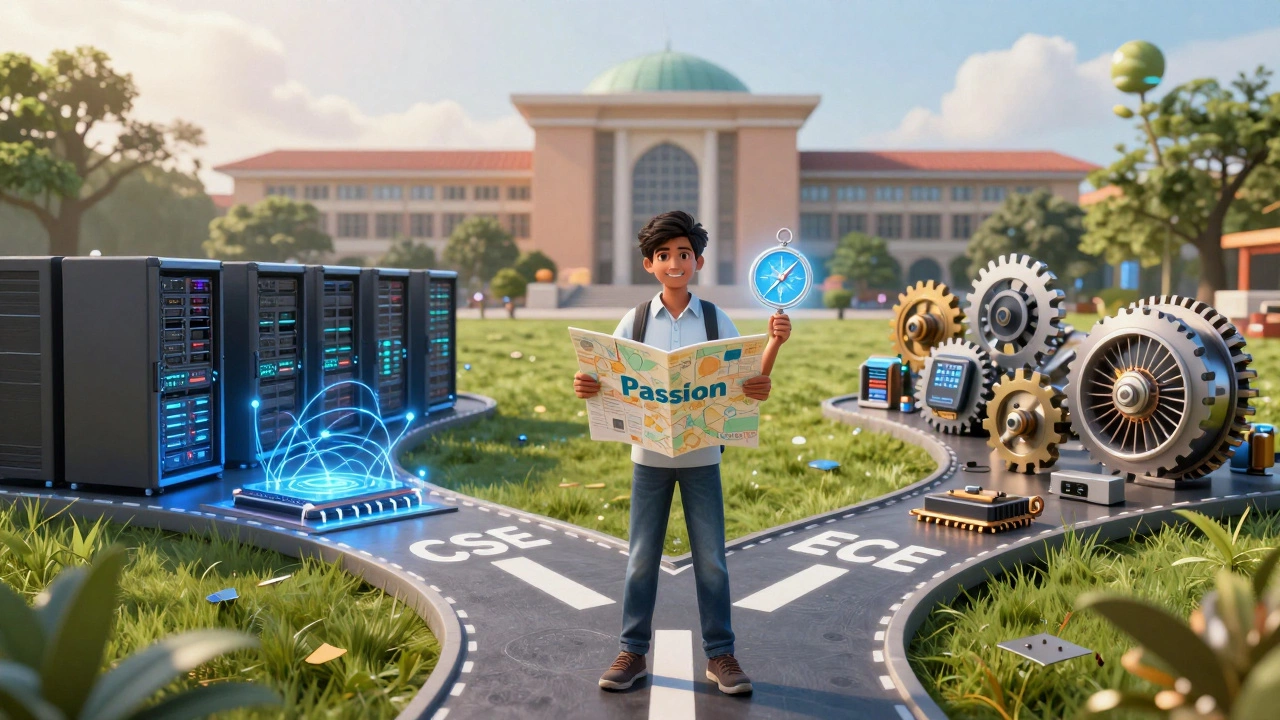
If you’re worried about toughness, ask yourself: What kind of hard work do I enjoy? Do you prefer solving logical puzzles (CSE)? Building physical devices (ECE/Mechanical)? Or analyzing large-scale systems (EE/Civil)?
Don’t choose a branch solely because it’s "prestigious." Passion fuels persistence. A student passionate about AI will find CSE challenging but rewarding. A student indifferent to coding will find it miserable. The "toughest" branch is the one you hate studying.
Is Computer Science really the hardest branch in IIT?
For most students, yes, due to the rapid pace of change and the need for continuous self-learning. However, "hardest" is subjective. ECE and EE involve heavier mathematical foundations which some find more difficult than coding.
Which IIT has the toughest academic environment?
IIT Bombay, IIT Delhi, and IIT Madras are generally considered to have the most rigorous academic cultures due to higher faculty expectations and competitive peer groups.
Can I switch branches after joining IIT?
Yes, most IITs allow branch changes after the first year based on CGPA. However, the cutoff is extremely high, especially for moving into CSE or ECE from less popular branches.
Is Mechanical Engineering easier than CSE?
Mechanical Engineering has a broader curriculum with more lab work, while CSE focuses deeply on logic and coding. Neither is objectively easier; they test different skills. Mechanical may feel less intense regarding daily coding deadlines but requires mastering diverse physical sciences.
How does branch choice affect placements?
CSE and ECE typically offer higher average salary packages due to demand in tech sectors. However, students from other branches can secure similar roles by developing strong coding skills through self-study and internships.