Exam Readiness & Strategy Simulator
Select the exam you are preparing for to simulate the required focus and a sample study trajectory.
Gaokao
ChinaHigh Volume & Social Pressure
UPSC
IndiaInfinite Syllabus & Endurance
IIT JEE
IndiaComplex Logic & Application
Preparation Metrics
Strategic Advice
Select an exam to see the golden rule for success.
- The Gaokao is a brutal multi-day test that determines a student's entire future in China.
- The UPSC Civil Services Exam is a marathon of endurance and deep knowledge of Indian governance.
- The IIT JEE is a high-stakes physics and math battle for seats in India's elite engineering colleges.
- Success in these exams depends more on strategic consistency than raw intelligence.
The Gaokao: China's Academic Pressure Cooker
Imagine a single test that decides where you'll live, what you'll study, and likely who you'll marry. That is the reality of the Gaokao. The Gaokao is the National College Entrance Examination in China, and it's widely considered the most stressful academic event for millions of teenagers every year. It isn't just a test; it's a national event. Police often escort students to exam centers to prevent traffic delays, and drones are used to catch cheaters in real-time.
The sheer scale of the Gaokao is what makes it terrifying. We're talking about roughly 10 to 12 million students fighting for a limited number of spots at "Double First Class" universities. The exam lasts for two to three days and covers subjects like Chinese, Mathematics, and a choice between Science or Arts. But the real difficulty isn't just the questions-it's the competition. A single point can be the difference between entering a top-tier university in Beijing or ending up at a vocational college in a remote province.
Students often enter "exam factories" where they study for 15 to 18 hours a day. They memorize thousands of pages of text and solve a relentless stream of practice problems. For a student in China, the Gaokao is the ultimate filter. The psychological toll is immense because there are very few second chances. If you bomb the Gaokao, your path to social mobility in China effectively narrows overnight.
UPSC Civil Services: The Ultimate Test of Endurance
If the Gaokao is a sprint, the UPSC Civil Services Examination is an ultramarathon. This exam, conducted by the Union Public Service Commission in India, is designed to recruit the top administrative officers for the country. It doesn't just test what you know; it tests how much you can handle before you break.
The UPSC process is a brutal three-stage filter: the Prelims, the Mains, and the Personality Test (Interview). The Prelims act as a massive cull, where hundreds of thousands of candidates are whittled down to a few thousand. The Mains are where the real torture begins. Candidates must write exhaustive essays and detailed answers on everything from ancient history and ethics to current global geopolitics and Indian economics.
What makes the UPSC one of the toughest exams in the world is the syllabus. It is effectively infinite. You can't just "study" for it; you have to live and breathe the news and the law. Many candidates spend 3 to 5 years in coaching hubs like Old Rajinder Nagar in Delhi, living in tiny rooms and studying 12 hours a day. The pass rate is hauntingly low-often less than 1% of the total applicants ever make it to the final list of selected candidates.

IIT JEE: The Math and Science Meat-Grinder
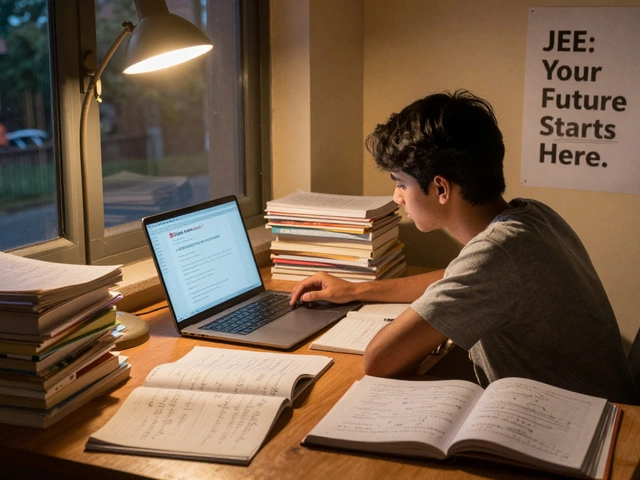
For those who love physics and chemistry, the IIT JEE (Joint Entrance Examination) is the peak of academic suffering. This exam is the gateway to the Indian Institutes of Technology, which are essentially the MITs of India. If you want to be a software engineer at Google or a quant on Wall Street, this is the door you have to kick down.
The exam is split into two stages: JEE Main and JEE Advanced. While the Main is hard, the Advanced is a different beast entirely. It doesn't ask you to repeat textbook formulas; it asks you to apply complex concepts to problems you've never seen before. It tests raw analytical power. You might encounter a physics problem that requires you to combine thermodynamics, electromagnetism, and calculus all in one go.
The competition is skewed by the sheer number of applicants. Over a million students take the JEE Main, but only a tiny fraction qualify for the Advanced version. Then, only a few thousand get into the top IITs. The pressure starts early, with many students joining "integrated" schools in 8th or 9th grade just to prepare for this one moment in their lives. It's a high-stakes game of intellectual survival.
| Exam | Primary Focus | Duration | Key Difficulty Factor | Typical Pass Rate |
|---|---|---|---|---|
| Gaokao | General Academic | 2-3 Days | High Social Pressure / Volume | Very Low (for top tiers) |
| UPSC | Governance & Policy | 1-2 Years | Infinite Syllabus / Endurance | < 1% |
| IIT JEE | STEM (Science/Math) | Several Months | Complex Application / Competition | < 2% (for IITs) |
Why These Exams Are So Hard (And Why They Exist)
You might wonder why any country would design a system this cruel. The answer usually boils down to one thing: scarcity. When there are 10 million qualified students but only 100,000 seats in top universities, the only way to pick the "best" is to make the test so hard that only a handful of people can pass it. It's not about whether the students are smart enough; it's about creating a filter that is fine enough to separate the gold from the silver.
Beyond the scarcity, these exams serve as a proxy for personality traits. A person who can study for 14 hours a day for three years straight exhibits an incredible level of discipline, grit, and resilience. For the UPSC, the government isn't just looking for a history buff; they're looking for someone who can handle extreme stress and a crushing workload without quitting. In that sense, the exam itself is a simulation of the job.
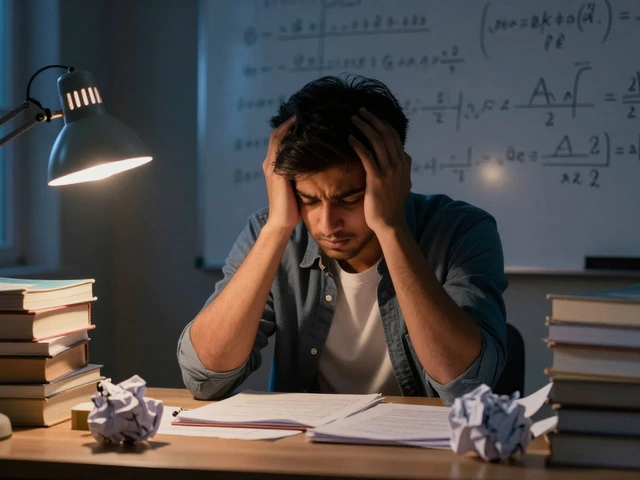
However, this system has a dark side. The "coaching culture" has turned education into a business. In cities like Kota in India, the entire economy revolves around JEE preparation. While this provides structure, it also leads to burnout, anxiety, and a loss of childhood. When your entire identity is tied to a three-digit rank on a PDF list, the psychological stakes become dangerously high.
Survival Tips for High-Stakes Testing
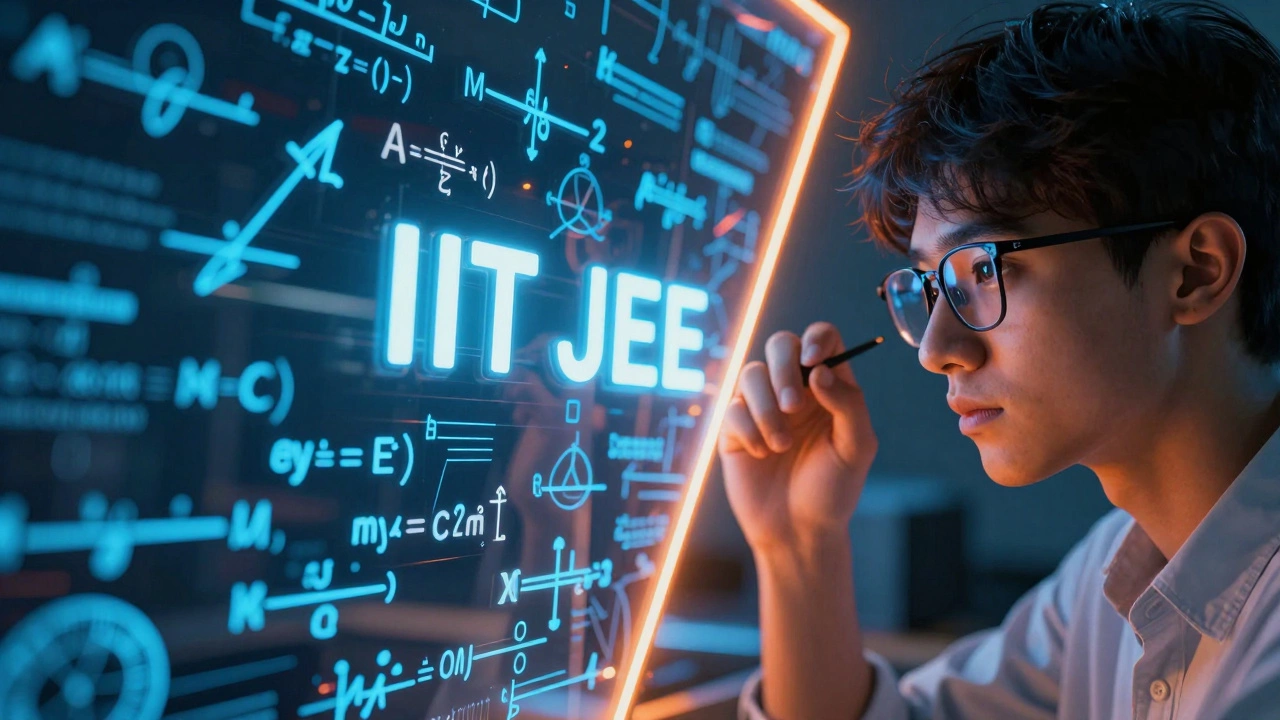
If you're staring down one of these monsters, you can't just "study harder." You have to study smarter. Most top scorers don't actually spend more hours reading; they spend more hours practicing the *right* way. The first rule is active recall. Don't just read a chapter on the Indian Constitution or Organic Chemistry-close the book and try to write everything you remember on a blank sheet of paper. If you can't explain it to a six-year-old, you don't understand it.
Second, focus on your "weakest link." It's tempting to keep solving physics problems if you're already great at physics because it feels good. But the exams aren't won by your strengths; they're lost because of your weaknesses. Spend 70% of your time on the topics that make you want to quit. That's where the real growth happens.
Finally, treat your brain like an athlete treats their body. You cannot function on four hours of sleep. Your brain needs REM sleep to consolidate the massive amounts of data you're cramming into it. If you sacrifice sleep for study, you're essentially pouring water into a bucket with holes in the bottom. The best candidates are those who balance a rigid study schedule with strategic rest and physical activity to keep their stress levels in check.
Is the Gaokao harder than the IIT JEE?
It depends on what you find difficult. The Gaokao is harder in terms of sheer volume and the emotional weight it carries for a student's entire future. The IIT JEE is harder in terms of the intellectual complexity of the problems, specifically in mathematics and physics. One is a test of endurance and breadth; the other is a test of depth and analytical agility.
Can someone pass the UPSC without a specialized degree?
Yes, absolutely. The UPSC is open to any graduate regardless of their major. In fact, candidates from diverse backgrounds-engineers, doctors, and humanities students-all compete. The key is not the degree you hold, but your ability to master the vast syllabus of general studies and your chosen optional subject.
How do I deal with the stress of competitive exams?
The most effective way is to detach your self-worth from the result. Understand that these exams are filters of scarcity, not measures of intelligence. Use a structured schedule (like the Pomodoro technique), maintain a social circle outside of your study group, and prioritize sleep. If the pressure becomes overwhelming, seeking professional counseling is a smart move, not a sign of weakness.
What is the passing percentage for the IIT JEE Advanced?
The percentage is incredibly low. While millions take the JEE Main, only about 2.5 lakh students qualify for the Advanced. Out of those, only a few thousand secure seats in the top IITs. This puts the final success rate for a top-tier seat at well below 2% of the total applicant pool.
Are there other exams as tough as these?
Yes, there are others like the Master Sommelier Diploma or the California Bar Exam, but those are professional certifications rather than mass-scale academic entrance exams. In terms of the sheer number of people competing for a tiny number of spots, the Gaokao, UPSC, and JEE remain the gold standard of difficulty.
Next Steps for Aspiring Candidates
If you are preparing for any of these, start by mapping out the syllabus. Don't just read; create a checklist of every single topic. When you can check off a topic with confidence, move to the next. If you're just starting, find a mentor who has already cleared the exam. They can tell you which parts of the syllabus are "distractors" and which are the core pillars of the test.
For those feeling burnt out, remember that your life does not end at the edge of an exam paper. While these tests open prestigious doors, there are always alternative routes to success. Many of the world's most successful entrepreneurs and leaders didn't top these exams-they simply found a different way to apply their grit and intelligence in the real world.