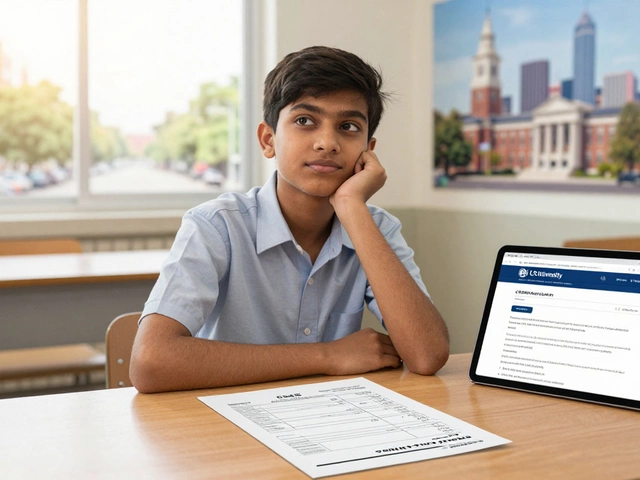
2026 Career Pathway Simulator
Select your profile below to generate a personalized skill recommendation.
Select your preferences to see your recommended skill path.
Job postings have changed. If you scroll through LinkedIn or Indeed right now, you won't just see requirements for a degree in English Literature or Accounting. You'll see lists of specific tools, frameworks, and soft skills that feel like they belong in a tech manual. The question isn't just "What is the best job?" anymore. It is "What skill is most in demand?" The answer depends on where you are starting from, but the trends for 2026 are clear. Employers are hiring for adaptability, technical fluency, and human-centric problem solving.
The labor market has shifted from rewarding tenure to rewarding versatility. A recent analysis by the World Economic Forum highlighted that nearly half of all workers will need reskilling by 2027. This isn't about replacing people with robots; it's about humans who can work alongside advanced technology. If you are looking to pivot your career or boost your salary, focusing on these high-value areas is your best bet.
The Rise of AI Literacy and Data Fluency
You don't need to be a data scientist to benefit from this trend. "Data fluency" means understanding what data says, how to interpret charts, and how to use basic analytics tools to make decisions. For marketers, this means using AI to predict customer behavior. For HR professionals, it means using algorithms to reduce bias in hiring. For accountants, it means automating reconciliation tasks.
- Generative AI Prompt Engineering: The ability to communicate effectively with large language models to get precise outputs.
- Data Visualization: Using tools like Tableau or Power BI to turn raw numbers into actionable insights.
- Basic SQL: Understanding how to query databases remains one of the highest ROI skills for non-technical roles.
Companies are not looking for people who fear AI. They are looking for people who can harness it. If you can show that you reduced a three-day task to three hours using an AI assistant, you become indispensable.
Cybersecurity: The Non-Negotiable Skill Set
As businesses move more operations to the cloud and rely heavily on digital infrastructure, security breaches have become more frequent and costly. According to IBM's 2025 Cost of a Data Breach Report, the average cost of a breach exceeded $4.8 million. This financial risk makes cybersecurity talent one of the scarcest resources in the global economy.
You don't necessarily need to become a "white hat" hacker to enter this field. There is a massive demand for compliance officers, security analysts, and IT auditors who understand regulations like GDPR and CCPA. Even in non-tech industries like healthcare and finance, employees who understand phishing detection, password hygiene, and secure communication protocols are highly valued.
The barrier to entry here is certifications rather than degrees. Certifications like CompTIA Security+ or Certified Information Systems Security Professional (CISSP) often carry more weight than a generic master's degree. If you are detail-oriented and enjoy puzzle-solving, this is a stable, high-paying path.
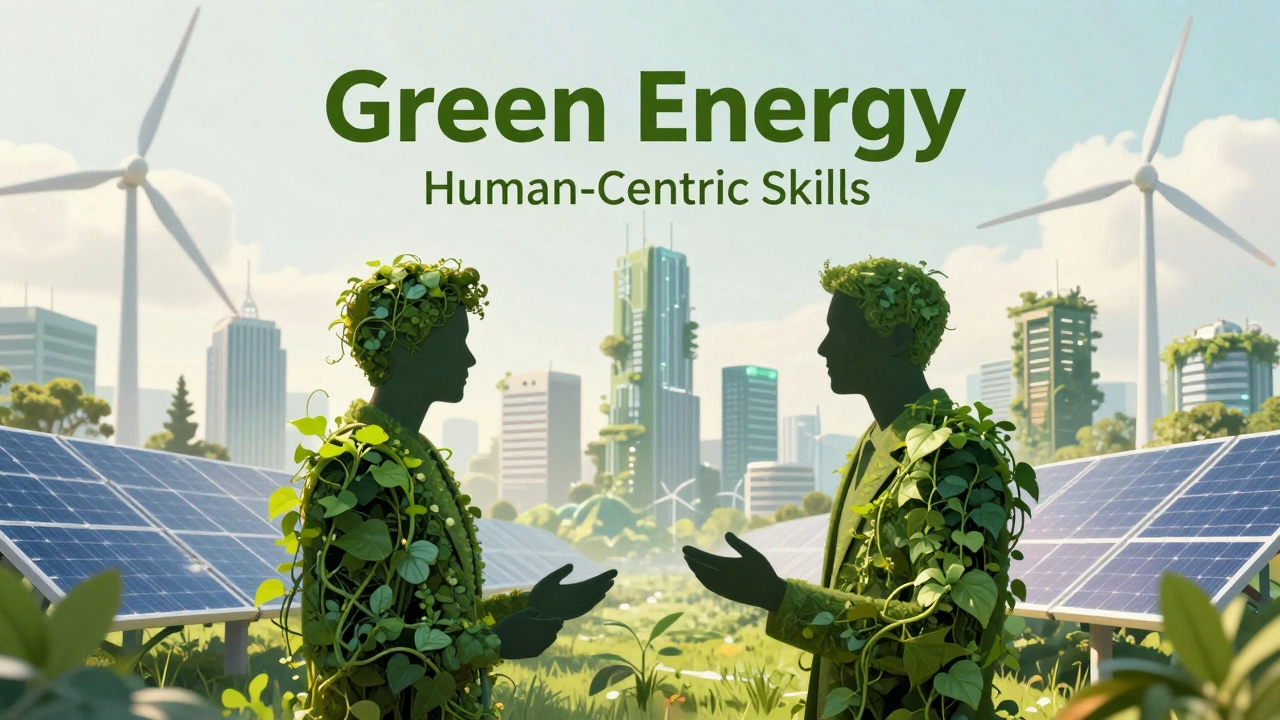
Green Energy and Sustainability Expertise
The push for net-zero emissions is driving a boom in green jobs. Governments worldwide are pouring billions into renewable energy infrastructure, electric vehicle supply chains, and sustainable agriculture. This creates a demand for specialized skills that blend engineering, policy, and project management.
Sustainability is no longer a PR exercise; it is a core business function. Companies need professionals who can calculate carbon footprints, design circular economy models, and ensure supply chain transparency. Roles like "Sustainability Manager," "Renewable Energy Technician," and "Environmental Compliance Officer" are seeing double-digit growth year over year.
If you have a background in biology, chemistry, or even law, you can pivot into this sector. Learning about Life Cycle Assessment (LCA) methodologies or getting certified in LEED (Leadership in Energy and Environmental Design) can open doors in construction, manufacturing, and corporate strategy.

Human-Centric Soft Skills: The AI Proof Advantage
While AI handles data and automation, it struggles with empathy, complex negotiation, and creative leadership. As machines take over routine cognitive tasks, the value of distinctly human skills skyrockets. These are often called "soft skills," but in 2026, they should be viewed as "power skills."
- Emotional Intelligence (EQ): The ability to understand and manage your own emotions, as well as those of others. This is crucial for team leadership, client relations, and conflict resolution.
- Critical Thinking: AI provides answers, but humans must ask the right questions. Evaluating the credibility of information and making judgment calls in ambiguous situations is a premium skill.
- Adaptability and Resilience: The pace of change is accelerating. Workers who can learn new tools quickly and bounce back from setbacks are preferred over specialists who resist change.
These skills are harder to quantify on a resume, which is why behavioral interviews have become so important. When applying for jobs, use the STAR method (Situation, Task, Action, Result) to demonstrate how you used empathy or critical thinking to solve a real-world problem.
Digital Marketing and Content Strategy
The way we consume content has fragmented. With the rise of short-form video, voice search, and personalized feeds, traditional marketing tactics are failing. Brands need strategists who understand algorithmic distribution and community building.
It's not enough to write good copy. You need to understand SEO (Search Engine Optimization), paid social media advertising, and conversion rate optimization (CRO). Tools like Google Analytics 4 and Meta Business Suite are standard. However, the differentiator is storytelling. Can you create a narrative that resonates with a specific niche audience across multiple platforms?
Influencer marketing has evolved into creator partnerships. Understanding how to negotiate contracts, measure engagement rates, and align brand values with creators is a specialized skill set that agencies and in-house teams are desperate for.
Comparison of High-Demand Skill Categories
| Skill Category | Primary Industries | Barrier to Entry | Salary Potential | Key Tools/Certs |
|---|---|---|---|---|
| AI & Data Fluency | Tech, Finance, Healthcare | Medium | High | Python, SQL, Tableau |
| Cybersecurity | All Sectors | High (Certifications) | Very High | CompTIA, CISSP |
| Sustainability | Energy, Manufacturing, Gov | Medium-High | Medium-High | LEED, GRI Standards |
| Soft Skills (EQ) | Management, Sales, HR | Low (Inherent) | Variable | Coaching, Workshops |
| Digital Marketing | Retail, Media, SaaS | Low-Medium | Medium | Google Ads, HubSpot |
How to Choose Your Next Online Course
With thousands of courses available on platforms like Coursera, Udemy, and edX, it is easy to get overwhelmed. Here is a simple framework to decide what to learn next.
First, audit your current role. What tasks do you dread? Often, learning a tool that automates those tasks (like Excel macros or AI writing assistants) provides immediate relief and value. Second, look at job descriptions for your dream role. Identify the three skills that appear in 80% of the listings. Third, consider the "half-life" of the skill. Will this knowledge be obsolete in two years? Coding languages change, but the logic behind them doesn't. Digital marketing platforms update constantly, but consumer psychology remains stable.
Don't chase certificates for the sake of collecting them. Focus on projects. Build a portfolio. If you are learning data analysis, publish a case study on Medium. If you are learning cybersecurity, document a home lab setup on GitHub. Employers want proof of competence, not just proof of attendance.
Is it too late to switch careers in my 30s or 40s?
Absolutely not. In fact, mid-career professionals often have an advantage because they bring industry context and soft skills that younger graduates lack. The key is to leverage your existing experience while adding new technical layers. For example, a teacher transitioning to instructional design uses their pedagogical knowledge combined with new e-learning tools.
Do I need a university degree to learn these skills?
For many tech and digital roles, no. Bootcamps, professional certifications, and self-taught portfolios are increasingly accepted. However, fields like healthcare, law, and academia still require formal degrees. Check specific job postings in your target area to see if a degree is listed as "required" or "preferred."
Which online course platform is best for beginners?
Coursera and edX offer university-backed courses that are great for foundational knowledge and recognized certificates. Udemy is better for specific, practical software skills (like learning Photoshop or Python) at a lower cost. LinkedIn Learning integrates well with your professional profile and offers bite-sized lessons on business and soft skills.
How long does it take to become proficient in a new skill?
It varies widely. Basic proficiency in a tool like Excel or Canva might take 10-20 hours. Becoming job-ready in data science or cybersecurity typically requires 6-12 months of dedicated study and practice. Consistency matters more than intensity; studying 1 hour a day is better than 10 hours once a month.
Are soft skills really worth investing time in?
Yes, especially as technical barriers lower. Anyone can access AI tools, but not everyone can lead a team through ambiguity or negotiate a difficult contract. Soft skills differentiate senior leaders from mid-level managers. Investing in coaching or workshops on communication and emotional intelligence yields high returns in career advancement.