Distance Education Cost Calculator
Compare Your Education Costs
Distance education can save you 20-40% on total costs. Input your specific figures to see your potential savings.
Traditional Education Costs
Distance Education Costs
Your Results
Traditional Education Total
$0.00
Distance Education Total
$0.00
Tip: Distance education saves an average of 20-40% on total costs. Your actual savings may vary based on program type, location, and personal circumstances.
Distance education isn’t just watching videos on a screen. It’s a full system designed to let people learn without being in the same room as their teacher. Back in the 1970s, it meant mailed textbooks and cassette tapes. Today, it’s live Zoom classes, AI feedback on assignments, and digital campuses that never close. If you’re working full-time, caring for kids, or living far from a university, distance education isn’t a backup plan-it’s the only plan that works.
How distance education actually works
Think of it like a recipe with four key ingredients: content, connection, assessment, and support. The content isn’t just a PDF dump. It’s broken into short modules-10 to 15 minutes each-with videos, quizzes, and real-world tasks. You might watch a lecture on supply chain logistics, then build a mock inventory plan using free software like Google Sheets.
Connection happens through forums, group chats, and scheduled video calls. At the University of Edinburgh’s online MBA, students form small teams that meet every Tuesday at 7 PM GMT. No one’s forced to speak, but if you don’t contribute, you won’t pass. That’s because participation counts for 30% of your grade.
Assessment is ongoing. Instead of one big final exam, you turn in weekly reflections, peer-reviewed projects, or timed online tests. Some programs even use proctoring tools that watch your screen and camera-not to spy, but to make sure the work is yours.
Support comes from academic advisors, tech help desks, and peer mentors. At Southern New Hampshire University, every online student gets a success coach who checks in every two weeks. They don’t teach the material. They ask: ‘What’s blocking you?’
Who uses distance education-and why
It’s not just for college students. A 2024 survey by the National Center for Education Statistics found that 41% of distance learners are over 30. Many are parents, nurses on night shifts, or veterans transitioning to civilian jobs.
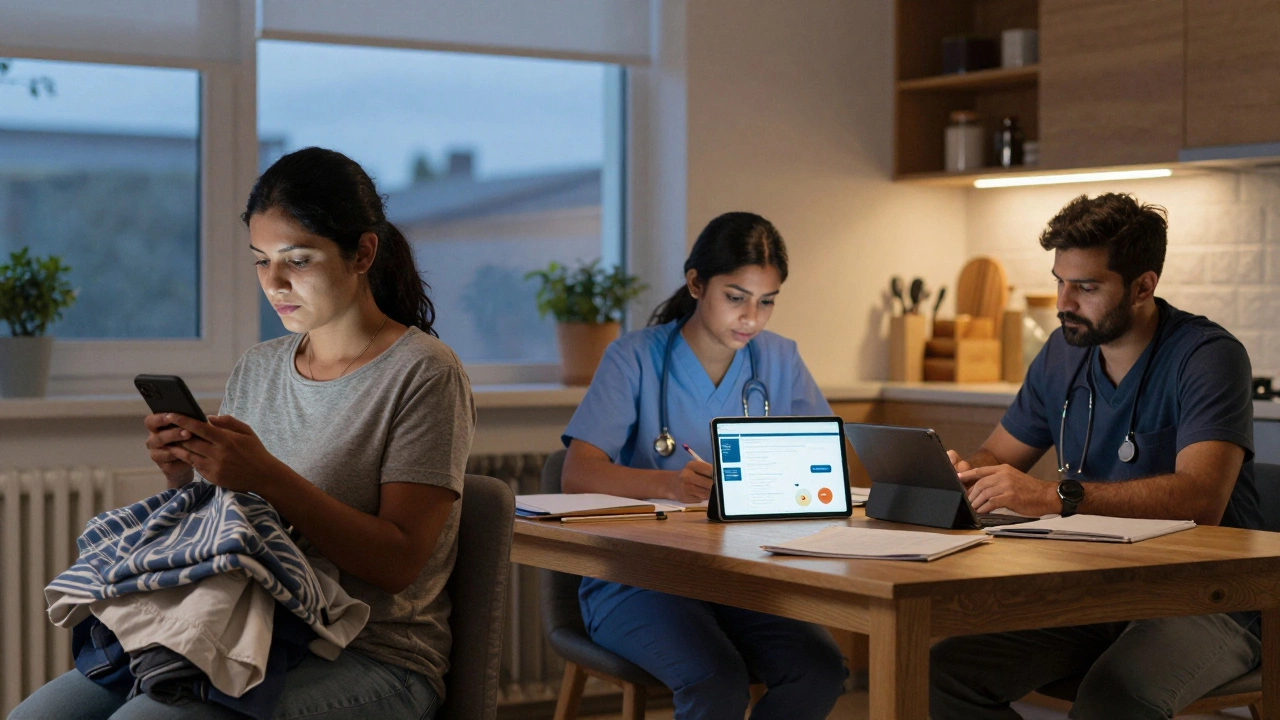
Take Maria, a single mom in Texas. She works as a medical coder from 10 PM to 6 AM. Her son’s school starts at 7:30 AM. She finishes her online nursing prerequisites at 8 PM, after he’s asleep. Her program lets her download lectures to her phone. She listens while folding laundry. That’s distance education: flexible enough to fit into real life.
Others use it to switch careers. James, a former warehouse worker in Glasgow, took a free online course in data analysis through Coursera. He finished in six months, built a portfolio with real public datasets, and landed a junior analyst role at a Scottish logistics firm. No campus. No relocation. Just persistence.
What you need to make it work
You don’t need fancy gear. A smartphone from the last five years, a stable Wi-Fi connection, and a quiet corner are enough. But here’s what most people underestimate: discipline.
Without a physical classroom, you’re your own alarm clock, your own motivator, your own accountability partner. If you miss a deadline, no one yells at you. You just fall behind-and it’s easy to stay behind.
Successful learners use three simple habits:
- Block time on your calendar like a doctor’s appointment. Not ‘I’ll do it later.’ But ‘Tuesday 7-8 PM: Module 3, quiz, forum post.’
- Use a physical planner or a free app like Notion to track deadlines. Color-code by subject. Seeing it all in one place cuts panic.
- Find one study buddy-even if they’re on the other side of the world. Text each other: ‘Did you finish the reading?’ It’s that small.
Also, check your tech setup. Many platforms don’t work on Safari. Some video tools require Chrome or Edge. Download the app version, not just the browser. And always have a backup plan: a public library with free Wi-Fi, or a neighbor who’ll let you borrow their hotspot.
What’s different today vs. 10 years ago
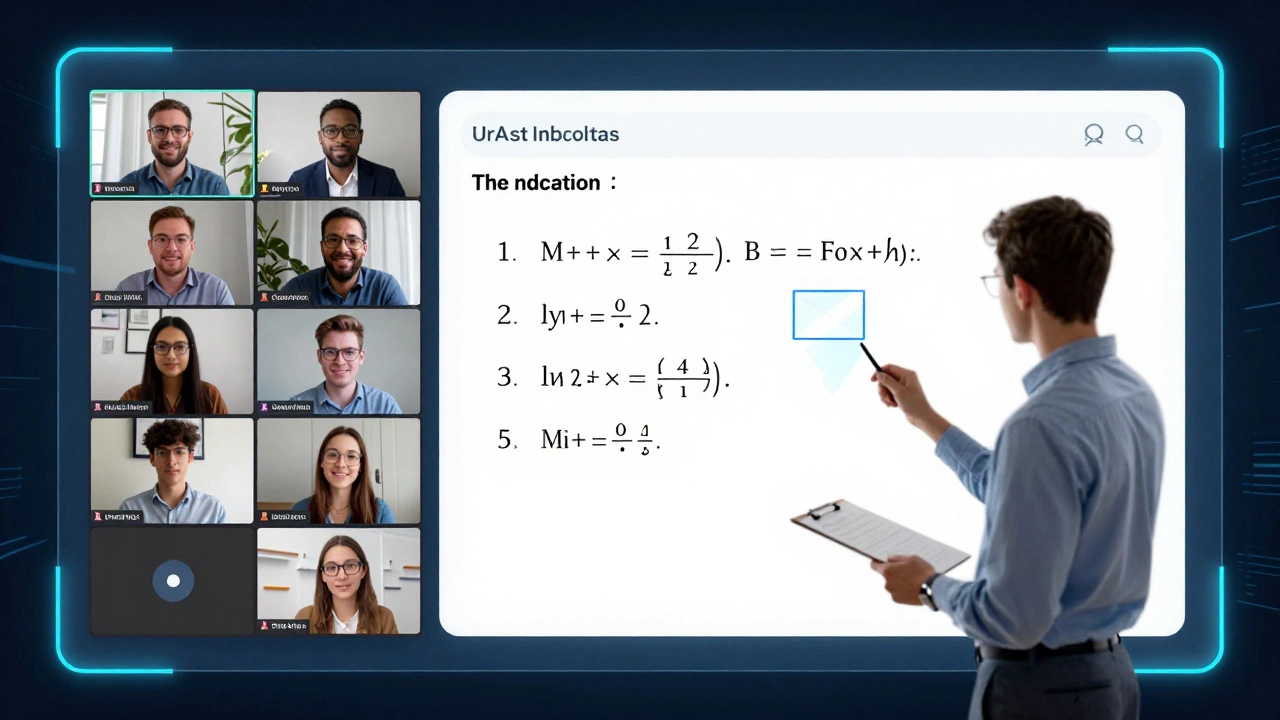
Ten years ago, online courses were mostly recorded lectures with a discussion board. Today, they’re interactive. Some platforms use AI tutors that adapt to your mistakes. If you keep missing questions about quadratic equations, the system serves you simpler problems first-then slowly ramps up.
Virtual reality is creeping in. Medical students at Johns Hopkins now practice suturing in VR simulations before touching real patients. Aviation programs use flight simulators you can access from your living room.
And credentials? They matter more than ever. Employers now recognize degrees from Arizona State University Online the same way they do from the main campus. Google, IBM, and Amazon offer their own online certificates that can replace a two-year degree for entry-level tech jobs.
Common myths about distance education
Myth 1: It’s easier than in-person school. It’s not. You’re responsible for everything. No one reminds you to study. No one notices if you skip class. The workload is often heavier because you’re learning on your own time.
Myth 2: Employers don’t value it. A 2023 LinkedIn report showed that 87% of hiring managers say they treat online degrees the same as traditional ones-if they’re from accredited institutions. The key word: accredited. Always check if the school is recognized by your country’s education board.
Myth 3: You’re alone. You’re not. Online students form tight-knit communities. One student in a global business program met two classmates through a forum. They started a weekly Zoom coffee chat. Two years later, they launched a consulting startup together.

How to pick the right program
Not all distance programs are equal. Here’s how to tell the good ones from the junk:
- Accreditation: Look for regional or national accreditation (like the UK’s QAA or the US’s CHEA). Avoid schools that only have ‘national’ accreditation-those are often diploma mills.
- Student support: Ask: ‘Is there a dedicated advisor for online students?’ If they say ‘We’re just like on-campus,’ that’s a red flag.
- Graduation rates: If a school won’t publish its completion rate, walk away. Top programs have rates above 65%.
- Technology: Does the platform work on mobile? Can you download materials? Is there a help chatbot that responds in under 10 minutes?
For example, the Open University in the UK has a 72% completion rate. Their platform works offline. You can stream lectures on your phone during your commute. They even mail printed materials if you prefer them.
What comes next after you finish
Distance education doesn’t end when you click ‘submit final assignment.’ The next step is often the hardest: proving your skills to employers.
Build a digital portfolio. Upload your projects, papers, and group work to a free site like GitHub (for tech) or Behance (for design). Add a short video explaining one of your projects. Even a 90-second clip makes a difference.
Ask your instructors for LinkedIn recommendations. Many professors are happy to write them for online students who showed up consistently.
And don’t underestimate networking. Join alumni groups. Attend virtual career fairs. One student from a distance psychology program got her first job by connecting with a grad on LinkedIn who also took the same course.
Is distance education cheaper than traditional college?
Often, yes. Tuition for online programs is typically 20-40% lower than on-campus programs at the same school. You also save on commuting, housing, and campus fees. But be careful: some private online schools charge the same as traditional ones. Always compare the total cost, including materials and tech requirements.
Can I get financial aid for distance education?
Yes-if the program is accredited. In the U.S., you can apply for FAFSA. In the UK, you’re eligible for Student Loans Company funding. Many countries offer grants or tax credits for adult learners. Check your national education department’s website. Some employers also reimburse tuition for job-related courses.
Do I need to be tech-savvy to succeed?
Not at all. You need to know how to open an email, download a file, and join a Zoom call. Most platforms are designed for beginners. If you can use a smartphone, you can handle the tech. Schools offer free tech orientation sessions-take them. If you get stuck, most have 24/7 help lines.
How do I stay motivated without a classroom?
Set small, visible goals. Instead of ‘finish the course,’ aim for ‘complete Module 2 by Friday.’ Reward yourself-coffee, a walk, an episode of your favorite show. Join a study group. Even one person holding you accountable makes a huge difference. And remember why you started. Write it down and keep it where you see it every day.
Are online degrees respected by employers?
Yes, if they’re from accredited institutions. A 2024 survey by the Society for Human Resource Management found that 83% of HR professionals say they don’t differentiate between online and in-person degrees when evaluating candidates. What matters more is the skills you show, the projects you’ve done, and how you present yourself in interviews.
Final thought: It’s not about where you learn-it’s about what you do with it
Distance education doesn’t change the value of learning. It changes who gets to learn. It’s opened doors for people locked out by geography, time, money, or responsibility. You don’t need to be a genius. You just need to show up, consistently. The world doesn’t need more degrees. It needs more people who finished what they started-and used what they learned to make things better.