CBSE School Comparison Tool
Compare the number of CBSE-affiliated schools across top Indian states
Select two different states to see the comparison
When parents and educators in India look for schools that follow a national curriculum, CBSE is often the first name that comes up. The Central Board of Secondary Education runs one of the largest school education systems in the country, with over 27,000 affiliated schools as of 2025. But not all states have the same number of these schools. So which state has the highest number of CBSE schools?
Uttar Pradesh Leads with Over 4,500 CBSE Schools
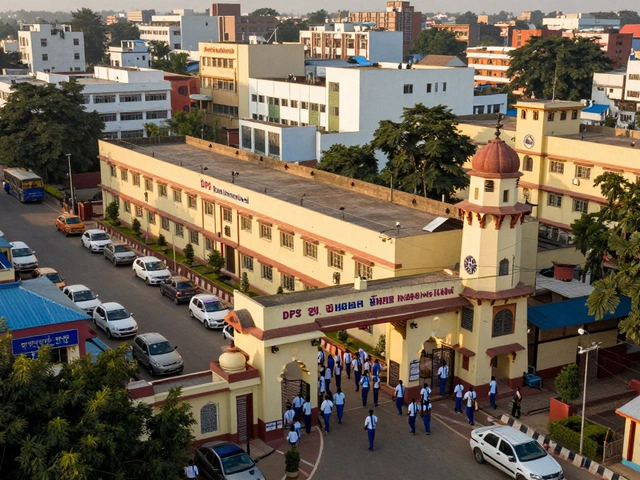
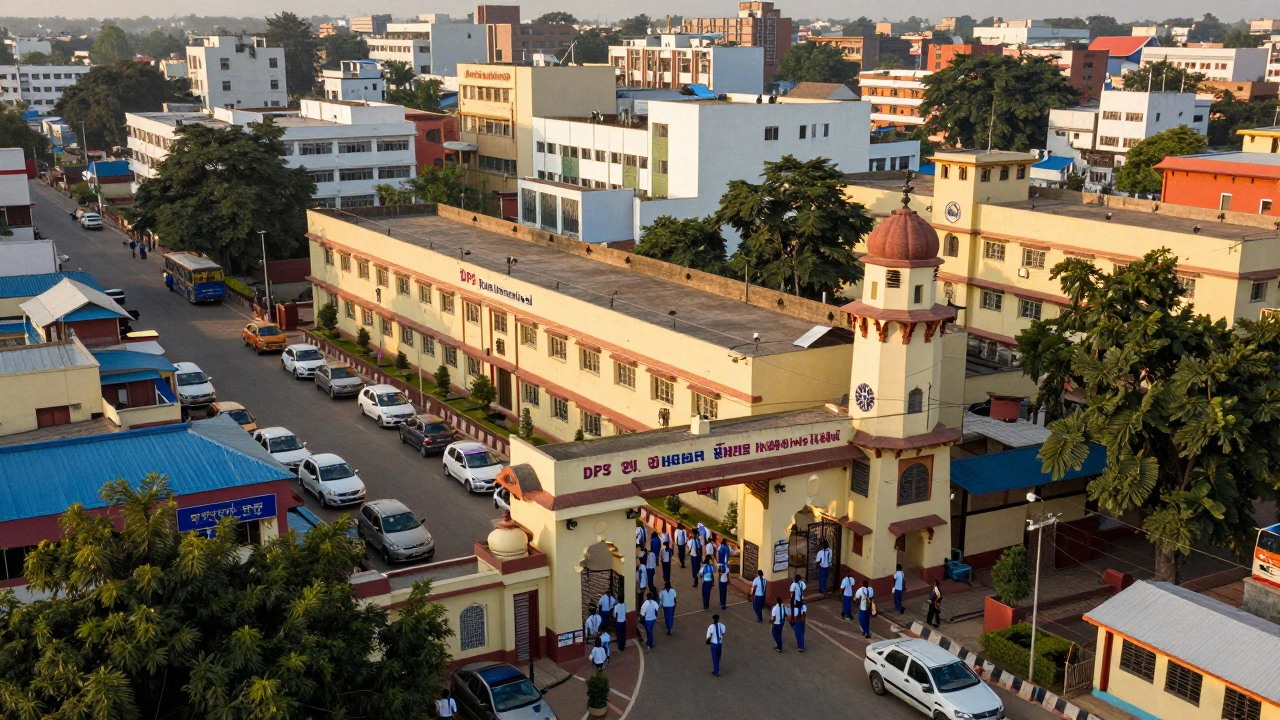
As of 2025, Uttar Pradesh has the highest number of CBSE-affiliated schools in India - more than 4,500. That’s nearly one in every six CBSE schools in the entire country. The state’s massive population, urbanization, and strong demand for standardized education have driven this growth. Cities like Lucknow, Kanpur, Agra, and Ghaziabad are packed with CBSE schools, many of them run by private trusts or chains like DPS, St. Xavier’s, and Ryan International.
Why so many? The answer lies in demographics and mobility. Uttar Pradesh has over 240 million people - more than any country in the world except India and China. Families move frequently for jobs, especially in the service and manufacturing sectors. CBSE’s national curriculum makes it easier for students to transfer between states without losing academic continuity. That’s a huge selling point for parents.
Why CBSE Is So Popular Across India
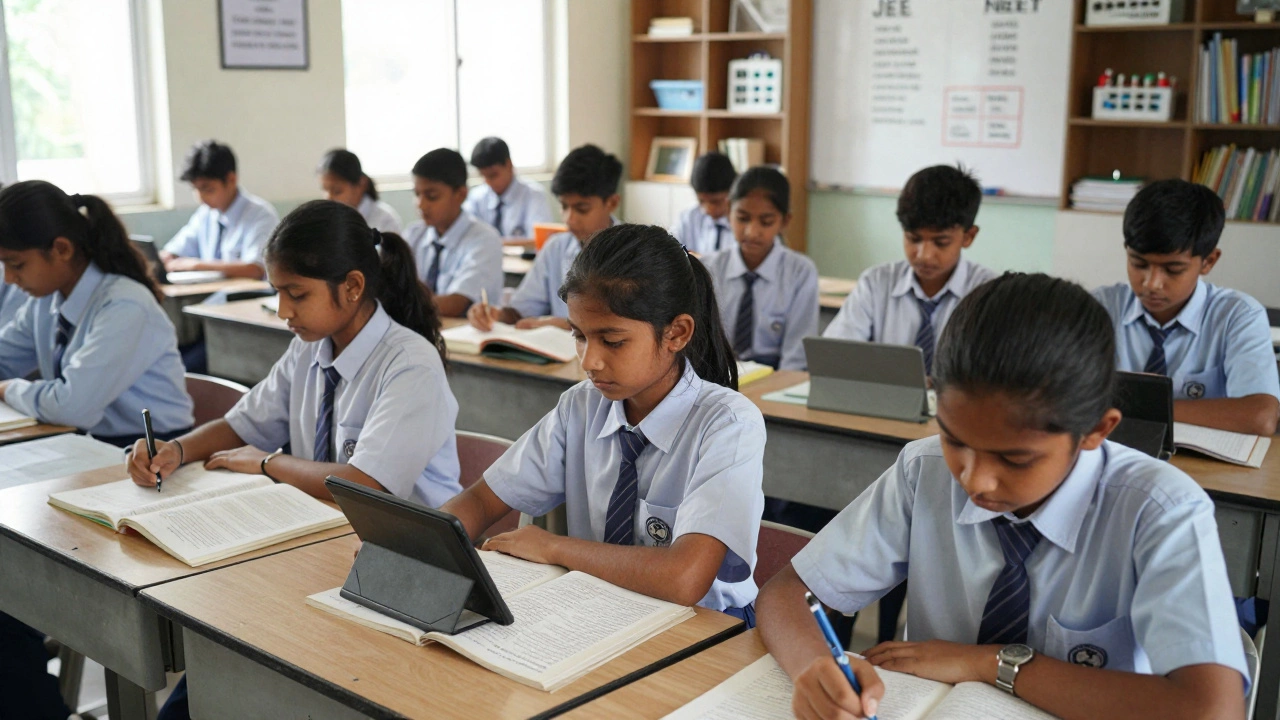
CBSE isn’t just popular in Uttar Pradesh - it’s the go-to board for families across India. Its syllabus is designed with national exams in mind, especially the JEE and NEET. That’s why so many parents choose it, even if they live far from Delhi, where CBSE is headquartered. The board also updates its curriculum regularly to match global standards, and it offers flexibility in subject choices from Class 9 onwards.
Unlike state boards that focus heavily on regional languages and local history, CBSE uses English as the primary medium of instruction. This gives students an edge in competitive exams and higher education. Plus, CBSE schools are more likely to have labs, digital classrooms, and extracurricular programs - features that appeal to middle- and upper-income families.
Other States with High CBSE School Counts
While Uttar Pradesh tops the list, it’s not alone. Here are the next four states with the most CBSE schools as of 2025:
- Delhi: Over 1,800 schools - the highest density per square kilometer. Many are located in suburban areas like Gurgaon and Noida, which are technically in Haryana but fall under Delhi’s educational influence.
- Madhya Pradesh: Around 1,700 schools. Indore and Bhopal have seen rapid growth in private CBSE institutions over the last decade.
- Rajasthan: Nearly 1,600 schools. Jaipur, Udaipur, and Kota are major hubs, especially for students preparing for engineering and medical entrance exams.
- Haryana: About 1,500 schools. Gurgaon alone hosts over 300 CBSE-affiliated schools, many linked to corporate housing colonies.
These five states together account for more than 45% of all CBSE schools in India. That’s a massive concentration. It also means competition among schools is fierce - leading to better infrastructure, more qualified teachers, and higher fees.
What About the South and Northeast?
States like Tamil Nadu, Kerala, and Karnataka have strong education systems, but they favor their own state boards. Tamil Nadu, for example, has over 30,000 schools under the Tamil Nadu State Board, and most parents there don’t see a reason to switch to CBSE unless they plan to move north. Kerala’s education model is deeply rooted in public schooling and literacy campaigns, making state board schools the default choice.
The Northeast sees even fewer CBSE schools. Assam has fewer than 150, and Nagaland has under 50. The reasons are cultural, linguistic, and logistical. Many communities in the Northeast prefer schools that teach in local languages or follow the ICSE or NIOS boards. CBSE’s national focus doesn’t always align with regional identity.
How CBSE Affiliation Works
Not every school that says it’s “CBSE” actually is. To become affiliated, a school must apply directly to CBSE and meet strict standards: minimum land area, qualified staff, laboratory facilities, and a minimum of three years of operation. The board also inspects schools every three years. If a school fails, it loses affiliation.
There are also unaffiliated schools that use the CBSE syllabus without official recognition. These aren’t legitimate and won’t allow students to sit for CBSE board exams. Parents should always check the official CBSE affiliation list on the board’s website before enrolling.
What This Means for Students and Parents
If you’re moving to a new city, choosing a CBSE school in Uttar Pradesh, Delhi, or Haryana gives you the most options. But if you’re in a state with fewer CBSE schools, you might need to travel farther or consider online learning as a supplement.
For students aiming for JEE or NEET, CBSE is still the most direct path. The syllabus matches the exam pattern almost exactly. Many coaching centers in Kota and Delhi design their programs around CBSE textbooks, not state board ones.
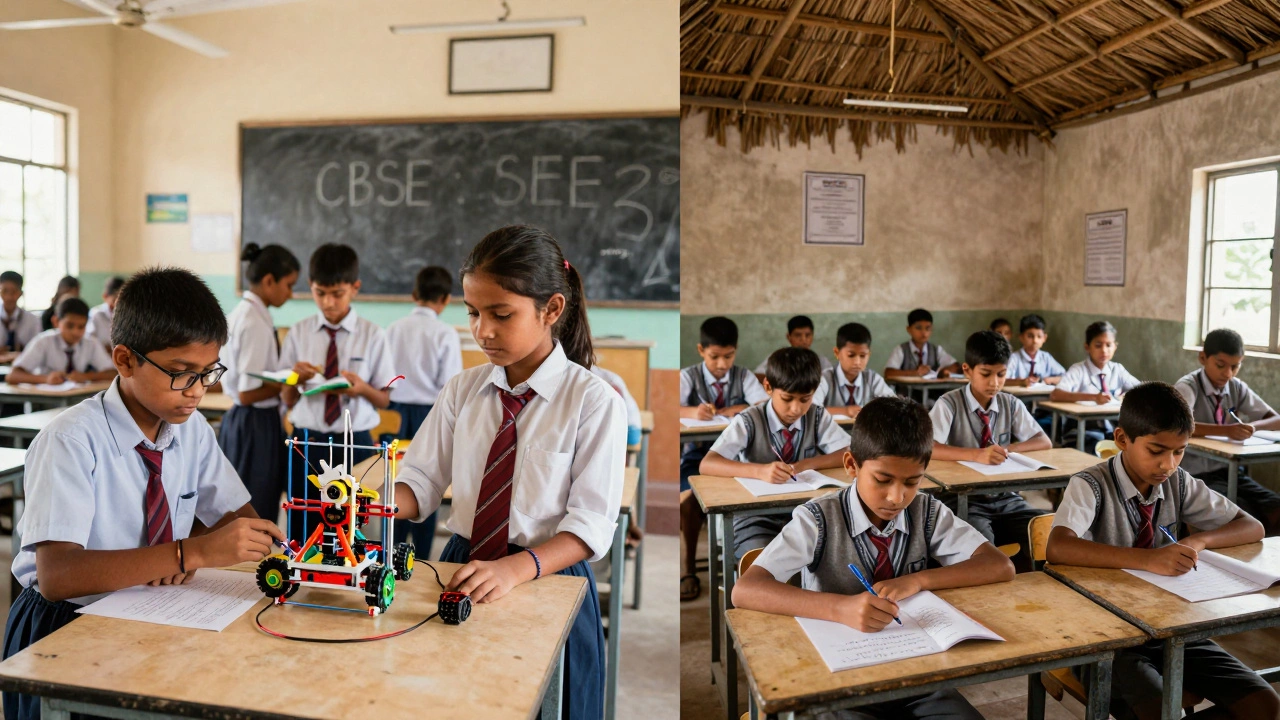
Still, don’t assume more schools means better education. A small CBSE school in a rural area might have fewer resources than a well-funded state board school in a city. Always visit the school, talk to current parents, and check the past three years’ board results.
Future Trends: Growth Slowing, But Still Strong
CBSE’s growth rate has slowed since 2020. Before that, the board added over 1,000 new schools every year. Now, it’s closer to 500-600 per year. Why? Because the market is saturating in the North. New schools are harder to get approved, and parents are starting to ask more questions - about teacher training, student-teacher ratios, and mental health support.
CBSE is responding by pushing for digital integration and competency-based learning. But for now, the numbers haven’t changed much. Uttar Pradesh still leads, and it’s not likely to be dethroned anytime soon.
Is CBSE better than state boards?
It depends on your goals. CBSE is better if you plan to take national exams like JEE, NEET, or CUET, or if you might move states. State boards often have a stronger focus on local culture and language, which can be an advantage if you’re staying in the same region. For most urban families, CBSE offers more flexibility and recognition.
Can I transfer from a state board to CBSE in Class 10?
Yes, but it’s not always smooth. CBSE requires you to submit your previous academic records and may ask you to take a bridging test in English and Science. Some schools accept students mid-year; others only admit at the start of the academic year. Check with the specific school well in advance.
Are CBSE schools more expensive?
Generally, yes. CBSE schools, especially private ones, charge higher fees than most state board schools. In Uttar Pradesh, annual fees can range from ₹40,000 to ₹2,00,000 depending on location and facilities. But many offer scholarships or installment plans. Always compare the full cost - including uniforms, transport, and activity fees.
How do I verify if a school is truly CBSE-affiliated?
Go to the official CBSE website and use their school directory. Enter the school name or city. If it shows up with an affiliation number and validity date, it’s legitimate. If you can’t find it, ask the school for their affiliation certificate. Schools that refuse to show it are likely not authorized.
Does CBSE have more students than ICSE?
Yes, by a large margin. CBSE has over 27,000 schools and serves more than 12 million students annually. ICSE, run by CISCE, has around 2,000 schools and serves about 1.2 million students. CBSE is the most widespread board in India, while ICSE is more common in metros and among families seeking a more literature-focused curriculum.
Final Thoughts: It’s Not Just About Numbers
Uttar Pradesh has the most CBSE schools - no doubt. But having more schools doesn’t automatically mean better education. What matters is the quality of teaching, the support systems in place, and whether the school fits your child’s learning style. A small, well-run CBSE school in a Tier-2 city might give your child more attention than a crowded one in Lucknow.
If you’re choosing a school, don’t just follow the crowd. Look at results, talk to teachers, and ask about student well-being. The number of CBSE schools in a state tells you about demand - but your child’s success depends on what happens inside the classroom, not how many schools there are outside.