
NEET Biology Difficulty & Strategy Quiz
Assess your understanding of the most challenging units in NEET Biology based on recent trends and cognitive load analysis.
Loading question...
Quiz Complete!
Your Score: 0/5
Keep practicing!
Key Takeaways:
- Genetics: Focus on logic and calculations (Pedigrees, Hardy-Weinberg).
- Human Physiology: Use mnemonics for enzymes and hormones; avoid confusion between similar processes.
- Plant Physiology: Draw diagrams repeatedly (Calvin Cycle, C3/C4 pathways) to visualize abstract concepts.
- Strategy: Don't skip hard chapters due to time fear; they carry high weightage (e.g., ~10-12% from Genetics alone).
Ask any medical aspirant who cracked NEET last year, and they’ll likely give you two answers for the hardest part of Biology. One will say Genetics and Evolution. The other will swear by Human Physiology. It’s not just about memorizing facts; it’s about how your brain processes the information. If you’re staring at a syllabus sheet wondering where to dump your extra hours, you need to understand why these specific chapters trip students up while others feel like free marks.
Here’s the truth: "toughness" in NEET isn’t uniform. For some, the abstract logic of Mendelian crosses causes more panic than the detailed anatomy of the heart. For others, visualizing DNA replication is easy, but recalling the exact steps of the Krebs cycle under time pressure is a nightmare. This guide breaks down the real difficulty levels based on cognitive load, question patterns from recent NTA papers, and common student pitfalls. We aren’t just listing hard topics; we’re showing you how to tackle them so they stop being scary monsters.
The Heavyweight Champion: Genetics and Evolution
If there is one unit that consistently lowers average scores, it’s Genetics and Evolution. This section isn't hard because the words are difficult. It’s hard because it requires application, not just recall. You can’t bluff your way through a dihybrid cross if you don’t understand independent assortment. The questions here often involve calculations-probability, allele frequencies, Hardy-Weinberg equilibrium-and these eat up precious minutes during the exam.
Why does this chapter hurt so much? First, it builds on itself. If you miss the concept of linkage in Class 12, you’ll struggle with genetic disorders later. Second, the National Testing Agency (NTA) loves twisting standard questions. Instead of asking "What is the phenotype ratio?", they might describe a pedigree chart with missing data and ask you to deduce the mode of inheritance. If you rely on rote learning, you’re stuck. You need logical reasoning skills here.
Pro Tip: Don’t just read NCERT. Solve at least 50 pedigree analysis problems and 30 numerical genetics questions before moving on. If you can solve a problem without looking at the solution manual, you’ve mastered it. Otherwise, you’re just recognizing patterns, not understanding principles.
The Memory Monster: Human Physiology
While Genetics tests your logic, Human Physiology tests your memory capacity and attention to detail. This unit covers digestion, respiration, circulation, excretion, locomotion, neural control, and chemical coordination. It’s massive. And it’s dense.
The challenge here isn’t complexity-it’s volume. You need to remember specific enzymes, their substrates, products, and the pH levels where they work best. For example, do you know exactly which cells secrete renin? Or the specific sequence of events in muscle contraction involving troponin and tropomyosin? These details are scattered across pages in NCERT. Missing one line means losing a mark.
Another trap is confusion between similar processes. Students often mix up the hormonal feedback loops in reproductive physiology or confuse the types of white blood cells and their functions. Since NEET asks assertion-reason type questions frequently, knowing *why* something happens is as important as knowing *what* happens. If you think you know the cardiac cycle, try explaining the pressure changes in the atria and ventricles aloud. If you stumble, you don’t know it well enough.
The Silent Killer: Plant Physiology
Many students underestimate Plant Physiology, thinking plants are simpler than humans. Wrong. This chapter is notorious for its conceptual depth, especially photosynthesis and respiration. Unlike human systems, plant processes are invisible and abstract. You can’t observe glycolysis happening in a leaf in real-time.
The C3, C4, and CAM pathways are classic stumbling blocks. Questions often ask you to differentiate between these cycles based on anatomical structures (Kranz anatomy) and biochemical outcomes. If you haven’t drawn out the Calvin cycle yourself multiple times, you will blank out in the exam hall. Additionally, topics like photoperiodism and vernalization require precise definitions. There’s no room for "close enough" answers here.

Comparing the Difficulty: A Reality Check
To help you prioritize, let’s look at how these chapters compare in terms of effort required versus marks obtained. This table reflects typical student experiences and recent trend analyses from coaching institutes across India.
| Unit | Primary Challenge Type | Average Time per Question | Common Error Source | Strategy Focus |
|---|---|---|---|---|
| Genetics & Evolution | Logical Reasoning & Calculation | High (1.5 - 2 mins) | Misinterpreting pedigrees or ignoring rare cases | Practice numericals daily |
| Human Physiology | Voluminous Memorization | Medium (1 min) | Confusing similar enzymes/hormones | Use flowcharts & mnemonics |
| Plant Physiology | Abstract Conceptualization | Medium-High (1.5 mins) | Mixing up C3/C4 pathways | Draw diagrams repeatedly |
| Ecology | Data Interpretation | Low-Medium (45 secs) | Ignoring graph trends | Focus on graphs & case studies |
Notice that Ecology, often considered "easy," still has a moderate error rate due to graph interpretation. But compared to Genetics, it’s a walk in the park. The key takeaway? Don’t ignore the "hard" units because they take time. They carry significant weightage. Genetics alone accounts for roughly 10-12% of the Biology paper. That’s nearly 40 marks. Losing half of that because you skipped practice problems is a costly mistake.
How to Tackle the Toughest Chapters
You don’t need to be a biology genius to ace these sections. You need a system. Here’s how to break down the barriers:
- For Genetics: Start with monohybrid crosses until you can solve them in your head. Then move to dihybrid. Only then touch sex-linked traits. Use color-coded pens for alleles when drawing Punnett squares. It sounds childish, but it reduces visual clutter and errors.
- For Human Physiology: Group related topics. Study the digestive system right after learning about enzymes in Plant Physiology? No. Study Digestion, Respiration, and Circulation together as "Systemic Functions." Create comparison tables for hormones (e.g., Insulin vs. Glucagon). Write them out by hand, not just type them.
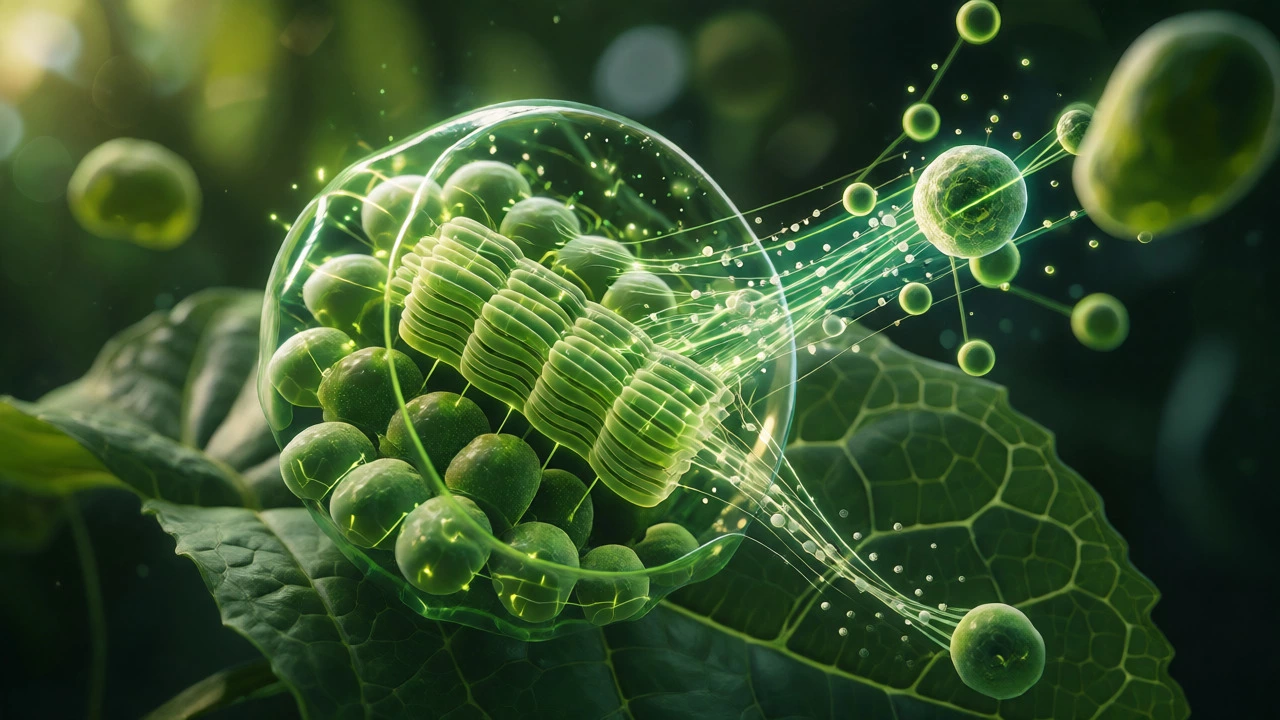
- For Plant Physiology: Visualize the chloroplast. Draw the thylakoid membrane and label every component involved in light reactions. Do the same for mitochondria. When you can draw the structure from memory, the function becomes obvious.
Also, leverage active recall. Close your book and explain the process of urine formation to an imaginary five-year-old. If you use jargon like "glomerular filtration" without simplifying it, you don’t truly understand it. Teaching forces clarity.
It’s Not Just About Knowledge, It’s About Stamina
One reason these chapters feel tough is fatigue. By the time you reach the end of the Biology section in NEET, you’ve already spent 45 minutes on Physics and Chemistry. Your brain is tired. Complex questions from Genetics or detailed recall from Physiology become harder when you’re mentally drained. This is why practicing full-length mock tests is non-negotiable. You need to train your brain to handle complex biological reasoning when it’s already working overtime.
Moreover, time management plays a huge role. If you spend 3 minutes on a tricky genetics problem, you might rush through easier ecology questions and make silly mistakes. Learn to flag difficult questions and return to them later. In NEET, securing easy marks quickly boosts confidence and frees up mental energy for the hard stuff.
Frequently Asked Questions
Is Genetics really harder than Organic Chemistry?
For many students, yes. While Organic Chemistry involves reaction mechanisms, Genetics involves probability and logic puzzles that can have multiple interpretations if you’re not careful. However, once the logic clicks, Genetics can be faster to solve than lengthy chemistry derivations. It depends on whether you prefer spatial/logical thinking or pattern recognition.
Should I skip difficult parts of Human Physiology if I’m short on time?
No. Human Physiology is high-weightage. Instead of skipping, focus on high-yield sub-topics like Neural Control, Chemical Coordination, and Reproduction. These areas appear most frequently. You can skim through less frequent topics like Locomotion if necessary, but never skip core systems entirely.
How many questions come from Genetics in NEET?
Typically, 6-8 direct questions appear from Genetics and Evolution combined. However, indirect applications may appear in other units. Given that each correct answer is worth 4 marks, this unit can contribute 24-32+ marks. It’s too valuable to neglect.
Does NCERT cover everything needed for these tough chapters?
NCERT is the bible, but for Genetics, you often need additional practice problems beyond the textbook exercises to build speed and accuracy. For Physiology, stick strictly to NCERT lines, including diagrams and captions. External sources can sometimes introduce unnecessary complexity that doesn’t align with NTA’s marking scheme.
Which chapter is easiest for scoring full marks?
Biology in Human Welfare and Biotechnology: Principles and Processes are generally considered easier because they are fact-based and shorter. However, even these require precise recall. Don’t assume any chapter is "free" marks; treat all equally with respect.
Next Steps for Your Preparation
Don’t let fear paralyze you. Pick one "tough" chapter today. Spend 45 minutes solving previous year questions specifically from that topic. Identify exactly where you got stuck. Was it a calculation error? A forgotten fact? A misunderstood concept? Once you diagnose the specific weakness, target it directly. Consistency beats intensity. Twenty minutes of focused Genetics practice every day is better than four hours of cramming once a week. Keep going-you’ve got this.