Indian Education Board Suitability Finder
Answer these questions to find your ideal board.
Your Recommendation
Complete the quiz
Please answer the questions on the left to see which board aligns best with your profile.
- ✓ Waiting for input...
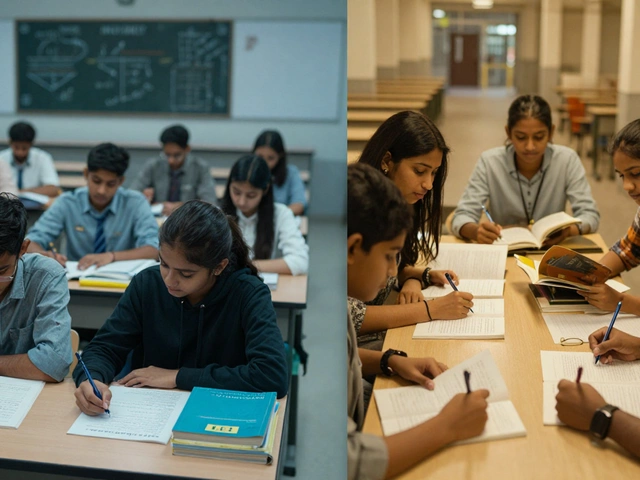
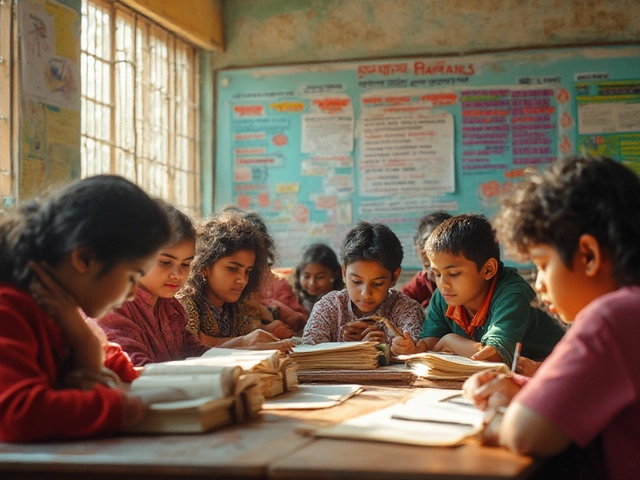
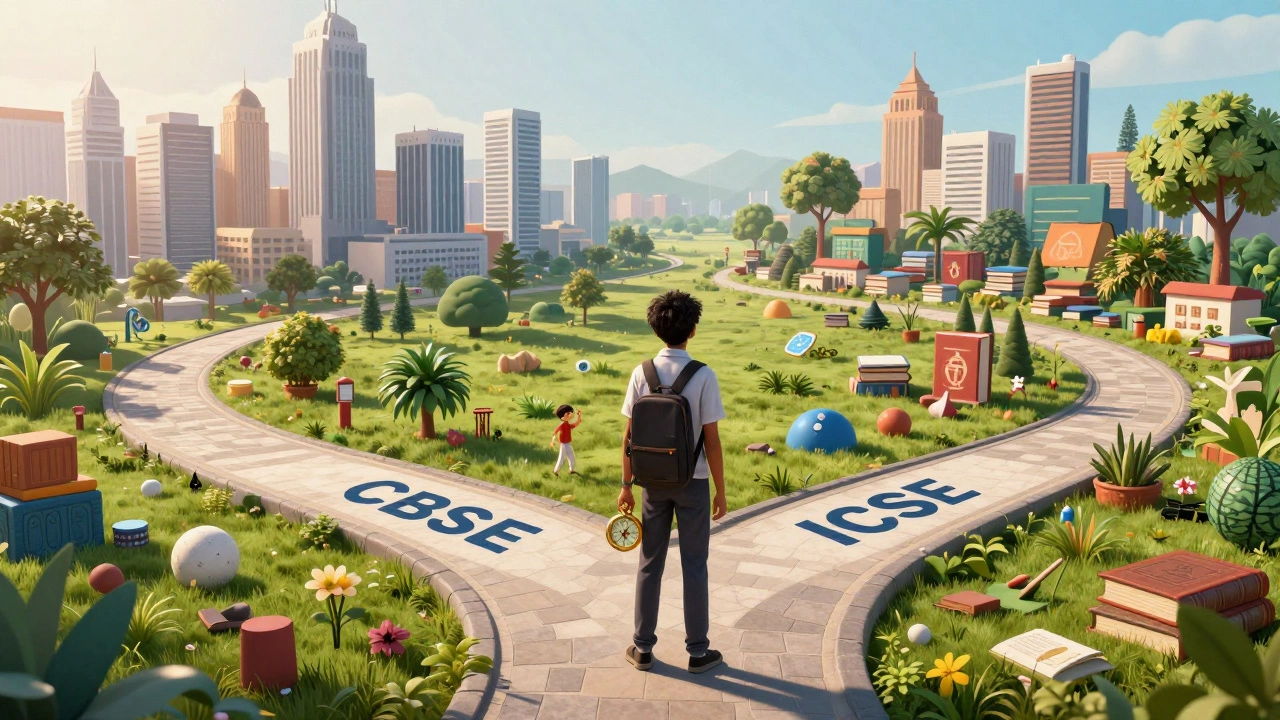
Every parent and student in India faces a critical question early on: which education board offers the best foundation for higher studies? The debate often centers on one specific claim-which is the toughest board in India? While "difficulty" is subjective, the consensus among educators and competitive exam experts points to two primary contenders: the Central Board of Secondary Education (CBSE) and the Council for the Indian School Certificate Examinations (CISCE, commonly known as ICSE). However, the answer isn't just about who has harder questions; it's about the structure, depth, and pressure associated with each system.
The Core Contenders: CBSE and ICSE
To understand why these two boards are frequently labeled as the toughest, we need to look at their underlying philosophies. CBSE is the largest educational board in India, affiliated with thousands of schools across the country and designed primarily to prepare students for national-level competitive entrance exams like JEE and NEET. Its curriculum is streamlined, focused, and heavily aligned with the patterns of these high-stakes tests.
In contrast, ICSE is a board known for its comprehensive, detailed, and literature-rich curriculum that emphasizes holistic development, language proficiency, and conceptual clarity over rote memorization. While CBSE students might find their path clear but narrow, ICSE students often navigate a broader, deeper academic landscape that requires significant time management and intellectual versatility.
Why CBSE is Considered Tough: The Competitive Pressure
If you ask a student preparing for engineering or medical entrance exams, they will likely point to CBSE as the most challenging. Why? Because the CBSE syllabus is not just about passing school exams; it is a direct pipeline to India's most cutthroat competitive landscapes.
- Alignment with JEE and NEET: The CBSE physics, chemistry, and mathematics papers closely mirror the concepts tested in the Joint Entrance Examination (JEE) and National Eligibility cum Entrance Test (NEET). This means students cannot simply study for their board exams; they must simultaneously prepare for these national tests, effectively doubling their workload.
- Numerical Accuracy: CBSE marking schemes are strict. In subjects like Mathematics and Physics, a small calculation error can cost marks. There is little room for partial credit if the final answer is incorrect, forcing students to maintain high precision under time pressure.
- Standardized Rigor: Since CBSE is followed by nearly all top coaching institutes in cities like Kota and Delhi, the pace of teaching is accelerated. Students are expected to grasp complex concepts quickly, leaving little time for leisure or extracurricular exploration during peak exam seasons.
The toughness here lies in the external pressure. The board itself provides a standard framework, but the ecosystem surrounding it demands excellence that goes far beyond the syllabus.
Why ICSE is Considered Tough: Depth and Breadth
On the other hand, many educators argue that ICSE is academically tougher because of its sheer volume and depth. The ICSE syllabus is famously detailed. A single chapter in an ICSE textbook might take three weeks to cover, whereas the same topic in CBSE might be covered in a week.
- Literature and Language Focus: ICSE places immense emphasis on English language skills, literature, and composition. Students are required to read extensive texts, write long essays, and demonstrate nuanced understanding. This linguistic demand adds a layer of difficulty that science-focused boards often lack.
- Conceptual Clarity: ICSE questions are rarely straightforward. They often require multi-step reasoning and application of concepts in novel situations. Rote learning, which might work for some CBSE topics, fails miserably in ICSE examinations.
- Internal Assessments: Unlike CBSE, where the final board exam carries the most weight, ICSE includes significant internal assessments and project work throughout the year. This means students cannot cram at the last minute; they must maintain consistent performance over two years.
The challenge with ICSE is internal rigor. It demands a higher level of engagement with the material, making it exhausting for students who prefer quick, formulaic approaches to studying.
State Boards: The Hidden Challenge
While the CBSE-ICSE debate dominates urban conversations, we cannot ignore the State Boards, such as Maharashtra State Board, Tamil Nadu State Board, or West Bengal Board. For many students, these boards present unique difficulties.
State boards often face challenges related to resource disparity. In rural areas, students may lack access to quality coaching materials, updated textbooks, or experienced teachers. Furthermore, the transition from a state board to a national competitive exam can be jarring. Students from state boards often find that the CBSE-aligned JEE/NEET pattern is significantly different from what they studied, requiring them to bridge a massive gap in preparation.
However, in terms of pure academic content, most state boards follow a similar NCERT-based structure for science and math. Their "toughness" often stems from administrative inconsistencies, delayed result declarations, and varying standards across different districts rather than the syllabus itself.
| Feature | CBSE | ICSE | State Boards |
|---|---|---|---|
| Syllabus Depth | Moderate, focused on core concepts | Very deep, extensive coverage | Varies by state, generally moderate |
| Exam Pattern | Direct questions, numerical accuracy key | Application-based, descriptive answers | Mix of direct and application questions |
| Competitive Exam Alignment | High (JEE/NEET) | Low (requires extra prep) | Low (requires extra prep) |
| Language Emphasis | Basic English proficiency | Advanced English and Literature | Regional languages + English |
| Assessment Method | Final board exam dominant | Continuous internal assessment | Varies, often final exam dominant |
The Role of Coaching Institutes
A crucial factor in determining the "toughness" of a board is the influence of private coaching institutes. In India, particularly in hubs like Kota, Patna, and Hyderabad, students enrolled in CBSE schools often attend rigorous coaching programs for JEE or NEET. This creates a dual-curriculum scenario where students are taught the same subject twice: once in school and once in coaching.
This phenomenon makes CBSE feel tougher because the expectation is not just to pass the board exam but to rank in the top percentile nationally. For ICSE students, while coaching exists, it is less standardized. Many ICSE students rely more on their school education, which can be both a blessing (less burnout) and a curse (less exposure to competitive problem-solving techniques).
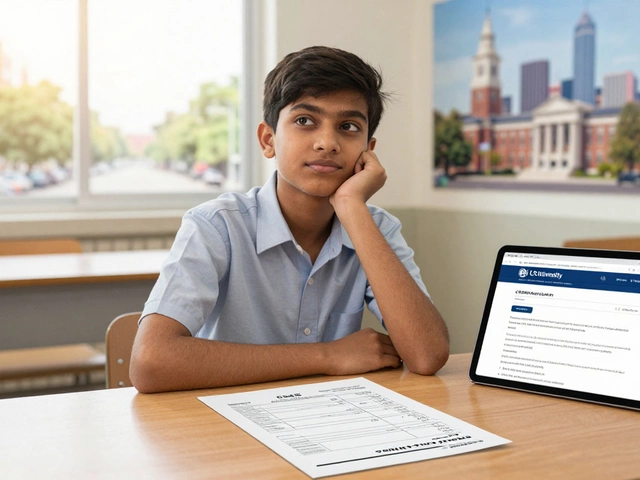
Which Board is Right for You?
Choosing between CBSE and ICSE shouldn't be based solely on which one is "harder." It should depend on your career goals and learning style.
Choose CBSE if:
- You are aiming for IITs, AIIMS, or other top-tier engineering and medical colleges.
- You prefer a structured, predictable exam pattern.
- You want a curriculum that aligns directly with national competitive exams.
- You thrive under pressure and enjoy solving numerical problems.
Choose ICSE if:
- You value a well-rounded education with strong language and literary skills.
- You prefer deep conceptual understanding over quick problem-solving.
- You are interested in fields like humanities, law, journalism, or international business.
- You dislike the high-pressure, coaching-centric environment of CBSE.
Conclusion: Difficulty is Contextual
So, which is the toughest board in India? If you measure difficulty by the amount of content and the demand for analytical writing, ICSE wins. If you measure difficulty by the intensity of competition and the stakes involved in every exam, CBSE takes the crown. State boards offer a different kind of challenge, often related to resources and transition gaps.
Ultimately, no board is inherently "easy" or "hard." The difficulty arises from how well the student engages with the material and prepares for their future goals. Whether you choose CBSE, ICSE, or a state board, success depends on consistency, curiosity, and strategic planning-not just the name of the board on your certificate.
Is CBSE easier than ICSE?
CBSE is generally considered easier in terms of syllabus volume and exam pattern, as it focuses on core concepts and direct questions. However, it becomes tougher when combined with competitive exam preparation like JEE or NEET. ICSE has a more extensive syllabus and demands deeper conceptual understanding, making it academically rigorous but less aligned with national entrance exams.
Which board is better for engineering aspirants?
CBSE is widely regarded as the best board for engineering aspirants because its syllabus closely matches the JEE Mains and Advanced pattern. This alignment reduces the need for separate coaching for basic concepts, allowing students to focus on advanced problem-solving techniques.
Can I switch from ICSE to CBSE in Class 11?
Yes, you can switch from ICSE to CBSE in Class 11. Many students do this to better align with competitive exam preparations. However, you may need to adapt to a different teaching style and exam pattern, so starting early and seeking guidance from mentors is recommended.
Are state boards recognized for college admissions?
Yes, all state boards are recognized by the University Grants Commission (UGC) and major universities in India. However, students from state boards often need additional preparation to compete in national entrance exams like JEE or NEET, as their syllabi may not fully cover the required depth.
Which board has higher marks?
ICSE students often score higher marks due to the detailed evaluation criteria and internal assessments. However, CBSE has implemented normalization processes to ensure fairness. High scores in either board are respected, but admission to top colleges depends more on competitive exam ranks than board percentages.