CBSE to US GPA Estimator
Estimate Your US Grade Point Average
Enter your percentage to see the estimated US GPA conversion.
Quick Conversion Guide:
| CBSE % Range | Estimated GPA | US Grade |
|---|---|---|
| 90% - 100% | 3.7 - 4.0 | A / A+ |
| 80% - 89% | 3.0 - 3.6 | B+ / A- |
| 70% - 79% | 2.0 - 2.9 | B / B- |
| 60% - 69% | 1.0 - 1.9 | C / C+ |
| Below 60% | Below 1.0 | D / F |
Quick Summary: What You Need to Know
- CBSE is widely recognized by US universities and high schools.
- You will likely need a credential evaluation (like WES) to translate your percentages into a US GPA.
- Standardized tests like the SAT or ACT often carry more weight than board percentages.
- High school transfers usually require a transcript review to determine grade placement.
Understanding CBSE Acceptance in the US
First, let's get the basics straight. CBSE is the Central Board of Secondary Education, a national level board of education in India for public and private schools. In the United States, education is decentralized, meaning there is no single national board. Instead, they have state boards and accreditation bodies. Because of this, US universities do not see CBSE as a "competitor" or a foreign anomaly; they see it as a valid secondary school diploma.
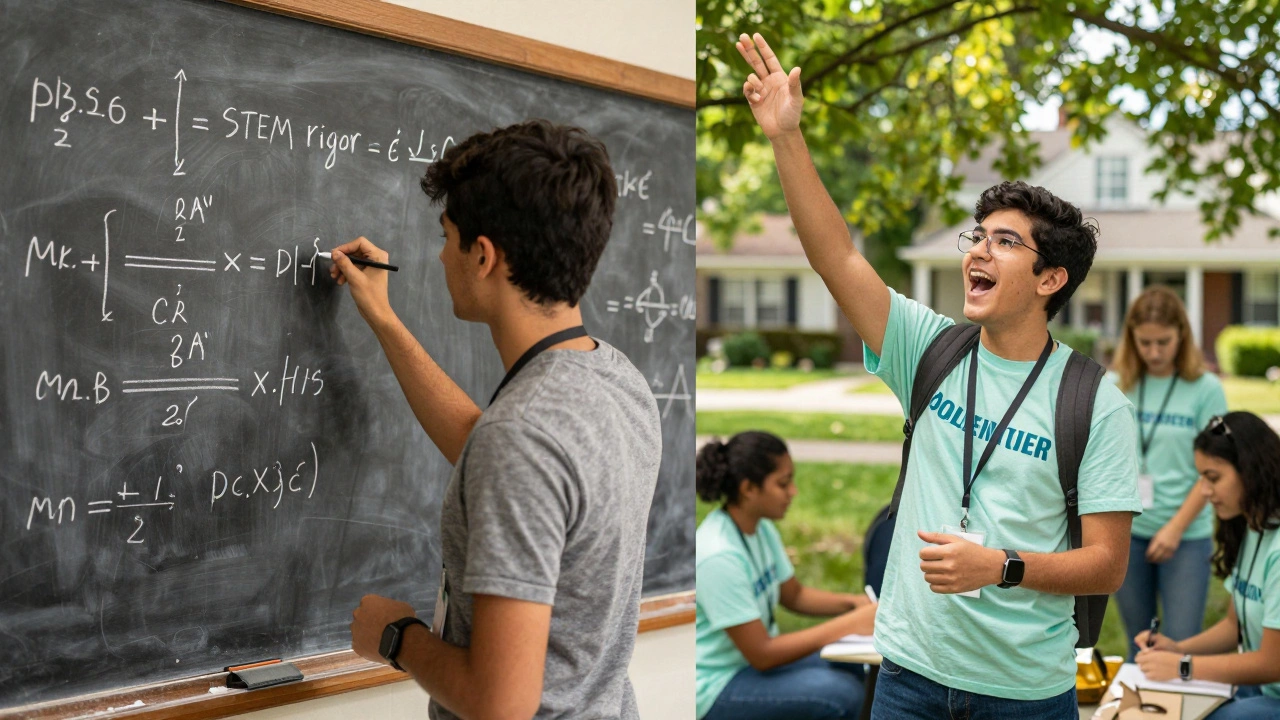
When you apply to a college in the US, the admissions officer isn't looking for a specific board name. They are looking for proof that you completed 12 years of formal schooling. Since CBSE provides a standardized, rigorous framework, it actually gives you a bit of an edge in STEM subjects. Most US admissions officers are familiar with the Indian system, especially at larger institutions like Harvard, Stanford, or the University of California system, which process thousands of applications from South Asia every year.
The GPA Gap: Translating Percentages to Points
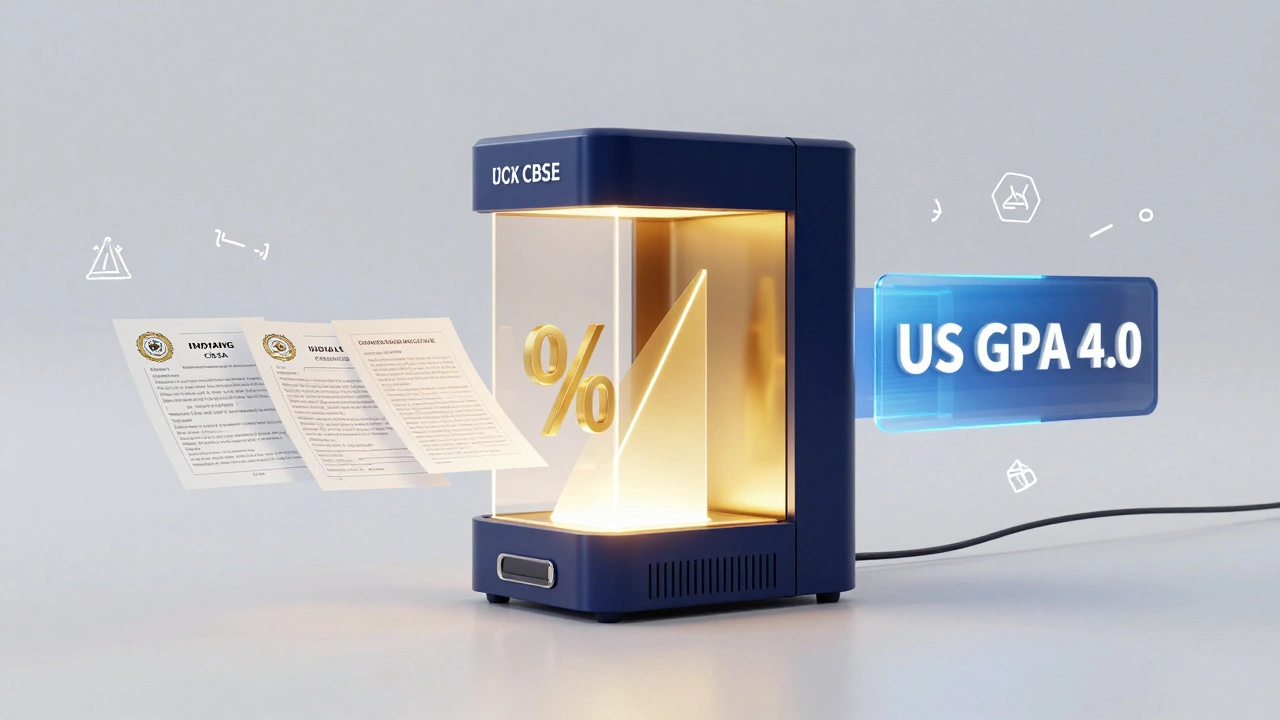
Here is where things get tricky. In India, you are used to seeing a percentage (e.g., 85% or 92%). In the US, students live and die by the GPA (Grade Point Average), usually on a scale of 4.0. A US university won't just look at your 90% and say "Great!" They need to know if that 90% in a CBSE Physics class is equivalent to an 'A' in an Advanced Placement (AP) course in New York.
To bridge this gap, you often need a credential evaluation. This is where organizations like WES (World Education Services) come in. WES is a non-profit organization that provides academic credential evaluations for international students. They take your original CBSE transcripts and "translate" them into the US equivalent. For example, they might determine that your CBSE Class 12 diploma is equivalent to a US High School Diploma. Without this, your application might get stuck in a bureaucratic loop where the university simply doesn't know how to categorize your marks.
| Feature | CBSE (India) | US High School |
|---|---|---|
| Grading System | Percentages / CGPA | GPA (usually 4.0 scale) |
| Curriculum Focus | Highly standardized, textbook-heavy | Flexible, elective-based |
| Exit Exam | Board Exams (Class 10 & 12) | Credits accumulated over 4 years |
| Standardized Tests | JEE, NEET (for higher ed) | SAT, ACT (for college entry) |
Transferring to a US High School
If you are moving to the US before finishing Class 12, you aren't applying to a university; you are applying for school admission. This is a different ballgame. US high schools don't have a "central board." You will be placed in a school based on your home address (your school district). The principal or guidance counselor will look at your CBSE marks to decide which grade you enter.
Usually, a student who has completed Class 9 in India is placed in 10th grade in the US. However, be prepared for a culture shock in the classroom. CBSE is often about rote learning and deep theoretical knowledge in science and math. US schools focus more on critical thinking, projects, and extracurriculars. You might find US math surprisingly easy if you've survived CBSE, but you might struggle with the open-ended essay requirements in US English classes. Pro tip: bring your detailed syllabus from your last school. It helps the US counselor see exactly what topics you've covered, which prevents you from repeating a year of study unnecessarily.
The Role of Standardized Testing
Since CBSE marks can vary wildly between different schools and regions, US colleges love a "common denominator." This is where the SAT and ACT come into play. These tests act as a leveler. If you have a decent CBSE score but a top-tier SAT score, it proves to the university that your academic ability is consistent with the best students globally, regardless of which board you studied under.
Many CBSE students find the Math section of the SAT quite manageable because the Indian curriculum is generally more advanced in algebra and geometry. However, the Reading and Writing sections can be a challenge. To maximize your CBSE acceptance USA chances, don't just rely on your board marks. A strong SAT score combined with a WES-evaluated transcript makes you a much more competitive candidate.
Common Pitfalls to Avoid
One of the biggest mistakes students make is assuming that a "First Division" or 90%+ automatically grants them admission. US admissions are holistic. They don't just look at the numbers; they look at the person. They want to see your "spike"-the thing you are exceptionally good at. If you only have high CBSE marks but zero sports, no volunteering, and no hobbies, you might lose out to a student with 75% who started a non-profit or plays an instrument at a professional level.
Another trap is the timing of transcripts. CBSE results often come out later than US school cycles. Ensure you provide "predicted grades" if your school offers them, or send your Class 10 and 11 marks as interim proof. If you wait until the official Class 12 mark sheet arrives in June, you might miss the application deadlines for many US programs.
Practical Steps for a Smooth Transition
If you are planning this move, stop guessing and start organizing. Here is a checklist to keep you on track:
- Gather Documents: Collect original mark sheets for Class 9, 10, and 11. Get them stamped by your school principal.
- Verify the Evaluation: Check if your target university requires a specific agency for evaluation (e.g., WES, ECE, or Scholar specialize).
- Prepare the "School Profile": Since US officers might not know your specific school in India, have your counselor write a brief description of the school's grading rigor and average class sizes.
- Focus on Extracurriculars: Start documenting your achievements outside the classroom. A certificate from a local NGO or a trophy from a district-level debate is gold in a US application.
- Plan Your Tests: Schedule your SAT/ACT at least a year before you plan to enroll to allow time for retakes.
Do I need to redo my 12th grade if I move to the US in Class 12?
Not necessarily, but it depends on the school district. Most US schools will accept your Class 11 marks and place you in 12th grade. However, because the US system is credit-based, you might be required to take a few extra 'bridge' courses to meet local graduation requirements for a US diploma.
Is CBSE considered "harder" than the US curriculum?
In terms of theoretical depth-especially in Mathematics and Science-CBSE is often considered more rigorous. However, the US curriculum is often seen as more comprehensive in terms of critical thinking, research, and practical application. US universities recognize the strength of CBSE in STEM.
Can I apply to US colleges with just CBSE marks?
Yes, you can, but it's risky. While some colleges may accept them, most will request a credential evaluation to understand how those marks translate to their system. Additionally, without SAT or ACT scores, your profile may be less competitive compared to other international students.
What is the best way to get my CBSE marks evaluated?
The gold standard is using World Education Services (WES). You typically need to have your board send the transcripts directly to WES, or you upload them via their secure portal. Once they verify the documents, they provide a report that translates your Indian grades into a US GPA.
Will I be behind in my classes if I transfer from CBSE?
In Math and Science, you'll likely be ahead. In English, History, or Social Studies, you might find the US approach-which relies heavily on essays and debate-challenging at first. Most students adapt within a few months once they get used to the style of assessment.
Next Steps and Troubleshooting
If you are currently in the middle of your 11th or 12th grade, your immediate priority is to check the "International Admissions" page of the universities you are interested in. Every college has slightly different rules. Some might not require a WES evaluation if they have an internal team that handles Indian transcripts.
If you encounter a situation where a school says they "don't recognize" CBSE, don't panic. This is usually a communication error. Provide them with a link to the official CBSE website or a sample mark sheet. Explain that it is a national board recognized by the Government of India. In 99% of cases, once the administration sees the official documentation, the "lack of recognition" disappears.