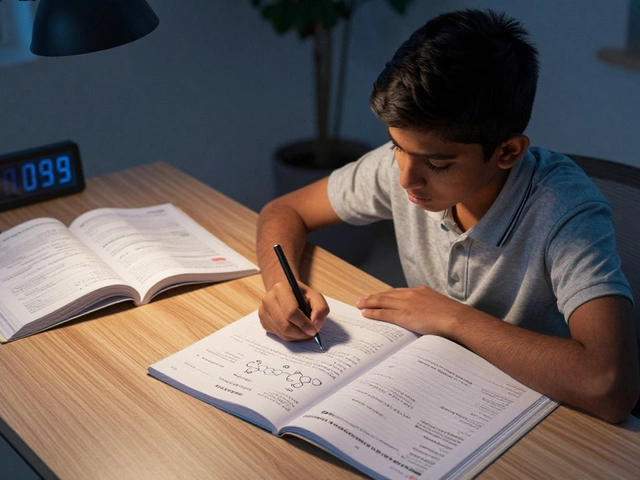
IIT JEE Preparation Timeline Planner
Your Current Profile
Recommended Strategy
Click "Generate My Plan" to see your personalized preparation strategy
Every student aiming for an Indian Institute of Technology (IIT) faces the same anxiety: when should you actually begin? The pressure from peers and coaching centers often suggests starting early, but timing is everything. Starting too late leaves you rushing through concepts, while starting too early can lead to burnout before you even reach the exam hall. IIT JEE preparation is a long-term strategic process that requires balancing school curriculum with advanced problem-solving skills. It is not just about studying harder; it is about studying smarter at the right time.
The short answer is that 2026 marks a pivotal year for many students. If you are currently in Class 9, you are building the foundation. If you are in Class 10, you are transitioning. And if you are in Class 11, the clock is ticking. This guide breaks down exactly which class is the best time to start preparing for the Joint Entrance Examination (JEE), based on your current academic standing and learning style.
The Case for Starting in Class 9: Building the Base
Many top rankers trace their success back to Class 9. At this stage, you are not expected to solve complex JEE-level problems. Instead, the focus is on conceptual clarity. Mathematics, Physics, and Chemistry in Class 9 introduce fundamental laws and algebraic techniques that form the backbone of engineering entrance exams.
- Conceptual Depth: You learn Newton’s Laws of Motion, basic Algebra, and periodic table trends. Understanding these deeply prevents gaps later.
- Habit Formation: Establishing a daily study routine now makes the intense workload of Class 11 manageable.
- Competitive Exposure: Participating in olympiads like the National Standard Examination in Physics (NSEP) or Mathematics (NSEJS) builds confidence.
If you start in Class 9, avoid joining rigorous JEE coaching modules immediately. Instead, use NCERT textbooks as your primary source. Supplement them with reference books like R.D. Sharma for Mathematics or H.C. Verma for Physics only if you finish your school syllabus easily. The goal here is curiosity, not competition.
Class 10: The Transition Year
Class 10 is often treated as a gap year between school and high school academics. However, it is the perfect time to bridge the gap between school-level understanding and competitive exam readiness. After completing board exams, students have several months free. This period is crucial for strengthening weak areas.
During the summer break after Class 10, you should:
- Revise all Mathematics topics from Classes 9 and 10, focusing on Trigonometry and Coordinate Geometry.
- Start reading introductory chapters of Class 11 Physics, such as Units and Measurements or Kinematics.
- Develop speed in calculation by practicing mental math and avoiding calculators.
Joining a pre-JEE foundation course during this summer is beneficial if you plan to join a full-time coaching institute in Class 11. These courses cover the basics of Mechanics, Organic Chemistry, and Calculus, giving you a head start. Without this preparation, jumping into Class 11 JEE material can feel overwhelming.

Class 11: The Critical Window
For most students, Class 11 is the official start of serious JEE preparation. This is because the syllabus for JEE Main and Advanced largely aligns with Class 11 and 12 curricula. Approximately 60-70% of the weightage comes from Class 11 topics alone.
Key reasons why Class 11 is the standard starting point:
- Syllabus Overlap: Topics like Rotational Motion, Electrostatics, and Thermodynamics are introduced here and are heavily tested.
- Coaching Modules: Most reputable institutes release their first-year modules aligned with Class 11 boards.
- Time Management: You have two years to complete the syllabus twice-once for learning and once for revision.
If you are in Class 11 now, do not wait. Join a structured program or create a self-study plan immediately. Balance is key; neglecting board exams for JEE prep is a common mistake. Your board scores matter for college admissions elsewhere, and a strong grasp of board concepts ensures you don’t miss foundational details.
Class 12: The Crash Course Approach
Starting preparation in Class 12 is risky but possible. Many students choose this path due to personal circumstances or late realization of their goals. In this scenario, every month counts. You must prioritize high-weightage topics and skip low-yield ones.
A strategic approach for Class 12 starters includes:
| Subject | High Weightage Topics | Strategy |
|---|---|---|
| Physics | Modern Physics, Semiconductors, Current Electricity | Focus on theory and direct formula application |
| Chemistry | Organic Chemistry, General Chemistry, Solutions | Memorize reactions and understand trends |
| Mathematics | Vectors, 3D Geometry, Probability, Matrices | Practice previous year questions extensively |
Students starting in Class 12 should aim primarily for JEE Main rather than JEE Advanced, as the latter requires deeper conceptual mastery built over years. However, with disciplined effort, cracking JEE Main for good NITs or IIITs is achievable.
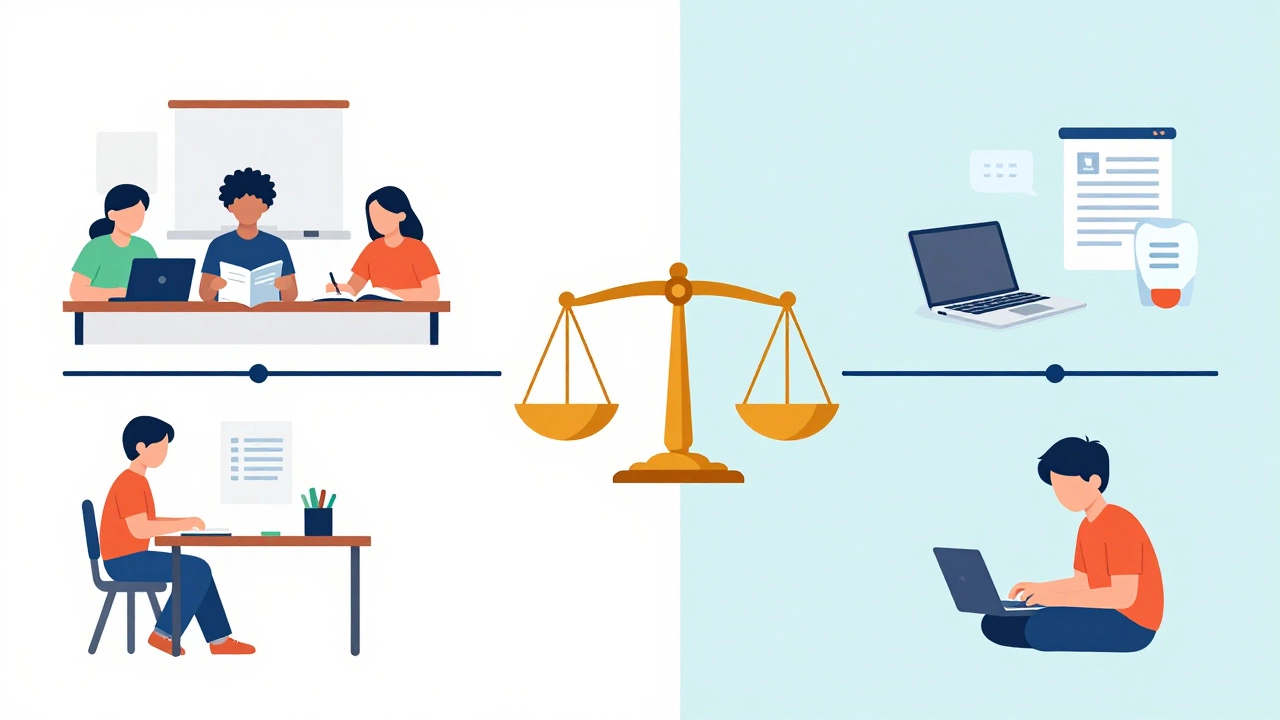
Choosing Between Coaching and Self-Study
Your choice of preparation mode depends on your discipline level and resources. Coaching classes provide structure, peer competition, and regular tests. Institutes like Allen, FIITJEE, and Resonance offer comprehensive materials. However, they can be expensive and rigid.
Self-study offers flexibility and cost-effectiveness. It requires strong self-discipline and access to quality resources. Online platforms like Khan Academy, Unacademy, or YouTube channels by experienced educators can supplement your learning. For self-learners, creating a strict schedule and taking mock tests regularly is non-negotiable.
If you are unsure, try a hybrid approach. Attend classes for difficult topics and self-study for others. Regularly assess your progress through online test series to identify weak areas.
Common Pitfalls to Avoid
Regardless of when you start, certain mistakes can derail your preparation:
- Ignoring NCERT: Especially for Chemistry, NCERT is the bible. Do not rely solely on coaching notes.
- Collecting Too Many Books: Stick to one reference book per subject. Depth matters more than breadth.
- Neglecting Health: Sleep, exercise, and nutrition impact cognitive performance. Burnout is real.
- Comparing Progress: Everyone learns at different speeds. Focus on your own improvement metrics.
Remember, consistency beats intensity. Studying 6 hours daily with focus is better than 12 hours of distracted reading.
Can I crack JEE Advanced if I start preparing in Class 12?
It is extremely challenging but not impossible. JEE Advanced requires deep conceptual understanding built over time. Focus on mastering high-weightage topics and solving previous years' papers. Prioritize JEE Main for broader opportunities.
Is it necessary to join a coaching institute for JEE preparation?
No, it is not mandatory. Many students succeed through self-study using NCERT, reference books, and online resources. Coaching provides structure and peer support, but self-discipline is equally effective if managed well.
How much time should I dedicate to JEE prep in Class 9 and 10?
In Class 9 and 10, dedicate 1-2 hours daily to strengthening fundamentals. Focus on conceptual clarity rather than solving complex problems. Use holidays for intensive revision and introductory reading of Class 11 topics.
What are the best reference books for JEE preparation?
For Physics, H.C. Verma and D.C. Pandey are excellent. For Chemistry, O.P. Tandon and Morrison & Boyd are recommended. For Mathematics, R.D. Sharma and Cengage series provide comprehensive practice. Always start with NCERT.
Should I focus on JEE Main or JEE Advanced first?
If you start early (Class 9-11), prepare for both simultaneously as the syllabus overlaps. If starting in Class 12, prioritize JEE Main due to its pattern and scoring nature. JEE Advanced requires deeper insight and problem-solving skills.