Learning App Finder
Find your perfect learning app based on what you want to learn and how you learn best. The article explains why there's no universal "top 1" app - the right one depends on your specific goals and needs.
If you’re asking which learning app is the top one, you’re not alone. Millions of people scroll through app stores every day looking for that one magic tool that will make them fluent in Spanish, ace their calculus exam, or finally learn to code. But here’s the truth: there’s no single top 1 learning app that works for everyone. The best app depends on what you’re trying to learn, how you learn best, and what you’re willing to stick with.
Why There’s No Universal #1 Learning App
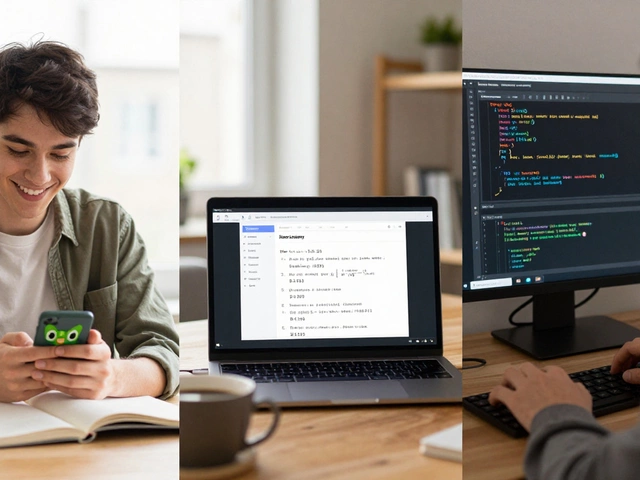
People want a simple answer. They want to hear, "Download App X and you’re done." But learning isn’t like buying a toaster. You don’t plug it in and get toast. Learning requires consistency, motivation, and the right fit for your brain.Take Duolingo. It’s the most downloaded language app in the world. Over 500 million people have used it. But studies show that after 30 days, most users stop. Why? Because it’s gamified, not deep. You learn phrases like "I like apples" and "Where is the bathroom?"-useful for tourists, not for holding a conversation with a native speaker. It’s great for building habits, not fluency.
Khan Academy, on the other hand, has no games, no streaks, no rewards. It’s just clear video lessons, practice problems, and progress tracking. It’s used by over 120 million students globally. Why? Because it’s built for mastery. If you’re trying to understand quadratic equations or how photosynthesis works, Khan Academy gives you the depth you need.
So the real question isn’t "What’s the top app?" It’s: "What are you trying to learn-and how do you learn?"
Best for Language Learning: Duolingo vs. Memrise vs. Busuu
If you want to learn a language, you have options. Duolingo leads in downloads, but that doesn’t mean it’s the best.Here’s how they compare:
| App | Strength | Weakness | Best For |
|---|---|---|---|
| Duolingo | Daily habit building, free tier, fun interface | Limited grammar depth, superficial speaking practice | Beginners wanting to build consistency |
| Memrise | Real native speaker videos, spaced repetition | Less structured lessons, inconsistent quality | Those who learn by hearing real speech |
| Busuu | Feedback from native speakers, CEFR-aligned courses | Advanced features require subscription | People serious about certification or exams |
One user in Edinburgh told me she used Duolingo for six months, then switched to Busuu because she needed to pass the B1 German exam for her job. She got certified. Duolingo didn’t cut it-but Busuu did.
Best for Academic Subjects: Khan Academy Still Leads
For math, science, economics, or computer science, Khan Academy is still the gold standard. It’s free, nonprofit, and trusted by schools from rural India to private schools in Scotland.What makes it different? It doesn’t try to be flashy. Each lesson starts with a short video (5-12 minutes), followed by practice problems that adapt to your mistakes. If you get stuck, it gives you hints-not answers. And if you master a topic, it moves you forward. If you struggle, it loops back.
It’s used by over 70% of U.S. high school math teachers. In the UK, it’s part of the National Tutoring Programme. Why? Because it works. A 2025 study from the University of Edinburgh found that students who used Khan Academy for 30 minutes a day, five days a week, improved their math scores by an average of 22% over one term.
Other apps like Brilliant or Photomath are great for specific niches. Brilliant teaches problem-solving through interactive puzzles. Photomath lets you snap a math problem and get a step-by-step solution. But neither builds the same foundation as Khan Academy.
Best for Coding: FreeCodeCamp vs. Codecademy
Want to learn to code? You’ve got two main choices: FreeCodeCamp and Codecademy.FreeCodeCamp is 100% free. You build real projects-like a weather app or a portfolio website-while learning HTML, CSS, JavaScript, and Python. It’s project-based, community-driven, and backed by a nonprofit. Over 2 million people have earned certifications from it.
Codecademy is slicker. It has interactive lessons, quizzes, and a clean UI. But its free version is limited. To unlock projects, you need Pro ($15/month). Still, if you like guided structure and instant feedback, Codecademy is easier to start with.
But here’s what no app can replace: building something real. One student in Glasgow built a simple budget tracker after finishing FreeCodeCamp’s JavaScript course. He posted it on GitHub. Within a month, he got a freelance job. Apps teach you syntax. Real projects teach you how to think like a developer.
Best for Kids: ABCmouse and Epic! Stand Out
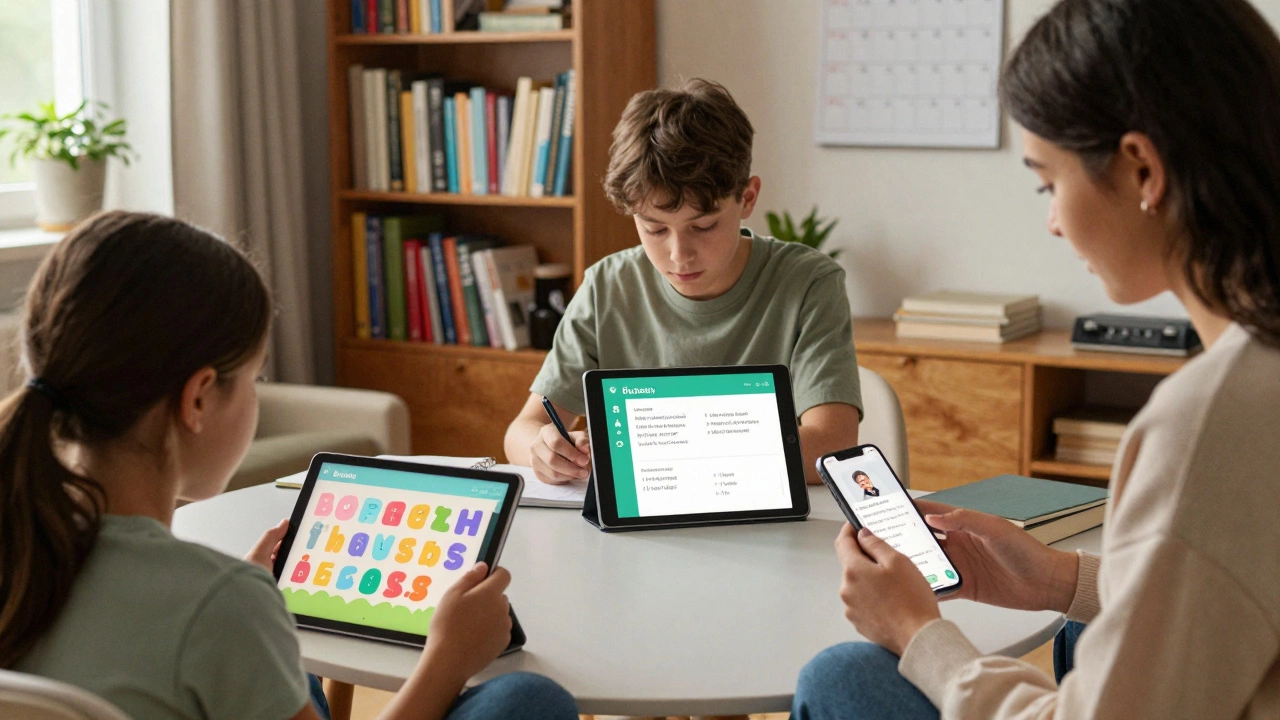
If you’re looking for a learning app for a child under 10, the game changes completely.ABCMouse covers reading, math, art, and music for ages 2-8. It’s structured like a curriculum, with 10,000+ activities. Parents love it because it feels like school at home.
Epic! is a digital library with 40,000+ books for kids up to age 12. It’s not interactive like ABCMouse, but it’s perfect for reluctant readers. One mom in Edinburgh said her 7-year-old, who hated reading, now asks to read "just one more book" on Epic! every night.
Neither is flashy. Neither has leaderboards. But they work because they meet kids where they are.

What No App Can Do-And Why You Need More
Apps are tools. They’re not teachers. They can’t read your frustration, adjust their tone, or say, "Let’s try this another way."Even the best app won’t help if you don’t show up. A 2024 study from Stanford found that the biggest predictor of learning success wasn’t the app-it was whether the learner had a clear goal and a weekly routine.
So if you want real results:
- Start with one goal: "I want to speak basic Spanish in three months" or "I want to understand algebra by summer."
- Choose one app that matches that goal-not the one with the most downloads.
- Schedule 15-20 minutes a day. No more. No less.
- Track progress, not streaks. Did you understand the concept? Not how many days you logged in.
Apps are like running shoes. They don’t make you run. You do.
Final Verdict: The Real "Top 1" Learning App
The top 1 learning app is the one you’ll use tomorrow. And the day after. And the day after that.For language: Duolingo if you need motivation. Busuu if you need results.
For school subjects: Khan Academy-no contest.
For coding: FreeCodeCamp if you’re on a budget. Codecademy if you want hand-holding.
For kids: ABCMouse for structured learning. Epic! for reading joy.
There’s no magic app. There’s only you, your goal, and the discipline to show up. Pick one. Start small. Stick with it. That’s the only thing that turns an app into real learning.
Is Duolingo really the best app for learning languages?
Duolingo is the most popular, but not the best for fluency. It’s great for building daily habits and learning basic phrases, but it doesn’t teach grammar deeply or give you real conversation practice. If you want to hold a conversation, pass an exam, or understand native speakers, you’ll need something more advanced like Busuu or LingQ.
Can Khan Academy replace a tutor or teacher?
Khan Academy can replace a tutor for most self-motivated learners. It covers everything from elementary math to college-level calculus and physics. Its strength is in clear explanations and adaptive practice. But if you’re struggling with motivation, need personalized feedback, or have learning differences, a human tutor still adds value.
Are free learning apps as good as paid ones?
Yes, for many people. FreeCodeCamp, Khan Academy, and Duolingo’s free tier offer enough to reach intermediate levels. Paid apps add features like offline access, personalized coaching, or certification-but those aren’t always necessary. The key isn’t price, it’s consistency. A free app used daily beats a paid app collecting dust.
What’s the best learning app for adults returning to education?
Khan Academy is the top choice for adults relearning math or science. For career skills like Excel or Python, LinkedIn Learning or Coursera offer structured paths. But the real advantage for adults is flexibility. Choose an app that fits your schedule-not one that demands hours a day. Even 15 minutes daily adds up.
Why do I keep quitting my learning app?
Most people quit because they pick an app that doesn’t match their goal or learning style. If you’re using Duolingo to prepare for a Spanish exam and keep failing, it’s not you-it’s the tool. Switch to something aligned with your outcome. Also, learning apps often reward streaks, not understanding. Focus on whether you actually learned something, not how many days you logged in.
Should I use more than one learning app at once?
Only if they serve different purposes. For example, use Duolingo for daily vocabulary, then watch YouTube videos in Spanish for listening practice. Or use Khan Academy for math concepts, then Brilliant for problem-solving. But don’t spread yourself thin. One app, used consistently, beats three apps used half-heartedly.
Next Steps: Pick One, Start Today
Don’t wait for the perfect app. It doesn’t exist.Right now, ask yourself: What’s one skill I want to build in the next 90 days? Then pick one app that helps with that. Open it. Do five minutes. That’s it. Tomorrow, do five more. That’s how real learning starts.