English Fluency Timeline Estimator
Configure Your Learning Plan
Select all that apply to your routine:
Estimated Time to B2 Fluency
Let’s get one thing straight right away: there is no magic pill for language learning. If you are looking for a shortcut that turns you into a native speaker in three weeks without effort, you will be disappointed. However, if you want to know how to cut the learning time in half compared to traditional methods, the answer lies in intensity and strategy. The fastest way to become fluent in English is not about studying harder; it is about studying smarter by maximizing immersion and forcing yourself to speak from day one.
Redefining Fluency: What Are You Actually Aiming For?
Before you pick a method, you need to define your finish line. Many learners waste years trying to sound like a BBC news anchor when their actual goal is to hold a job interview or order coffee confidently. This mismatch slows you down because you are focusing on perfection rather than communication.
Fluency is not the same as accuracy. Accuracy means knowing every grammar rule. Fluency means being able to express your thoughts smoothly without long pauses or frustration. For most people, reaching a B2 level (upper-intermediate) is the sweet spot where you can handle almost any social or professional situation. According to the Common European Framework of Reference for Languages (CEFR), moving from A1 to B2 typically takes around 600-750 guided learning hours. The "fast" track compresses this by increasing daily exposure and output.
The Power of Total Immersion (Even at Home)
You do not need to move to London or New York to immerse yourself. While living abroad helps, it is not strictly necessary if you create a digital and physical bubble around yourself. The core principle is simple: eliminate English-free zones in your life.
- Change your digital environment: Switch your phone, computer, and social media settings to English. This sounds minor, but it exposes you to thousands of words daily that you might otherwise skip.
- Consume media actively: Stop watching movies with subtitles in your native language. Use English subtitles first, then none. Listen to podcasts during your commute. Choose topics you already understand so you can focus on the language structure rather than guessing the context.
- Think in English: Narrate your day internally. "I am making coffee. Where is the mug?" This builds the connection between concepts and English words, bypassing the translation step in your head.
This approach leverages the concept of comprehensible input, a theory popularized by linguist Stephen Krashen. He argued that we acquire language best when we understand messages that are slightly above our current level. By flooding your senses with accessible English content, you train your ear to recognize patterns naturally.
Speak From Day One: Overcoming the Fear Factor
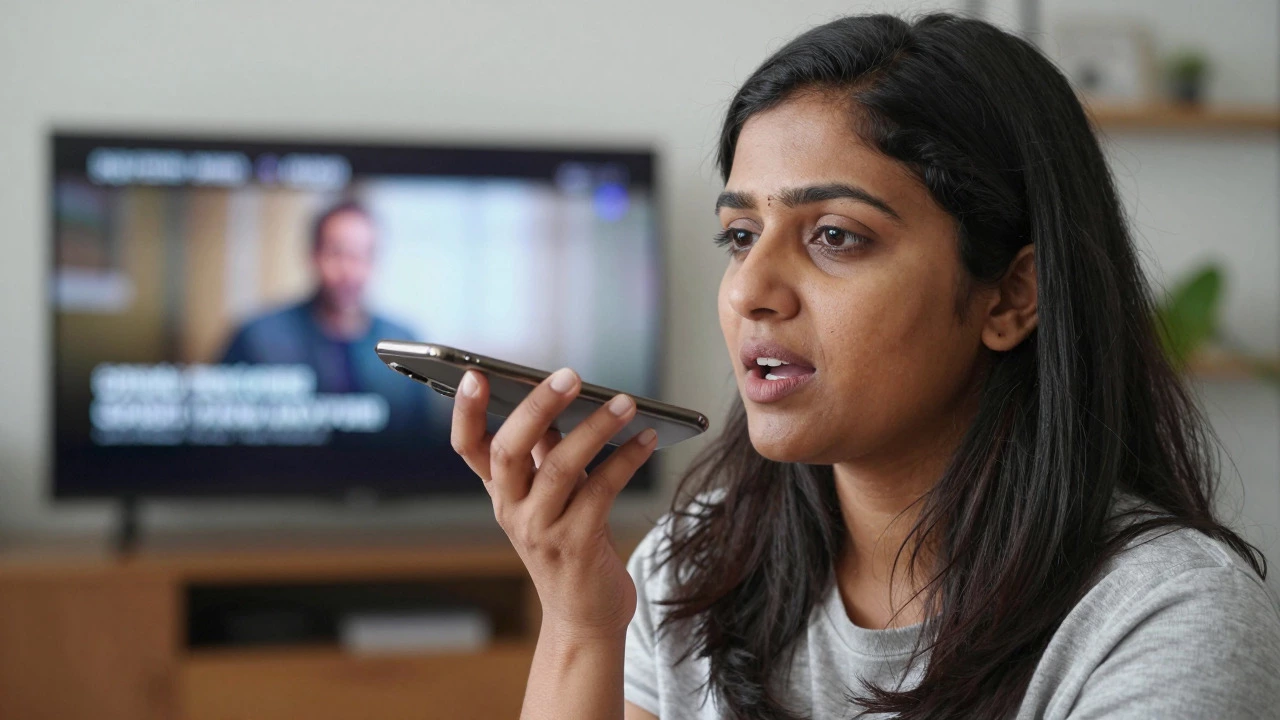
The biggest mistake learners make is waiting until they feel "ready" to speak. They study grammar books for months, convinced they need perfect syntax before opening their mouths. This is backward. Speaking is a muscle. If you do not use it, it stays weak.
To speed up fluency, you must produce output early. This does not mean giving a TED Talk. It means talking to yourself, recording voice notes, or finding a language partner who does not mind your mistakes. Platforms like Tandem or HelloTalk connect you with native speakers worldwide who want to learn your language in exchange for practicing English. These interactions are low-stakes and high-reward.
Another effective technique is shadowing. Listen to a native speaker (a podcast host or YouTube creator) and repeat what they say immediately after them, mimicking their speed, intonation, and emotion. This trains your mouth muscles to form English sounds correctly and improves your rhythm, which is often more important for understanding than individual pronunciation.
Focusing on High-Frequency Vocabulary
Trying to learn every word in the dictionary is inefficient. Research shows that the most frequent 1,000 words in English account for about 85% of all everyday conversation. The top 3,000 words cover roughly 95%. Focus your energy here.
Instead of memorizing isolated lists, learn words in chunks or collocations. Do not just learn the word "decision." Learn "make a decision." Do not just learn "interested." Learn "interested in." This helps you retrieve phrases quickly during conversation because your brain stores them as single units rather than assembling them piece by piece.
| Strategy | Time Efficiency | Best For | Potential Pitfall |
|---|---|---|---|
| Traditional Classroom | Low | Structured grammar basics | Slow pace, passive listening |
| Self-Study Apps | Medium | Vocabulary building, habit formation | Lack of real-time speaking practice |
| Intensive Tutoring (1-on-1) | High | Correcting specific errors, confidence | Costly, requires discipline |
| Full Immersion | Highest | Rapid fluency, cultural nuance | Overwhelming initially, requires total commitment |
Using Technology to Accelerate Progress
Technology has democratized access to high-quality language instruction. You no longer need expensive textbooks. Tools like Anki (for spaced repetition flashcards) ensure you review vocabulary just before you forget it, optimizing memory retention. AI-powered chatbots can provide instant feedback on your writing or simulate conversations without judgment.
If you have the budget, hiring an online tutor via platforms like iTalki or Preply allows for personalized correction. A good tutor will not just correct your grammar; they will tell you why you made the mistake and give you a better alternative. This targeted feedback loop is crucial for breaking bad habits before they become permanent.
A Realistic Timeline and Expectations
How fast is "fast"? If you dedicate 2-3 hours a day to intense immersion and active speaking, you can reach conversational fluency (B1/B2) in 6 to 9 months. Reaching near-native proficiency (C1/C2) usually takes 2-3 years of consistent effort. Consistency beats intensity in the long run. Studying for 30 minutes every day is better than cramming for five hours once a week.
Track your progress by recording yourself speaking every month. Compare the recordings. You will hear improvements in speed, clarity, and confidence that you might not notice day-to-day. This visual and auditory proof keeps motivation high when the learning curve gets steep.
Can I become fluent in English in 3 months?
Reaching basic conversational fluency (A2/B1) in 3 months is possible if you study intensively for 4+ hours daily and immerse yourself completely. However, true professional fluency (B2+) usually takes 6-9 months of dedicated effort. It depends heavily on your native language's similarity to English and your previous experience with other languages.
Is it better to learn English alone or with a tutor?
For speed, a combination is best. Self-study builds vocabulary and listening skills efficiently. However, a tutor provides immediate feedback on speaking and pronunciation, preventing fossilization of errors. Aim for at least 2-3 tutoring sessions per week alongside daily self-practice for the fastest results.
Do I need to live in an English-speaking country to become fluent?
No. While living abroad accelerates immersion, you can replicate this environment digitally. Many polyglots achieve high fluency without leaving their home countries by using online communities, media consumption, and virtual tutors. The key is consistency and creating an English-only zone in your daily routine.
What is the most important skill to focus on first?
Listening and speaking should take priority over reading and writing if your goal is conversational fluency. You need to train your ear to recognize sounds and your mouth to produce them. Reading and writing are valuable but can be developed later without hindering your ability to communicate verbally.
How do I overcome the fear of making mistakes?
Accept that mistakes are data, not failures. Every error teaches you what needs correction. Start by speaking with supportive partners or AI tools where judgment is minimal. Gradually increase the difficulty by speaking with native speakers. Remember, most people appreciate the effort you are making and are patient with learners.