CBSE Affiliation: What It Means for Students and Schools
When a school has CBSE affiliation, the official recognition by the Central Board of Secondary Education that it follows national standards for curriculum, exams, and teaching quality. Also known as CBSE recognition, it means the school is legally allowed to conduct Class 10 and Class 12 board exams under the CBSE name and uses its syllabus, question patterns, and grading system. This isn’t just paperwork—it affects everything from how subjects are taught to how students prepare for college.
Not every school in India is CBSE-affiliated. Some follow state boards, ICSE, or international curriculums. But if your school has CBSE affiliation, you’re learning a standardized curriculum used across the country. That means if you move from Delhi to Chennai, your textbooks, exam format, and even the weightage of chapters stay the same. It’s why CBSE-affiliated schools are popular among families who relocate often or plan to take national entrance exams like JEE or NEET—because the syllabus lines up directly with those tests.
Getting CBSE affiliation isn’t easy for schools. They need proper infrastructure, trained teachers, minimum classroom sizes, and a clear academic calendar. The board inspects them before approving, and they must keep meeting those standards every year. That’s why not every private school claims CBSE affiliation—some can’t pass the checklist. But for students, it’s a signal: this school is held to a national benchmark.
What does this mean for you? If you’re in a CBSE-affiliated school, your Class 10 board exam isn’t just a test—it’s a nationally recognized credential. The question papers are set by CBSE, not your school. The marking is uniform. The results are accepted by colleges and employers across India. That’s the real value. It’s not about prestige. It’s about consistency, fairness, and mobility.
You’ll also notice CBSE-affiliated schools focus more on objective-type questions, especially from Class 8 onward. That’s because the board’s exam pattern rewards clarity and precision over long descriptive answers. It’s a style that prepares students for competitive exams later. If you’re wondering why your school skips certain topics or teaches them in a specific order, it’s because CBSE’s syllabus is tightly structured. There’s no room for guesswork.
And here’s something most parents don’t realize: CBSE affiliation doesn’t guarantee better teaching. A school can be affiliated and still have underpaid teachers or overcrowded classrooms. The affiliation only means they follow the board’s rules—not that they’re doing a great job. So look beyond the logo. Check the results. Ask about pass rates. See how students perform in national exams.
The posts below cover real stories and data from students and schools dealing with CBSE affiliation—what works, what doesn’t, and how to make the most of it. Whether you’re choosing a school, preparing for Class 10, or just trying to understand why your syllabus feels so different from your cousin’s, you’ll find practical insights here.
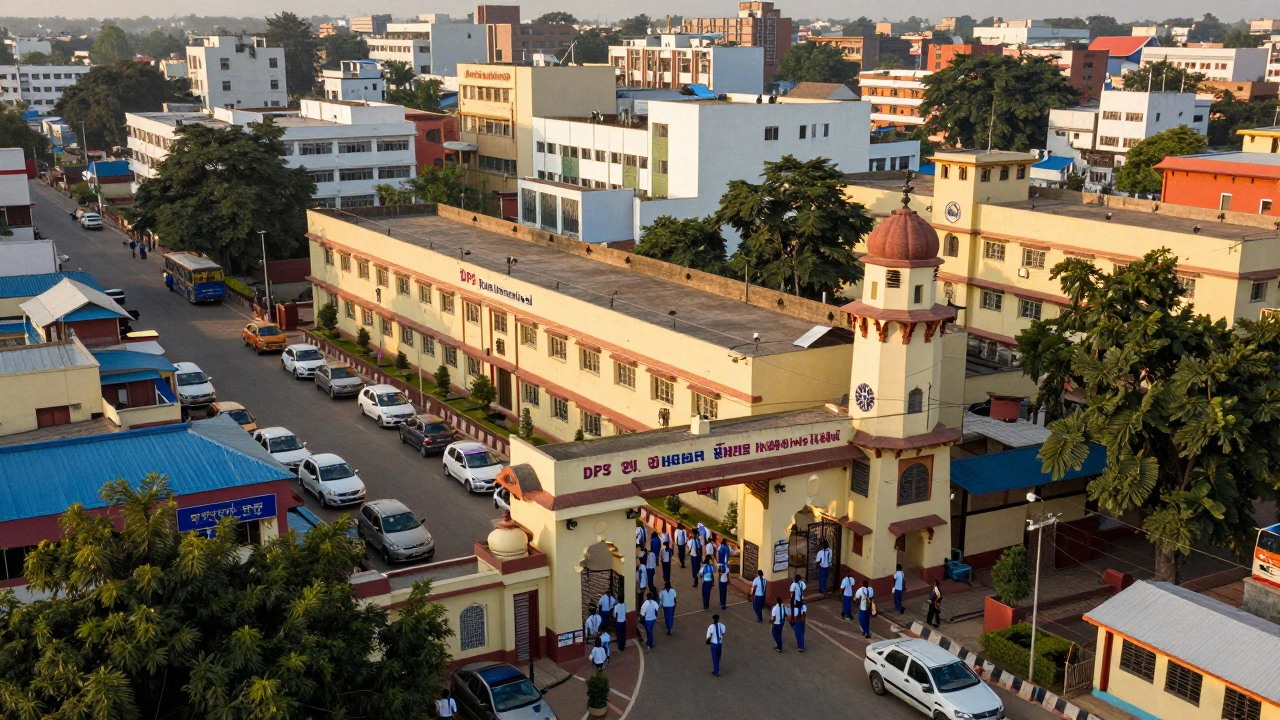
Which State Has the Highest Number of CBSE Schools? 2025 Data
As of 2025, Uttar Pradesh has the highest number of CBSE schools in India, with over 4,500 affiliated institutions. Learn why CBSE dominates in northern states and how it compares to other boards.
Recent Post
-

Exploring Common Digital Platforms in E-Learning
Feb, 6 2025