Coding Path & Timeline Calculator
Determine the best programming language for your goals and estimate your learning timeline based on daily commitment.
Recommended Language:
Estimated Timeline
You’ve probably heard the myth: you need a math degree or a genius-level IQ to write software. It’s a lie that keeps millions of people from picking up one of the most valuable skills of the 21st century. So, is coding actually hard? The short answer is no. The long answer is that it’s easy to start but difficult to master, much like learning a new language or playing an instrument.
In 2026, the barrier to entry has never been lower. You don’t need expensive hardware or a computer science degree. You just need curiosity and a bit of patience. But here’s the catch: many beginners quit within the first month because they expect instant results. They hit their first bug, get frustrated, and assume they’re “not built for this.” That’s not true. It’s just part of the process.
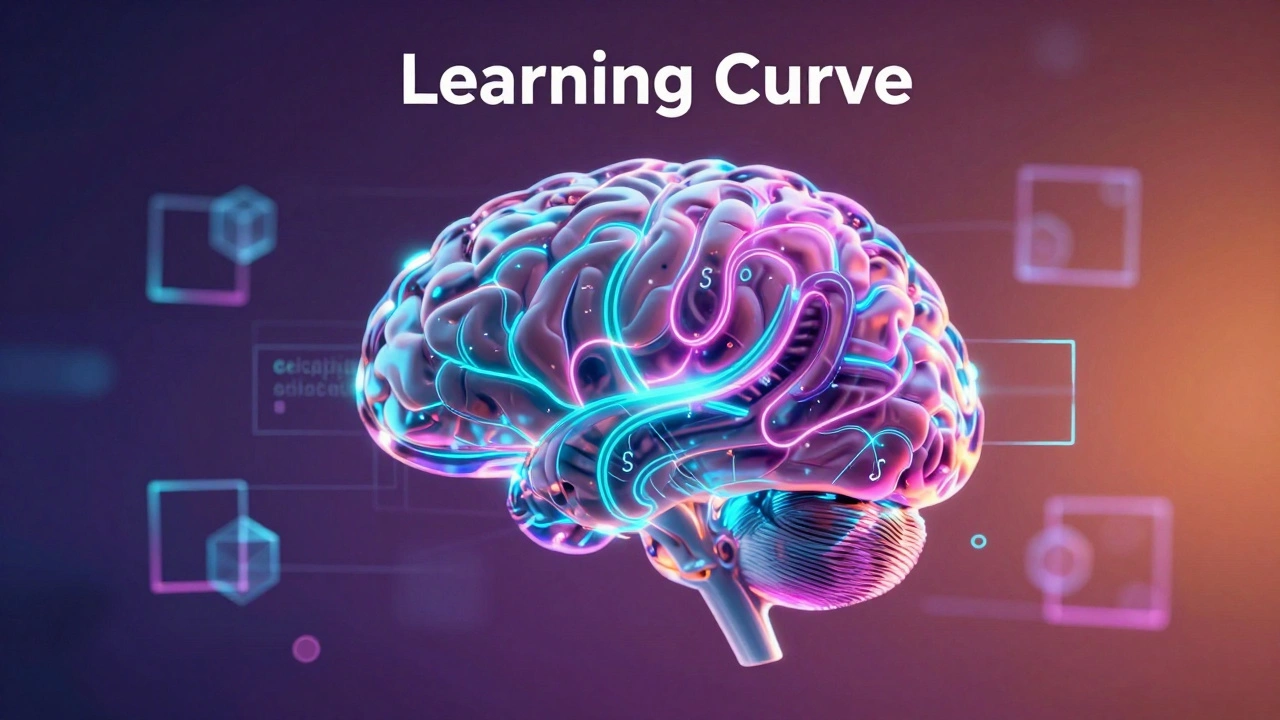
The Learning Curve: Why It Feels Hard at First
When you start learning to code, your brain is doing heavy lifting. You are essentially building a new neural pathway. In the beginning, everything feels abstract. Concepts like variables, loops, and functions don’t have physical forms you can touch. This abstraction is often where the friction lies.
Think of it like learning to drive a manual transmission car. At first, you’re thinking about every single movement: clutch, gear, gas, brake. It’s overwhelming. You stall the engine. You feel embarrassed. But after a few weeks, those actions become muscle memory. You stop thinking about the gears and start thinking about the road. Coding works the same way. The initial struggle isn’t a sign of inability; it’s a sign of growth.
Research in cognitive psychology suggests that the "zone of proximal development"-the sweet spot between what you know and what you can learn with help-is crucial. If a tutorial is too easy, you get bored. If it’s too hard, you give up. Most beginner-friendly platforms now use adaptive algorithms to keep you in that zone, but finding the right pace is still up to you.
Self-Taught vs. Coding Classes: Which Path Is Easier?
This is the biggest decision you’ll face. Should you binge-watch YouTube tutorials and build projects alone, or should you enroll in structured Coding Classes which provide structured educational programs designed to teach programming fundamentals through guided instruction and peer support? Both paths work, but they serve different personalities.
| Factor | Self-Taught (Online Resources) | Coding Classes / Bootcamps |
|---|---|---|
| Cost | Low to Free | High ($5k - $20k+) |
| Structure | You create the roadmap | Pre-defined curriculum |
| Accountability | Low (easy to procrastinate) | High (deadlines & peers) |
| Feedback Speed | Slow (forums, AI tools) | Fast (instructors, mentors) |
| Networking | Limited | Strong (alumni, hiring partners) |
If you are highly disciplined and love exploring topics on your own, self-study might save you money. However, statistics show that only about 3-5% of self-taught learners complete a full-stack project without external guidance. The majority get stuck in "tutorial hell," where they can follow instructions but can’t build anything from scratch.
Coding classes solve this by providing accountability. When you pay for a course, you’re also paying for a deadline. You have peers who are struggling with the same issues, creating a support network. In 2026, many online coding classes offer hybrid models-live instruction combined with asynchronous labs-which gives you the best of both worlds.
Choosing Your First Language: Does It Matter?
Newbies often panic over which language to pick. Will Python make me a better developer than JavaScript? The truth is, the syntax doesn’t matter as much as the concepts. Once you understand logic in one language, transferring to another is relatively easy.
- Python: Great for beginners because its syntax reads like English. It’s dominant in data science and AI.
- JavaScript: Essential if you want to build websites. It runs in every browser, making it immediate and visual.
- HTML/CSS: Not technically programming languages, but they are the foundation of web design. Easy to learn and provides instant gratification.
If you want to see results quickly, start with HTML and CSS. Build a simple personal page. Then move to JavaScript to make it interactive. If you’re interested in data or automation, go with Python. Don’t spend weeks debating this. Pick one and stick with it for three months.
The Biggest Pitfalls That Make Coding Feel Impossible
Why do so many people fail? It’s rarely because the code is too complex. It’s usually due to these three traps:
- Tutorial Hell: Watching videos without typing code. You must type it out. Your fingers need to learn the rhythm.
- Perfectionism: Trying to write perfect code on the first try. Professional developers write messy code first, then refactor it. Embrace the mess.
- Imposter Syndrome: Feeling like everyone else understands it except you. Remember, even senior engineers Google basic syntax daily.
In Edinburgh, where I live, the tech community is vibrant precisely because it embraces beginners. Local meetups often have "intro to code" nights where seniors pair-program with novices. This social aspect reduces isolation, which is a huge factor in retention.
How Long Does It Actually Take?
There is no fixed timeline, but here are realistic benchmarks for 2026:
- Basics (Variables, Loops): 2-4 weeks of consistent practice (1 hour/day).
- Building Simple Projects: 2-3 months.
- Job-Ready (Junior Developer Level): 6-12 months of intensive study (bootcamp or dedicated self-study).
Consistency beats intensity. Studying for 30 minutes every day is far more effective than cramming for 10 hours on Sunday. Your brain needs sleep to consolidate the logical patterns you’ve learned.

Tools That Make Learning Easier in 2026
Technology has evolved significantly. You no longer need to configure complex local environments to start coding.
AI Pair Programmers are advanced artificial intelligence tools that assist developers by suggesting code completions, debugging errors, and explaining complex concepts in real-time have become standard. Tools like GitHub Copilot or Cursor can explain why your code is broken. However, be careful. Don’t let the AI write the code for you. Use it as a tutor, not a ghostwriter. Ask it, "Why did this error occur?" rather than "Fix this for me."
Browser-based IDEs (Integrated Development Environments) like Replit or CodeSandbox allow you to code directly in Chrome or Firefox. No installation required. This removes the technical friction of setting up your computer, letting you focus purely on logic.
Next Steps: How to Start Today
If you’re ready to take the leap, here is your action plan:
- Pick a goal: Do you want to build a website? Automate Excel sheets? Analyze data? Let the goal dictate the language.
- Choose a resource: Sign up for a free tier on a platform like freeCodeCamp, Codecademy, or a local coding class if you need structure.
- Set a schedule: Block out 30 minutes daily. Treat it like a gym session.
- Build something ugly: Your first project will look bad. That’s fine. Finish it.
Coding is a skill, not a talent. It’s like riding a bike. You wobble, you fall, you get back up. Eventually, you just ride. The question isn’t whether coding is hard. The question is whether you’re willing to be confused for a little while to gain a superpower that lasts a lifetime.
Do I need to be good at math to learn coding?
No, you do not need advanced math skills for most coding jobs. Basic arithmetic and logical reasoning are sufficient. While fields like machine learning or game development require heavier mathematics, web development, app creation, and automation rely more on logic and problem-solving than calculus.
Is it better to learn coding online or in person?
It depends on your learning style. Online courses offer flexibility and lower costs, allowing you to learn at your own pace. In-person or live virtual classes provide immediate feedback, accountability, and networking opportunities. For most beginners, a hybrid approach with some human interaction yields the best retention rates.
Can I learn to code in one month?
You can learn the basics in one month, but becoming job-ready typically takes 6 to 12 months of dedicated study. In a month, you can build simple scripts or static websites. To land a professional role, you need to build a portfolio of complex projects and understand software engineering principles, which takes longer.
What is the easiest programming language for beginners?
Python is widely considered the easiest language for beginners due to its readable syntax and large community support. JavaScript is also a great choice if you are interested in web development because you can see results immediately in your browser without needing extra software.
How much does it cost to learn to code?
Learning to code can be completely free using resources like freeCodeCamp, YouTube, and official documentation. Paid bootcamps range from $5,000 to $20,000, while online subscription platforms cost between $20 to $50 per month. The cost depends largely on how much structure and mentorship you require.