Pomodoro Focus Timer
Pomodoro Technique Timer
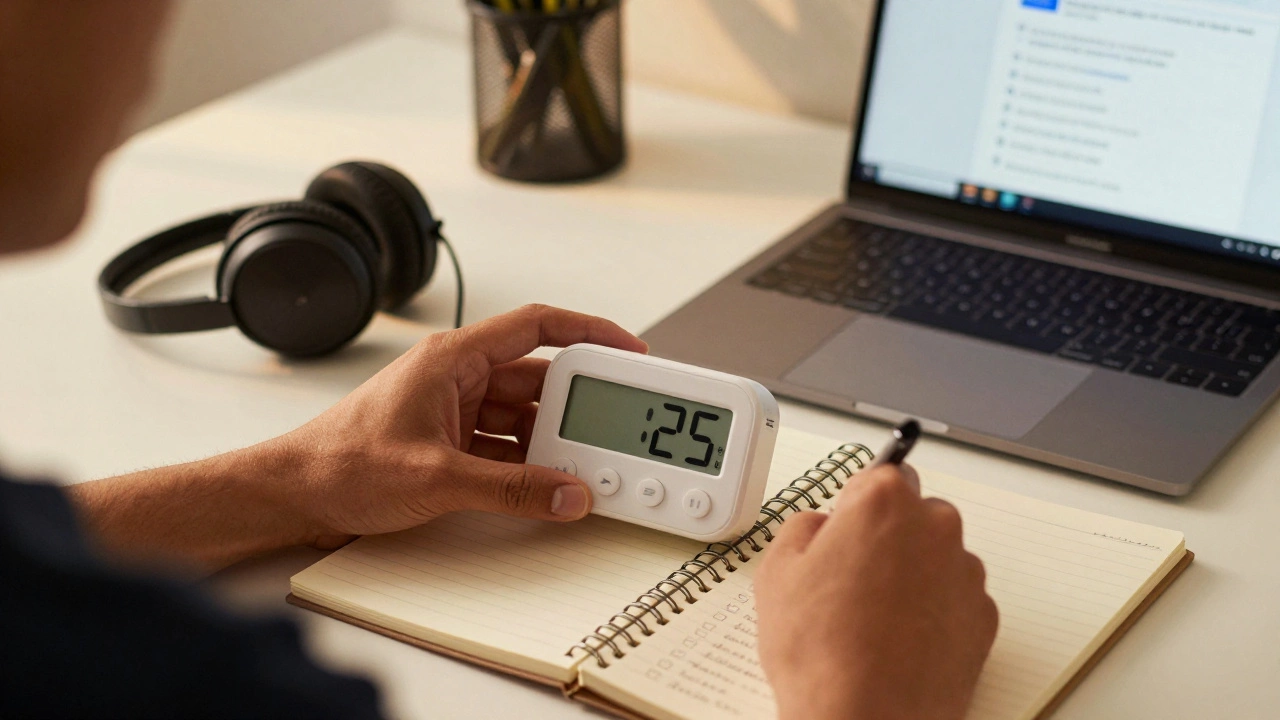
Use this timer to structure your study sessions with 25 minutes of focused work followed by a 5-minute break. Perfect for setting up your learning station!
Setting up a learning station isn’t about buying the fanciest desk or the latest tablet. It’s about creating a space where your brain actually wants to focus, stay consistent, and get things done. If you’ve ever sat down to study, only to find yourself scrolling through your phone 10 minutes later, you know the problem isn’t motivation-it’s environment.
Start with the right spot
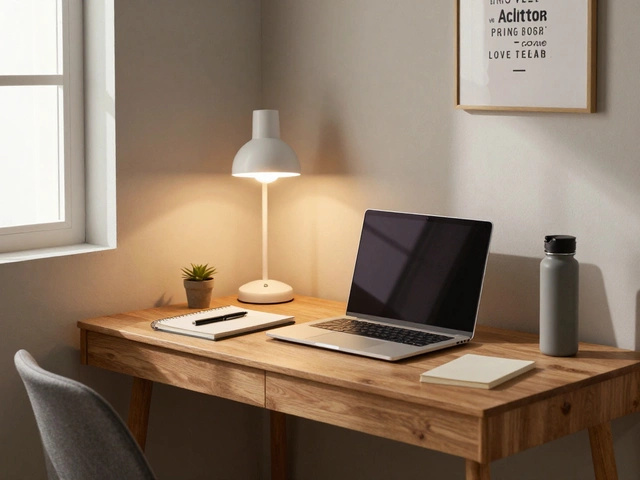
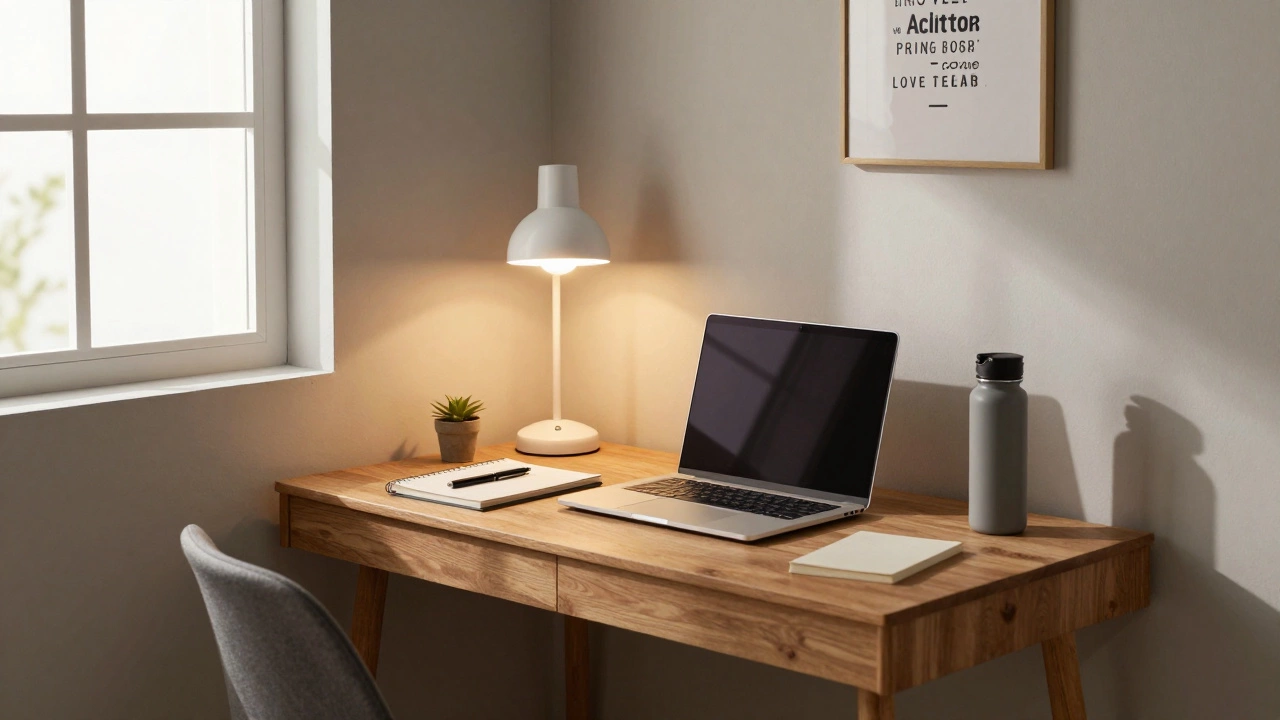
Your learning station needs to be somewhere you can go every day without distractions. That means no couches, no beds, and definitely not the kitchen table while your family is cooking dinner. Find a quiet corner-maybe a spare chair by a window, a small desk in your room, or even a dedicated spot in the living room if you can block out noise.Studies from the University of California show that people who use the same physical space for focused work are 30% more likely to stick to their study schedule. Your brain starts associating that spot with "time to learn." Walk into that corner, and your mind automatically switches modes.
Gather only what you need
Clutter kills focus. You don’t need five different devices, three chargers, and a stack of notebooks you haven’t opened in months. Keep it simple:- One reliable device: laptop, tablet, or even a Chromebook if you’re mostly watching videos or reading PDFs
- A single notebook for quick notes and to-do lists
- One pen and one highlighter
- Headphones (noise-canceling if possible)
- A water bottle
Everything else? Put it away. If you need to look something up, open your browser. If you need to write something down, grab your notebook. No rummaging. No distractions.
Set up your digital tools
Your learning station isn’t complete without the right digital setup. Pick one main platform and stick with it. Don’t jump between Google Classroom, Canvas, Moodle, and Khan Academy like you’re playing musical chairs.Most learners do better with one central hub. If you’re using YouTube for lessons, pair it with Notion or Google Keep to track progress. If you’re taking structured courses on Udemy or Coursera, use their built-in dashboards. Don’t add more apps unless they solve a real problem.
Here’s what works for most people in 2026:
- Learning platform: Coursera or Khan Academy (free, reliable, structured)
- Note-taking: Notion or Google Docs (easy to search, syncs across devices)
- Task tracking: Todoist or a simple paper list
- Focus timer: Pomodoro technique (25 minutes work, 5 minutes break)
Don’t install ten apps because they look cool. Use what’s already working. You don’t need AI-powered flashcards if your old flashcards still get the job done.
Lighting and comfort matter more than you think
If your eyes are strained or your back hurts, you won’t stay focused for long. Natural light is best-if you can sit near a window, do it. If not, get a simple LED desk lamp with warm white light (around 4000K). Avoid harsh blue lights before bedtime-they mess with your sleep cycle.Your chair doesn’t need to be ergonomic gold-plated. But it should support your lower back. Sit with your feet flat on the floor, screen at eye level, and arms relaxed. If you’re hunched over your phone or tablet, you’re setting yourself up for fatigue.
Make it yours
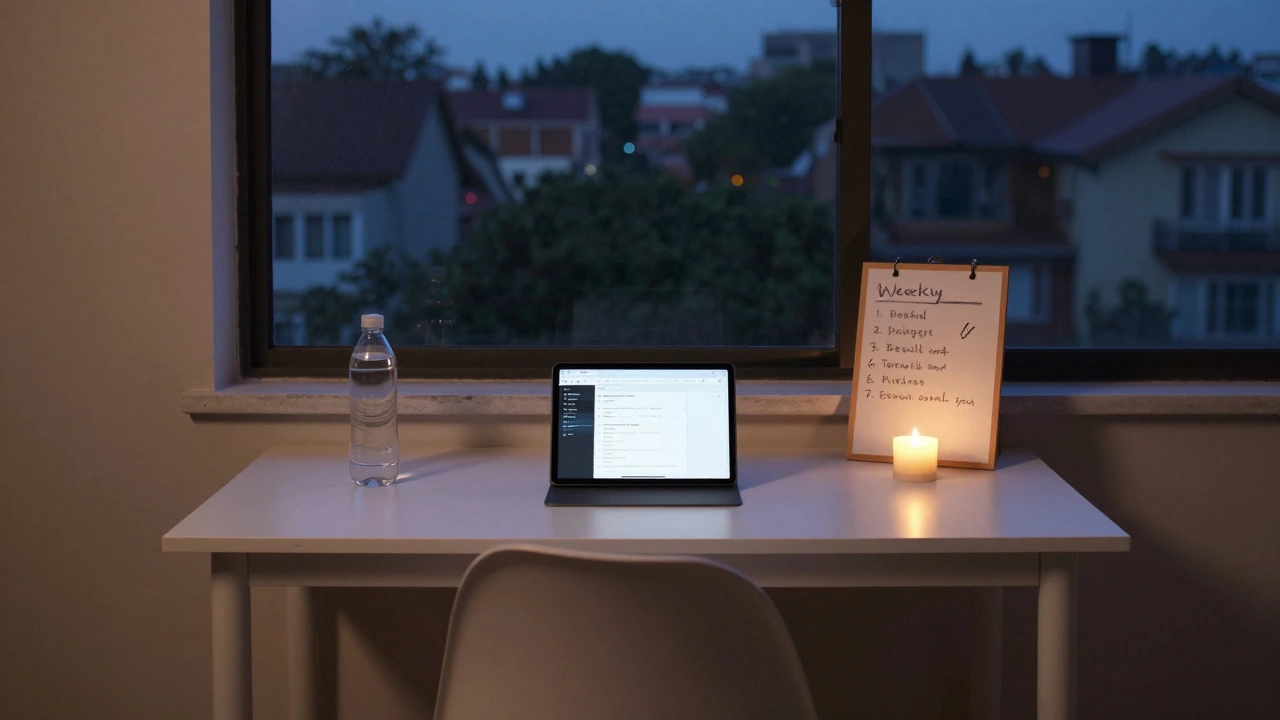
This isn’t a library. It’s your space. Add one or two things that make you feel calm or motivated. A small plant. A quote you like. A photo of someone who inspires you. A whiteboard where you write your weekly goal.But don’t turn it into a shrine. Too many decorations become noise. One personal touch is enough. The goal is to feel safe, not overwhelmed.
Build a routine around it
A learning station is useless without a routine. You can have the perfect desk, the best headphones, and the most organized Notion dashboard-but if you only show up when you feel like it, nothing changes.Start small. Pick one time every day. 7 a.m. before breakfast. 6 p.m. after dinner. 10 p.m. if you’re a night person. Stick to it for 21 days. Your brain will start expecting it.
Here’s a simple daily flow:
- Walk to your station (even if it’s just 3 steps)
- Turn on your lamp
- Open your learning platform
- Set a timer for 25 minutes
- Work until the timer ends
- Stand up, stretch, drink water
- Repeat once or twice
That’s it. No need for hours. Just consistency.
What to avoid
Here are the top three mistakes people make when setting up a learning station:- Trying to do everything in one place. Don’t mix work, social media, and learning on the same device. Use separate browser profiles or even different devices if you can.
- Waiting for perfect conditions. You don’t need a whole room. You don’t need $500 worth of gear. Start with what you have.
- Skipping the cleanup. Every Sunday, clear your desk. Close unused tabs. Delete old notes. Reset your space. It resets your mind.
Track your progress
You won’t stay motivated unless you see results. Keep a simple log:- Day 1: Watched 1 video on algebra
- Day 3: Finished 3 practice questions
- Day 7: Completed the first module
Use a calendar. Put a big X on the days you showed up. After 7 X’s in a row, you’ve built a habit. After 30, it’s part of your identity.
Progress isn’t about how much you learn in a week. It’s about showing up, day after day, even when you don’t feel like it.
When things go wrong
Sometimes you’ll miss a day. Or two. Or five. That’s normal. Don’t treat it like failure. Just reset.If you’re stuck:
- Ask yourself: Did I change my routine? Did I move my station? Did I add too many distractions?
- Go back to basics: one device, one platform, one time a day.
- Lower the bar: instead of 25 minutes, do 10. Just show up.
The goal isn’t perfection. It’s presence.
Final thought
Your learning station isn’t a luxury. It’s your most powerful tool for taking control of your education. You don’t need to be smart. You don’t need to be fast. You just need to show up in the same spot, with the same tools, at the same time-and keep going.That’s how people who start from scratch end up ahead of everyone else.
Do I need a dedicated room to set up a learning station?
No. A learning station can be as small as a corner of your desk or a chair by a window. What matters is consistency, not size. Many successful learners use shared spaces-just make sure the area is quiet and reserved for studying only.
Can I use my phone as my main learning device?
You can, but it’s not ideal. Phones are designed to distract you-with notifications, messages, and endless apps. If you must use a phone, switch to grayscale mode, turn off all notifications, and use a browser-based platform like Khan Academy instead of apps that push you to scroll. A laptop or tablet is better for longer sessions.
What’s the best free e-learning platform to use?
Khan Academy is the most reliable free option for structured learning in math, science, and humanities. Coursera offers free courses from universities, though some features require payment. edX and YouTube channels like CrashCourse are also excellent for specific topics. Stick to one platform to avoid overwhelm.
How long should each study session be?
Start with 25-minute sessions using the Pomodoro Technique. After two or three sessions, take a longer 20-minute break. Most people can sustain focus for 90 minutes total per day when broken into chunks. Longer sessions lead to burnout, not better retention.
Should I use headphones while studying?
Yes-if you’re in a noisy environment. Use noise-canceling headphones with ambient sounds like rain or white noise. Avoid music with lyrics if you’re reading or listening to lectures. Silence is best, but if you can’t have it, controlled sound is better than random noise.
How do I stay motivated when I don’t see progress?
Progress in learning is often invisible until it’s not. Track small wins: "I finished one video," "I remembered three formulas," "I didn’t check my phone for 25 minutes." These add up. Motivation follows action, not the other way around. Keep showing up, even when you feel stuck.