
Bar Exam Jurisdiction Selector
Select your primary career goal to see which jurisdictions offer the best balance of accessibility and opportunity.
Please select a priority and click Analyze.
| State | Cut Score | Est. Pass Rate | Why This Choice? |
|---|
So, you’ve survived three years of law school. You’ve read enough case law to last a lifetime, and you’re ready to practice. But there’s one final hurdle standing between your degree and your license: the Bar Exam. It’s a notorious beast, known for breaking even the brightest minds. The question every aspiring lawyer whispers in the library is simple: which state makes this process less painful?
The short answer? There is no single "easiest" state that applies to everyone. However, data tells a compelling story. If you look at raw pass rates, states like South Dakota, Montana, and North Dakota consistently rank highest. But before you pack your bags for the Midwest, you need to understand why those numbers are high. Is it because the test is easier? Or is it because only the most prepared candidates show up? This guide breaks down the metrics, the myths, and the strategic realities of choosing where to take your bar.
Understanding the Metrics: What Makes a Bar Exam "Easy"?
To judge difficulty, we can’t just look at how many people passed. We have to look at who took the test. This is where the concept of the Uniform Bar Exam (UBE) comes into play. Adopted by over 40 jurisdictions, the UBE standardizes the multiple-choice section (Multistate Bar Examination (MBE)) and the essay portion (Multistate Essay Examination (MEE)). Because the content is identical across these states, the difference in pass rates usually stems from two factors: the cut score and the applicant pool.
A lower cut score (the minimum passing grade) generally correlates with higher pass rates. For instance, states with cut scores around 260-270 tend to see more successful candidates than those requiring 300+. But here’s the catch: some states have small populations of law schools. If only top-tier graduates from local universities apply, the average preparation level is sky-high, inflating the pass rate without the exam actually being "easier."
The Top Contenders: High Pass Rate States
Let’s look at the hard numbers. Based on recent National Conference of Bar Examiners (NCBE) data, several states consistently report first-time pass rates above 85%. These are often rural or mid-sized states with fewer applicants.
| State | Approximate Cut Score | Recent First-Time Pass Rate | Key Characteristic |
|---|---|---|---|
| South Dakota | 260 | ~90% | Very small applicant pool; mostly local graduates. |
| Montana | 260 | ~88% | Low competition; strong local support networks. |
| North Dakota | 260 | ~87% | High pass rate due to rigorous pre-bar screening. |
| Wyoming | 260 | ~85% | Small market; limited number of testing sites. |
| New Hampshire | 260 | ~84% | Proximity to Boston; attracts well-prepared candidates. |
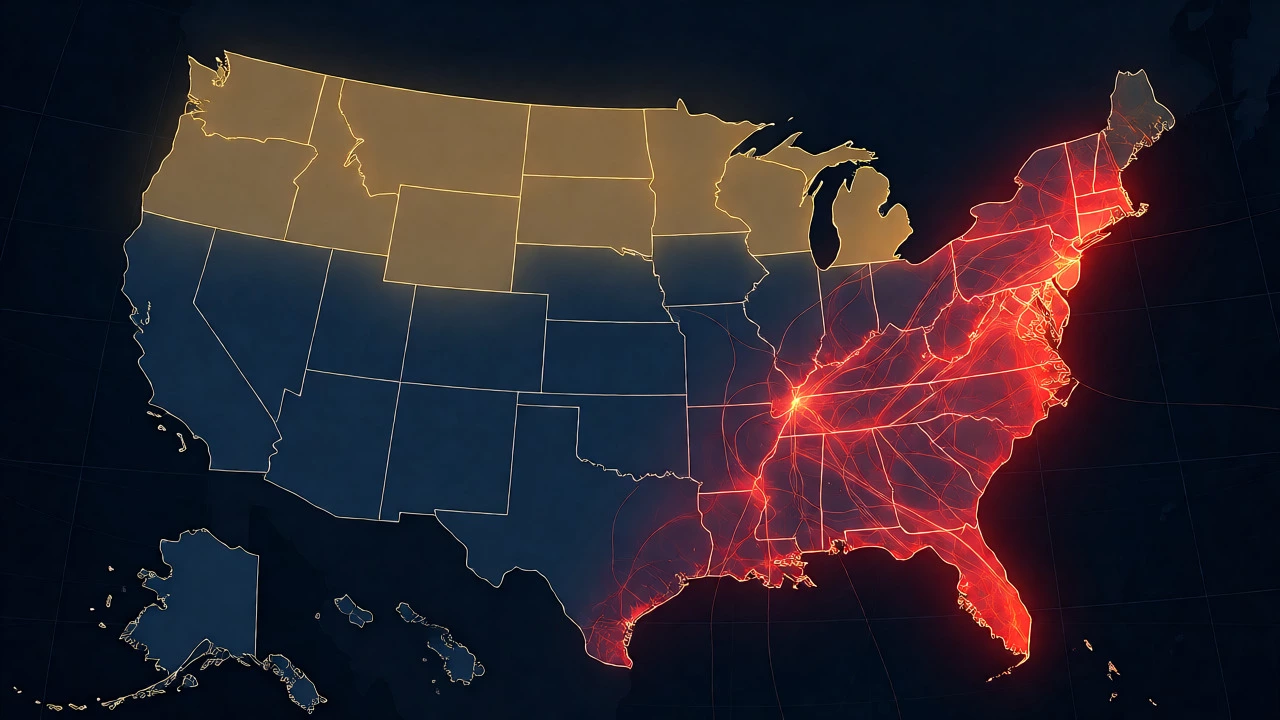
Notice the pattern? Most of these states use a cut score of 260, which is among the lowest in the nation. In contrast, California uses a scaled score of 1390 (roughly equivalent to a much higher raw percentage), and New York requires a 266. While 266 sounds close to 260, the grading curve in major markets like New York is notoriously strict. A single point can mean the difference between practicing law and retaking the exam.
The Big Market Myth: Why New York and California Are Harder
You might think, "I want to work in New York City, so I should just take the NY bar." But consider the sheer volume of applicants. New York sees tens of thousands of test-takers every cycle. Many are international lawyers or graduates from out-of-state schools who may not be as familiar with New York-specific civil procedure or family law nuances. This dilutes the average preparation level compared to a state like South Dakota, where almost everyone has attended the same few accredited programs.
California is another outlier. It doesn’t use the UBE. Instead, it administers its own comprehensive exam covering state-specific laws that don’t exist elsewhere. The California Bar Exam includes unique topics like community property and workers' compensation. Its pass rate hovers around 40-50%, making it statistically one of the toughest hurdles in the country. If you’re aiming for California, "easy" isn’t in the vocabulary-it’s about endurance.
Strategic Considerations: Portability vs. Ease
Here is the critical trade-off most students ignore: portability. Taking the easiest bar exam in the world is useless if you can’t practice where you live. The UBE solves this problem. If you take the UBE in Minnesota and score a 270, you can transfer that score to other UBE jurisdictions. However, each receiving state sets its own minimum transferred score requirement. Some require a 260, others demand a 280.
This means you could technically "pass" in a low-cut-score state but fail to meet the threshold for a high-demand city like Washington D.C. or Massachusetts. Before you choose a location based on ease, check the UBE Transfer Rules for your target employment market. Don’t let the allure of an easy pass trap you in a jurisdiction where you have no job prospects.
Factors That Actually Impact Your Success
Is the exam really easier in Montana? Probably not. The questions are standardized. The grading rubrics are similar. So why do pass rates vary? It comes down to three human factors:
- Preparation Culture: In states with large law firms and competitive legal markets, bar prep courses are intense. Students study full-time for ten weeks. In smaller states, the culture might be more relaxed, yet the local graduates are highly motivated because they know the local market is tight.
- Self-Selection Bias: People who take the bar in remote areas are often deeply committed to staying there. They aren’t using it as a backup plan while waiting for NYC interviews. Their focus is sharper.
- Grading Curves: Some states grade essays on a curve relative to other test-takers. In a state with 500 applicants, the curve might be forgiving. In a state with 10,000, the curve is brutal. Even if the content is the same, the statistical probability of hitting the median changes.
How to Choose Your Jurisdiction Wisely
If you are still in law school, you have leverage. Use it. Here is a practical checklist to determine the best path for you:
- Identify Your Target Job Market: Do you want to work in Chicago, Houston, or rural Idaho? Take the bar in the state where you intend to practice. Portability is a safety net, not a primary strategy.
- Check the Cut Score: Visit the NCBE website or the specific state bar association page. Look for the current passing score. Anything below 270 is generally considered more accessible.
- Analyze the Applicant Pool: Does the state attract many repeat takers? High numbers of repeaters can skew statistics. Look for first-time taker data specifically.
- Consider Reciprocity: Some states offer reciprocity or admission without examination for attorneys licensed in other states for a certain period. If you plan to move later, this matters more than the initial exam difficulty.
Remember, the goal isn’t just to pass. It’s to launch a career. Passing the "easiest" bar in a state with zero legal jobs is a pyrrhic victory. Conversely, struggling through the hardest bar in a booming legal hub pays dividends immediately after licensure.
Frequently Asked Questions
Does taking the bar in an easy state make me a worse lawyer?
No. The core legal principles tested on the MBE and MEE are national standards. Whether you pass in South Dakota or New York, you have demonstrated competence in constitutional law, contracts, torts, and criminal law. Employers care more about your law school pedigree, internships, and interview performance than the state where you sat for the exam.
Can I take the bar in a different state than where I went to law school?
Yes, absolutely. Most states allow out-of-state graduates to sit for their exam, provided they meet educational requirements (usually an ABA-accredited JD). However, some states require you to declare an intent to practice in that state. Always verify residency or intent-to-practice rules with the specific state bar board.
What is the Uniform Bar Exam (UBE)?
The UBE is a standardized test developed by the National Conference of Bar Examiners. It consists of the Multistate Bar Examination (MBE), the Multistate Essay Examination (MEE), and the Multistate Performance Test (MPT). Over 40 US jurisdictions administer the UBE. Scores can be transferred between participating states, though each state sets its own minimum required score for admission.
Why is California's bar exam considered so difficult?
California does not use the UBE. It creates its own exams that include complex state-specific laws not covered in the national curriculum. Additionally, California has a massive applicant pool, including many international lawyers and self-study candidates, which can lower the average pass rate. The combination of unique content and high volume makes it statistically tougher than most UBE states.
Do pass rates change year to year?
Yes. Pass rates fluctuate based on economic conditions, the quality of the incoming law school classes, and changes in grading curves. During economic downturns, more people take the bar, sometimes lowering average preparation levels. Always look at multi-year averages rather than a single data point when assessing difficulty.