Global Math Difficulty Estimator
Select up to three countries to compare their perceived mathematical difficulty based on standardized test performance, curriculum pacing, and elite competition success.
You’ve probably heard it before: "Math in Asia is brutal." Or maybe you’ve seen those viral videos of six-year-olds solving equations that would make a high schooler sweat. But is there actually a single country where math is objectively harder? The short answer is no-there’s no global ruler for mathematical difficulty. However, if we look at standardized testing scores, competition rankings, and curriculum depth, certain countries consistently stand out as having the most rigorous math education systems.
Let’s cut through the noise. When people ask which country has the hardest math, they’re usually asking one of two things: "Where do students score highest on tests?" or "Where is the curriculum most advanced at a young age?" These are different questions with different answers. Let’s break down the data, the curricula, and the cultural factors that create this reputation.
The Data-Driven Answer: Who Scores Highest?
If you want to judge difficulty by outcomes, you look at the Programme for International Student Assessment (PISA). Run by the OECD every three years, PISA tests 15-year-olds in reading, science, and math across dozens of countries. It’s not perfect, but it’s the closest thing we have to a global yardstick.
In recent cycles, East Asian nations dominate the top spots. Countries like Singapore, China (specifically regions like Beijing, Shanghai, Jiangsu, and Zhejiang), and South Korea consistently rank in the top tier. In the 2022 results, Singapore held the number one spot for math literacy, followed closely by Macau and Chinese Taipei. This isn’t an accident. These systems prioritize deep conceptual understanding over rote memorization, and they start teaching complex problem-solving early.
| Rank | Country/Region | Average Score | Key Strength |
|---|---|---|---|
| 1 | Singapore | ~575 | Problem-solving & application |
| 2 | Macau (China) | ~569 | Curriculum rigor |
| 3 | Chinese Taipei | ~547 | Conceptual depth |
| 4 | Hong Kong (China) | ~542 | Early algebra exposure |
| 5 | Japan | ~536 | Critical thinking focus |
Notice something? Western countries like the US, UK, and France often hover around the middle or lower-middle of these rankings. Does that mean their math is "easier"? Not necessarily. It often means their approach is broader but shallower, focusing on numeracy for everyone rather than pushing the ceiling for high achievers.
Curriculum Depth: Where Do They Teach Algebra in Grade 1?
PISA measures performance, but curriculum maps measure expectations. If you compare what a 10-year-old learns in China versus the United States, the gap is startling.
In many Chinese schools, students encounter negative numbers and basic algebraic concepts by grade 5 or 6. By grade 8, they’re tackling quadratic equations and geometry proofs that American students might not see until grade 10 or 11. Similarly, India’s CBSE and ICSE boards introduce trigonometry and calculus basics earlier than many European systems. The Russian math tradition, famous for its emphasis on logic and proof, also pushes theoretical boundaries early, producing students who excel in abstract reasoning.
This doesn’t mean every student in these countries loves math. It means the bar is set higher. If you move from a US public school to a top-tier Chinese academy mid-grade, you’ll likely face a steep learning curve-not because you’re less intelligent, but because the pacing is faster and the content is denser.
The Competition Circuit: Proving Grounds for Difficulty
If you want to know where math gets truly hard, look beyond school exams to international competitions. Events like the International Mathematical Olympiad (IMO) reveal which countries produce the most elite problem-solvers.
Here, China and South Korea are perennial powerhouses. Their training programs identify talent as young as age 10 and drill them in non-standard problems that require creative leaps, not just formula application. For instance, IMO problems often involve combinatorics or number theory concepts that aren’t part of standard high school curricula anywhere else. Students from these nations don’t just solve problems; they derive new methods on the fly.
Compare this to countries like Germany or Australia, where participation is strong but medal counts are lower. This suggests that while general math education might be solid, the pipeline for nurturing extreme mathematical talent is more selective and intense in East Asia.
Why Is Math Harder in Some Countries? Cultural Factors Matter
It’s tempting to blame genetics or innate ability, but research points to culture and policy. In many East Asian societies, effort is valued over talent. There’s a widespread belief that anyone can master math if they work hard enough. This leads to longer school days, mandatory extra tutoring (like juku in Japan or hagwon in Korea), and parental pressure that drives achievement.
Contrast this with Finland, often cited as a model for balanced education. Finnish students score well on PISA despite having shorter school hours and less homework. How? Their teachers are highly trained specialists, and the curriculum focuses on understanding why math works, not just how. So, is Finnish math "harder"? In terms of workload, no. In terms of cognitive demand per lesson, possibly yes. It’s a different kind of difficulty-one rooted in quality instruction rather than volume of practice.
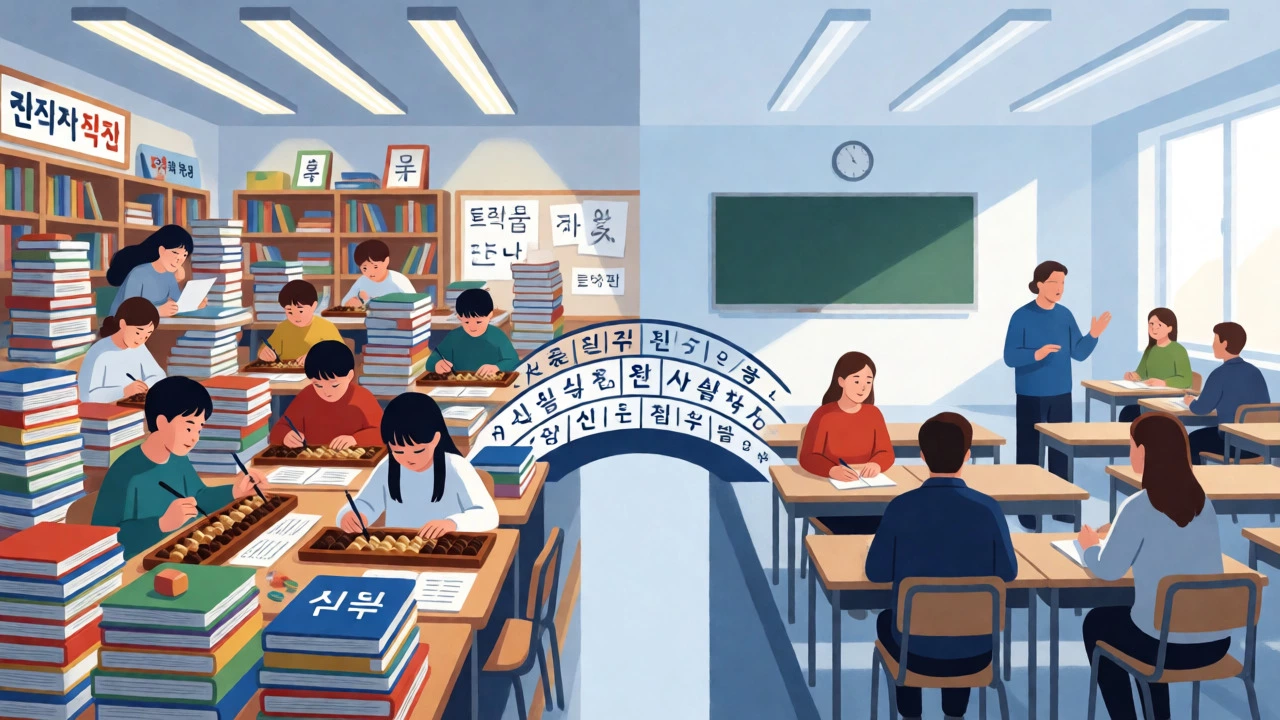
Is "Harder" Better? The Trade-Offs
Before you decide to enroll your kid in a Singaporean-style program, consider the trade-offs. High-stakes math environments can lead to burnout. Studies show that students in high-pressure systems report higher anxiety levels regarding mathematics. On the flip side, students from low-pressure systems may struggle when they hit university-level STEM courses that assume stronger foundational skills.
There’s also the issue of relevance. In some rigid systems, students become excellent at manipulating symbols but struggle to apply math to real-world scenarios. Conversely, project-based approaches in countries like Canada or the Netherlands emphasize application but may lack the procedural fluency needed for advanced theoretical work.
How to Prepare for Global Standards
If you’re a student aiming for top universities abroad, or a parent worried about falling behind, here’s how to bridge the gap:
- Focus on Problem-Solving, Not Just Answers: Don’t just memorize formulas. Ask "why does this work?" Try to explain the logic to someone else. If you can’t, you don’t understand it yet.
- Expose Yourself to Non-Routine Problems: Use resources like AoPS (Art of Problem Solving) or past IMO papers. Standard textbook problems are comfortable; growth happens in discomfort.
- Build Mental Math Fluency: Systems like Vedic math (from India) or abacus training (popular in Japan and China) speed up calculation, freeing up brainpower for complex reasoning.
- Don’t Ignore Geometry and Logic: Many modern curricula de-emphasize formal proofs. Reintroducing logical deduction exercises sharpens critical thinking skills that pure calculation misses.
Ultimately, asking "which country has the hardest math" is like asking "which language is hardest to learn." It depends on your background, your goals, and how you define difficulty. But if you want to challenge yourself, look to the curricula of Singapore, China, and Russia. They offer a level of rigor that will test your limits-and expand them.
Which country has the best math education system?
Singapore is widely considered to have the best math education system due to its consistent top rankings in PISA assessments and its mastery-focused curriculum. Other top contenders include China, South Korea, and Japan, all of which emphasize deep conceptual understanding and rigorous problem-solving from an early age.
Is Chinese math harder than American math?
Generally, yes. Chinese curricula introduce topics like algebra and geometry earlier and with greater depth than typical US standards. Additionally, the pace is faster, and there is a heavier emphasis on mental arithmetic and complex word problems. However, US curricula may place more emphasis on applied statistics and real-world modeling in later grades.
What makes Singapore Math so effective?
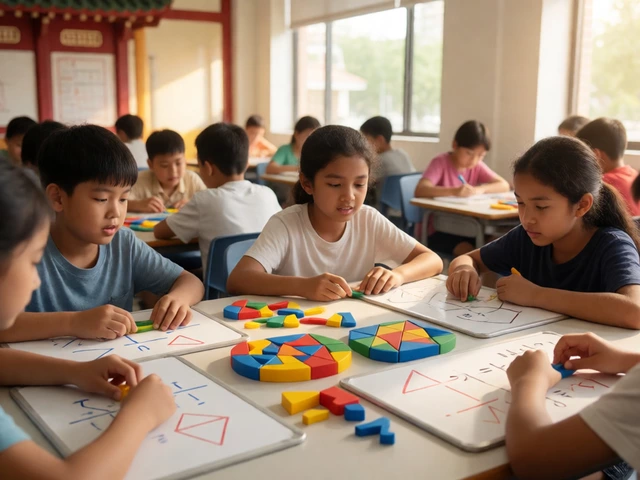
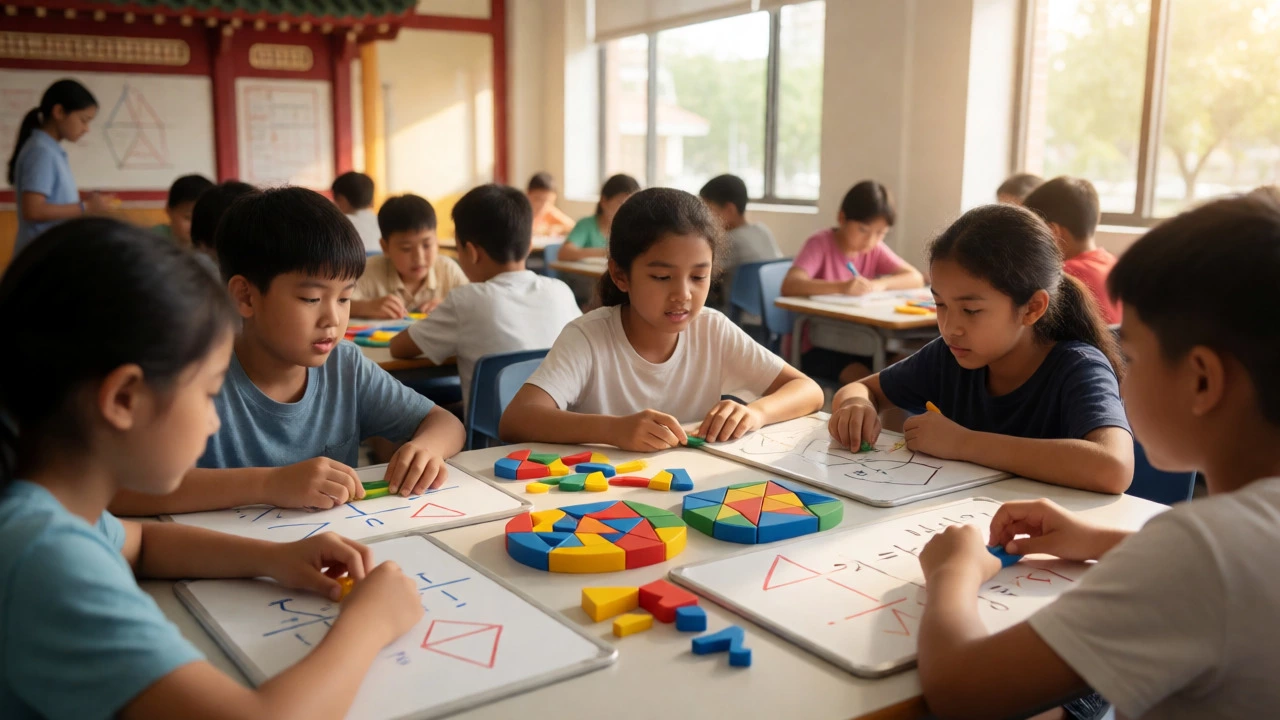
Singapore Math uses a concrete-pictorial-abstract approach, helping students visualize concepts before moving to abstract symbols. It focuses on fewer topics each year but explores them in much greater depth, ensuring mastery before progression. This reduces gaps in knowledge and builds strong foundational confidence.
Do Indian students find math easier or harder than others?
Indian students often excel in computational speed and algebraic manipulation due to rigorous training in competitive exams like JEE. However, the system can be heavily exam-oriented, sometimes prioritizing trick solutions over conceptual clarity. Compared to Western systems, the volume of practice required is significantly higher.
Is math difficulty related to IQ?
No, math difficulty is primarily related to educational quality, cultural attitudes toward effort, and instructional methods. While natural aptitude plays a role, studies show that high-performing countries achieve results through structured pedagogy and sustained effort, not just innate intelligence. Anyone can improve their math skills with the right approach.