
Beginner English Phrase Simplifier
Teaching beginners requires using simple, direct language. This tool helps you convert complex sentences into beginner-friendly phrases based on the article's guidelines.
Simplified Output:
Imagine sitting across from a student who knows only five words in your language. You ask them how their day was, and they stare back with polite confusion. This is the reality of teaching English for beginners, which is the process of introducing foundational language skills to learners with little to no prior knowledge of English. It is less about complex grammar rules and more about building confidence, establishing basic communication patterns, and creating a safe space for mistakes.
If you are stepping into an ESL classroom or starting private tutoring, you might feel overwhelmed by the sheer volume of resources available. But here is the truth: beginners do not need Shakespearean analysis. They need survival phrases, clear visual cues, and consistent repetition. The goal isn't perfection; it's connection. When you teach English for beginners, you are laying the groundwork for every future skill they will acquire. Get this foundation right, and everything else becomes easier.
Understanding the Beginner Mindset
Before you open a textbook, you need to understand what your students are experiencing. Learning a new language triggers anxiety. For many adults, it feels like being a child again-unable to express needs, fears, or humor. This vulnerability requires empathy from the teacher.
Beginner English learners typically fall into two categories:
- Absolute Beginners (A0): These students know zero English. They rely entirely on body language, pictures, and native-language support if available. Their primary need is recognition, not production.
- False Beginners (A1): These students have studied English before but have forgotten most of it. They recognize words but cannot form sentences. They often feel frustrated because they "know" something but can't access it.
Your job is to identify which group you are dealing with within the first ten minutes. If you push absolute beginners too hard into speaking, they will shut down. If you bore false beginners with baby talk, they will disengage. Adjust your pace based on their comfort level, not just their test scores.
The First Lesson: Setting the Stage
Your first lesson sets the tone for the entire course. Do not start with the alphabet unless absolutely necessary. Instead, focus on immediate utility. What does the student need to say right now?
Start with greetings and introductions. These are low-stakes interactions that build rapport. Use simple scripts:
- "Hello, my name is [Teacher]." (Point to yourself.)
- "What is your name?" (Point to the student.)
- "Nice to meet you." (Smile and shake hands if culturally appropriate.)
Repeat this three times. Then swap roles. Let the student lead. This establishes a pattern of input followed by output. Always model the behavior first. Never ask a beginner to do something you haven't demonstrated clearly.
Incorporate visual aids immediately. Flashcards with photos of common objects-a pen, a book, a phone-are essential. Hold up a card and say, "Pen." Have the student repeat. Then point to a real pen on your desk and say, "Pen." Connect the word to the object, not just the picture. This bridges the gap between abstract symbols and concrete reality.
Core Vocabulary: The 100 Most Important Words
You don't need to teach thousands of words at once. Research shows that the most frequent 100 words make up about 50% of everyday conversation. Focus on these high-utility terms first:
- Pronouns: I, you, he, she, it, we, they
- Verbs: be, have, do, go, want, need, like
- Common Nouns: water, food, house, car, friend, family
- Question Words: what, where, when, who, why, how
Teach these in context, not isolation. Don't just list verbs. Show them in action. Say, "I eat," while miming eating. Say, "You drink," while handing the student a glass. Kinesthetic learning helps memory retention significantly for beginners.
| Use This (Simple) | Avoid This (Complex) | Why It Works |
|---|---|---|
| "I am hungry." | "I could use a bite to eat." | Direct subject-verb-object structure is easier to parse. |
| "Where is the bathroom?" | "Could you direct me to the restroom facilities?" | Question word + verb + noun is a universal pattern. |
| "I like coffee." | "Coffee is quite enjoyable to me." | Active voice reduces cognitive load. |
Grammar Without the Headache
Grammar scares beginners. And rightly so. Traditional grammar lessons filled with tenses and clauses are useless if the student can't order a cup of coffee. Your approach must be functional, not theoretical.
Focus on three structures initially:
- Present Simple: For habits and facts. "I work." "She lives here."
- To Be: For identity and location. "I am happy." "The book is on the table."
- Can/Can't: For ability and permission. "I can swim." "Can I go?"
Do not explain the rules explicitly. Induce the rules through examples. If you want to teach the present simple, give five examples: "I walk. She walks. He runs. They run." Ask the student to spot the difference. Let them discover the pattern. This active engagement sticks better than passive listening.
When correcting grammar, prioritize clarity over correctness. If a student says, "He go to school," and you understand them, let it slide. Correcting every error kills momentum. Save corrections for errors that cause misunderstanding. If they say, "Me go home," and you nod, you've reinforced bad habits. Gently recast: "Ah, you go home?" This models the correct form without shaming the mistake.
Making Lessons Interactive and Fun
Beginners get bored easily. Monotony is the enemy of retention. You need variety in your activities to keep energy levels high.
Role-plays are powerful tools. Create scenarios relevant to the student's life. If they are traveling, practice airport check-ins. If they are working, practice email greetings. Give them a script first, then remove it gradually. Role-playing reduces anxiety because the situation is predictable.
Games aren't just for kids. Word searches, hangman, and Pictionary work wonders for vocabulary review. They lower the affective filter-the psychological barrier that blocks learning when stress is high. When students laugh, they learn faster.
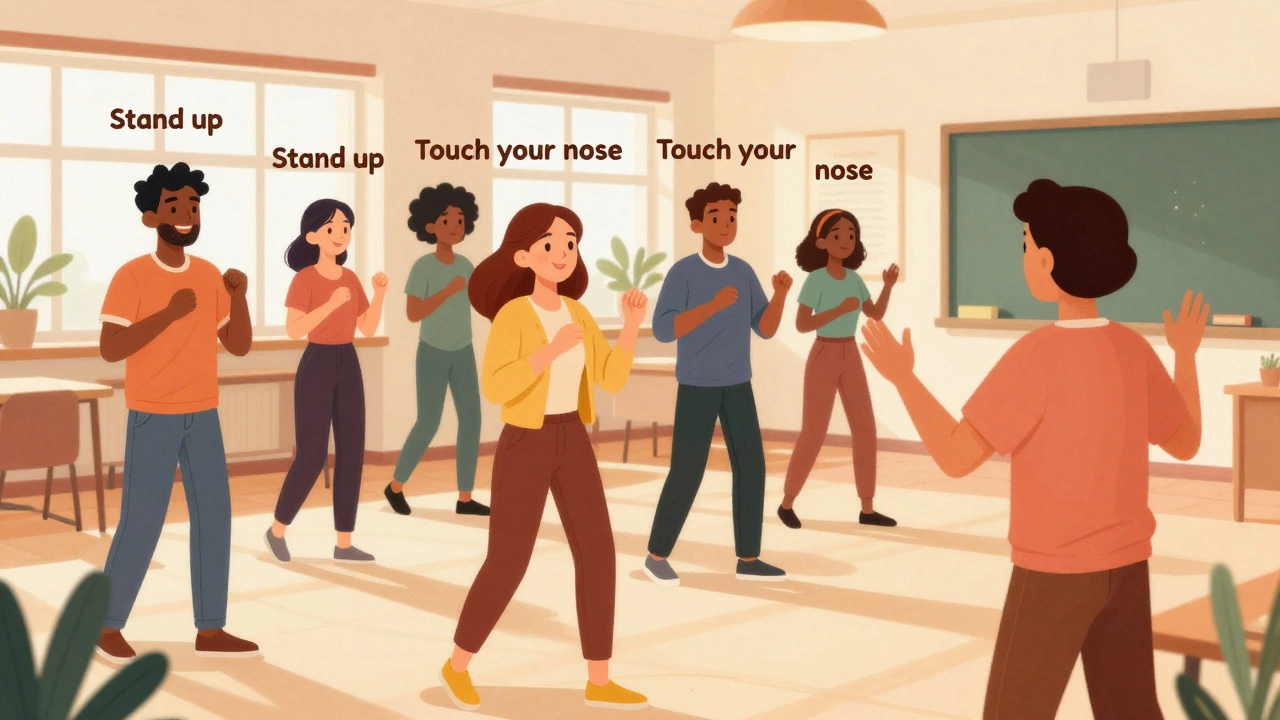
Total Physical Response (TPR) involves linking language to movement. Command the student to "Stand up," "Sit down," "Touch your nose." Then reverse it. This connects muscle memory to linguistic memory, making recall quicker and more automatic.
Common Pitfalls to Avoid
Even experienced teachers make mistakes when working with beginners. Here are the biggest traps:
- Talking too fast: Speed doesn't equal intelligence. Slow down. Enunciate clearly. Pause between sentences to allow processing time.
- Using idioms: "Break a leg" means nothing to a beginner. Stick to literal meanings until advanced levels.
- Over-explaining: Five minutes of explanation is worse than five minutes of practice. Demonstrate, don't lecture.
- Igoring L1 interference: Students' native languages influence their English. If a Spanish speaker drops subjects ("Is raining" instead of "It is raining"), understand why. Address these specific transfer errors directly.
Another critical error is assuming silence equals understanding. Beginners often nod politely even when confused. Check comprehension frequently using concept checking questions (CCQs). Instead of asking "Do you understand?" (which always gets a "yes"), ask "Is it raining now?" after teaching weather vocabulary. Specific questions reveal true gaps.
Tools and Resources for Success
You don't need expensive software to teach effectively. Simple tools often yield the best results.
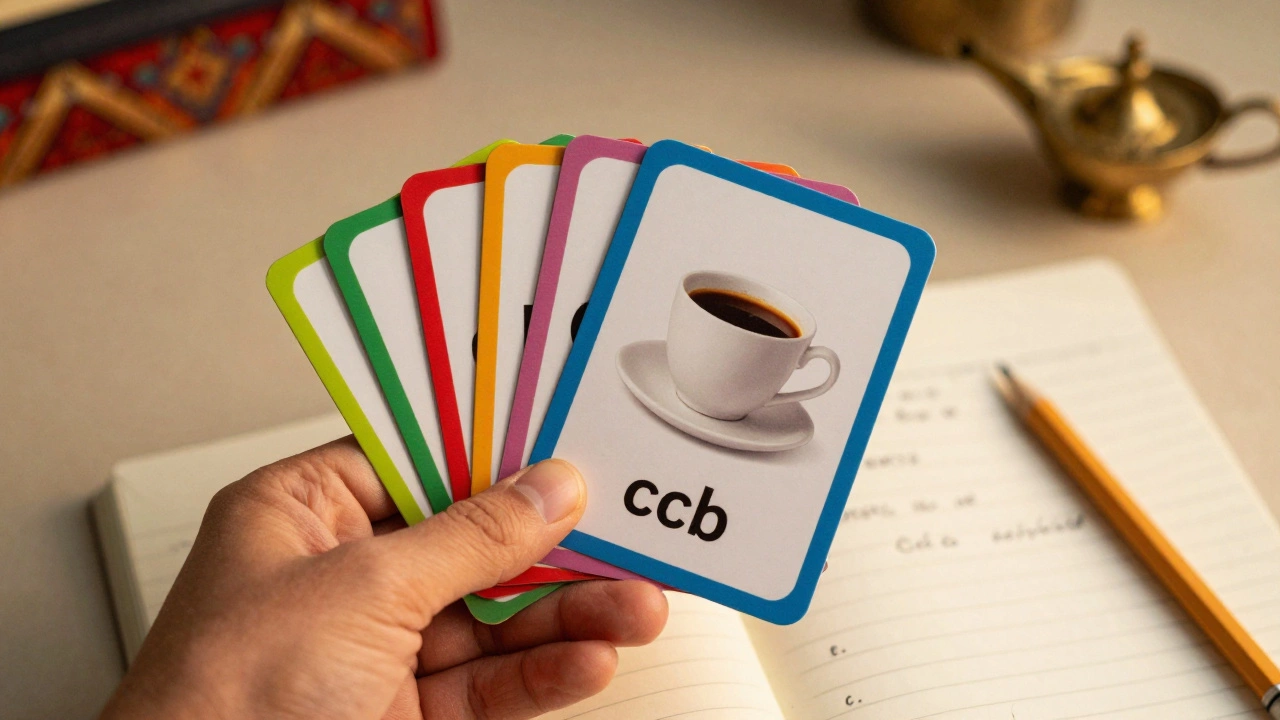
Flashcards remain one of the most effective study aids for beginners. Digital versions like Anki or Quizlet allow for spaced repetition, ensuring words move from short-term to long-term memory. Print physical cards for tactile learners who benefit from writing words repeatedly.
Picture dictionaries provide visual context for vocabulary. Online platforms like BBC Learning English offer free, structured courses tailored to A1 levels. YouTube channels dedicated to slow English pronunciation help students hear the sounds clearly without background noise distractions.
For assessment, avoid written tests initially. Oral assessments reduce pressure and reflect real-world usage. Record short conversations weekly. Play them back to students so they can hear their own progress. Hearing improvement is motivating in ways that grades never are.
Building Long-Term Confidence
The ultimate goal of teaching English for beginners is not fluency overnight. It's confidence. Every small victory matters. Celebrate when a student orders food correctly. Praise when they ask a question without hesitation.
Create a positive feedback loop. Start each class with a review of last week's successes. End with a preview of next week's challenge. Consistency builds trust. Trust builds openness. Openness leads to risk-taking. And risk-taking is where language acquisition truly happens.
Remember, you are not just teaching words. You are giving students access to culture, opportunity, and connection. That responsibility is heavy, but also incredibly rewarding. Stay patient. Stay curious. And never underestimate the power of a smile and a simple "Good job."
How long does it take to teach English basics to a beginner?
Reaching a basic conversational level (A1) typically takes 60-100 hours of guided study plus regular practice. However, individual progress varies widely based on age, native language similarity to English, and exposure outside the classroom. Some students grasp greetings quickly but struggle with verb conjugations, while others memorize vocabulary effortlessly but freeze during spontaneous speech. Set realistic expectations: aim for functional communication, not perfection, within the first month.
Should I correct every mistake my beginner student makes?
No, correcting every mistake hinders fluency development. Focus on errors that impede meaning or reinforce bad habits. For example, if a student says "I goed to store," gently recast it as "I went to the store" without stopping the flow. Reserve detailed correction for dedicated grammar exercises. Prioritize confidence-building in early stages. Frequent interruption signals that mistakes are failures rather than natural steps in learning.
What is the best way to teach vocabulary to beginners?
Use contextualized, multisensory methods. Combine visual aids (pictures), auditory input (clear pronunciation), and kinesthetic actions (gestures or handling objects). Introduce words in thematic groups-food, family, daily routines-rather than random lists. Reinforce through repetition across different activities: reading labels, listening to dialogues, and using words in simple sentences. Spaced repetition systems (SRS) like flashcard apps optimize long-term retention by reviewing words just before they are forgotten.
Can I teach English online to beginners effectively?
Yes, online teaching works well if adapted properly. Use screen sharing for visual materials and digital whiteboards for interactive exercises. Ensure stable internet and good lighting so facial expressions and lip movements are visible. Incorporate breakout rooms for pair work if possible. Online platforms offer unique advantages like instant access to multimedia resources and recording capabilities for self-review. The key is maintaining high engagement through frequent interaction checks and varied activity types to combat screen fatigue.
How do I handle students who speak their native language in class?
Establish clear language policies early. Explain that maximizing English exposure accelerates learning. However, banning the native language entirely can increase anxiety. Allow brief moments for clarification if frustration mounts. Redirect gently: "Try saying that in English." Provide sentence starters to scaffold expression. Over time, students will rely less on translation as their English proficiency grows. Balance enforcement with empathy to maintain a supportive environment.